

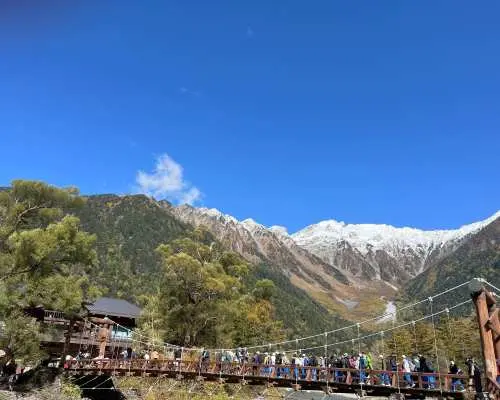


3-Day Japan Tour of Tateyama Kurobe Alpine Route: Snowy Valley | Kamikochi Stroll, Hida Takayama, Karuizawa, Lake Kawaguchi, Mt. Fuji | Hot Spring Hotel Stay (Departing from Tokyo)
- Take commemorative photos at various scenic spots along the Tateyama Kurobe Alpine Route, utilizing six different modes of transportation.
- Experience a stroll along the Tateyama Kurobe Alpine Route, ascending to 1500 meters and surrounded by majestic mountains and crystal-clear lakes – a hidden gem of Japan. Discover the Kappa Bridge and Myojin Bridge, enjoying the pristine beauty of this idyllic landscape. Choose from six different modes of transport to ascend the Tateyama Kurobe Gorge via either the "Tateyama Illumination - Ogisawa Exit" or "Ogisawa Illumination - Tateyama Exit" routes, escaping the summer heat with a cool retreat in the Tateyama Kurobe Alpine Route.
- Dam sightseeing and flood discharge (June to October): This season is the best time to climb Tateyama Kurobe. The climate is cool and not cold, the mountains are full of greenery, and you may even see Japanese antelopes. This is also the time when the Kurobe Dam is only discharging floodwaters.
- Autumn foliage viewing season (September to early November): In autumn, the mountains are ablaze with golden and red maple leaves. Spend the night in Hida, known as "Little Kyoto," or in Hirayu Onsen. Stroll through the old streets of Takayama and experience the Edo period. Savor Hida beef and explore the culture of a century-old sake brewery.
- A 3-day, non-retrograde trek through the Japanese Alps: Karuizawa, Kamikochi, Tateyama Kurobe Alpine Route, Hida Takayama, and Lake Kawaguchi – all in one trip, capturing stunning views of Mt. Fuji from Lake Kawaguchi.
Package Options


Sightseeing Tours
| Tour Type | Shared tour |
| Transportation method | Transfer from meeting point |
| Luggage limit | 1 piece |
| Minimum participant requirement | 15 travelers |
| Meal arrangement | Breakfast included, Arrange yourself |
| Accommodation type | Hotel, Economy (< 3 stars) |
| Seasonal | Autumn Maple |
| Sightseeing type | Natural sights |
| Transport | Bus tour |
Product Info
The content of this product is provided by machine translation and may not reflect the actual information, please take this into consideration before booking.
This itinerary features three of Japan's most iconic scenic wonders: the hidden beauty of the Alps, the spectacular snow-capped cliffs of Tateyama Kurobe Alpine Route, and the stunning lakeside scenery of Mount Fuji. Combining nature walks, mountain landscapes, and therapeutic hot springs, it offers a profound three-day experience of Japan's most classic mountain beauty.
Day 1 | Tokyo → Kamikochi → Karuizawa/Hakuba/Kurobe/Toyama Onsen Hotel
Departing from Tokyo, take a private car to Kamikochi, known as the "Hidden Gem of the Japanese Alps." Enjoy a leisurely nature walk along Taisho Pond and Tashiro Pond to Kappa Bridge. The lake reflects the mountains, and the tranquil forest trails allow you to immerse yourself in the pristine, unpolluted natural environment and completely relax. In the evening, head to Karuizawa, Hakuba, Kurobe, or Toyama for a stay at a hot spring hotel (subject to availability). Staying at Hotel Green Plaza Karuizawa allows you to experience the relaxed atmosphere of a highland resort town, rejuvenating you for the rest of your journey.
Day 2 | Karuizawa/Hakuba/Kurobe/Toyama → Ogizawa Station (or Tateyama Station) → Tateyama-Kurobe Alpine Route → Takayama/Hirayu Onsen
After breakfast, head to the entrance of the Tateyama Kurobe Alpine Route (Ogizawa Station or Tateyama Station) for a spectacular mountain traverse. Travel through the magnificent Tateyama Kurobe Alpine Route using various modes of transportation, including mountain trams, highland buses, cable cars, and tunnel buses. During spring, you can enjoy a close-up view of the limited-time "Snow Valley," with its breathtaking snow walls reaching several meters high—one of Japan's most iconic natural wonders. After the tour, check into your hotel in the Hida Takayama or Hirayu Onsen area. Relax in the hot springs that evening to soothe your body and mind after a long day.
Day 3 | Takayama/Hiryu Onsen → Hida Takayama Old Town → Kawaguchiko Oishi Park → Tokyo
In the morning, stroll through the old streets of Hida Takayama, where the well-preserved wooden buildings and traditional shops of the Edo period are lined up, earning it the nickname "Little Kyoto of Hida." It feels like stepping back in time, allowing you to immerse yourself in the rich historical and cultural atmosphere of Japan. Afterwards, visit Oishi Park, a popular spot on the shores of Lake Kawaguchi, for breathtaking views of Mount Fuji. The changing seasonal flowers and the interplay of lake and mountain scenery create a stunning panorama, making it a perfect location for photography and social media check-ins. In the evening, return to Tokyo, bringing this wonderful journey combining nature, culture, and healing to a perfect close.
Taisho Pond is a mysterious lake formed by the eruption of Yaedake volcano. Its tranquil surface reflects the peaks of the Hotaka mountain range and the blue sky and clouds. The dead trees standing in the lake show different appearances with the seasons, and when shrouded in morning mist, it is even more like a fairyland. It is one of the most representative and spectacular sights in Kamikochi.


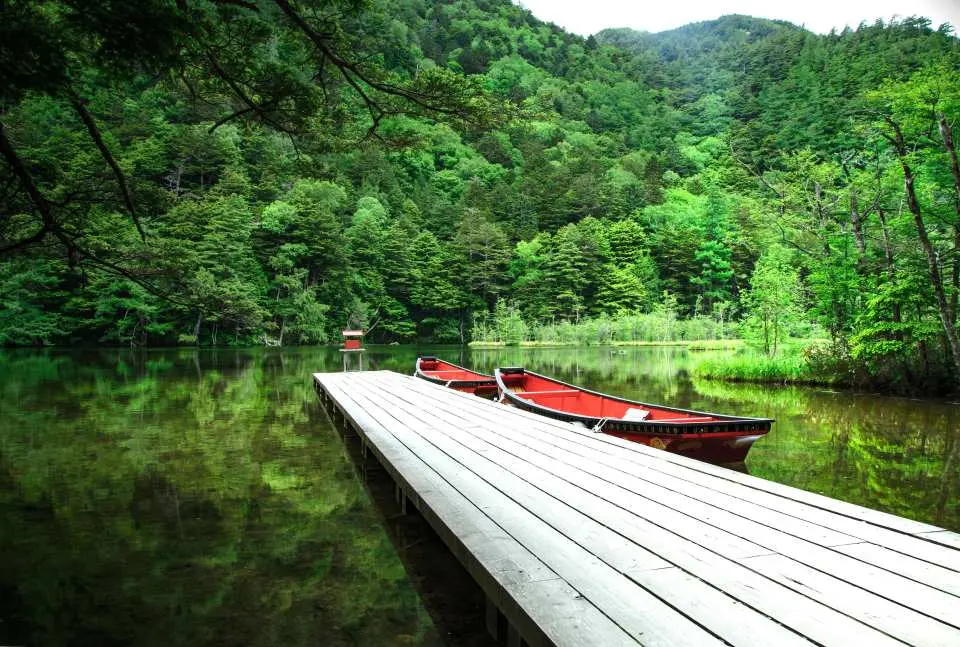
Tashiroike Pond is a shallow wetland located in Kamikochi, where the Hotaka mountain range and blue sky and white clouds are reflected on its surface. In May, the fresh greenery is refreshing and healing; in October, it is golden and brilliant; and in late autumn, the thin ice is like a mirror. Each season presents a different kind of tranquil beauty, making it a secret place that should not be missed for photography and leisurely strolling.


Kappa Bridge, a classic suspension bridge built against larch trees, is the most representative symbol of Kamikochi. Standing on the bridge, one can enjoy panoramic views of the magnificent Hotaka Mountain Range, the Yaedake volcano, and the clear Azusa River, creating a picturesque landscape. It is about a 5-minute walk from the bus terminal and is beautiful in all seasons, but it is a popular must-visit spot during Golden Week, summer vacation, and the autumn foliage season.
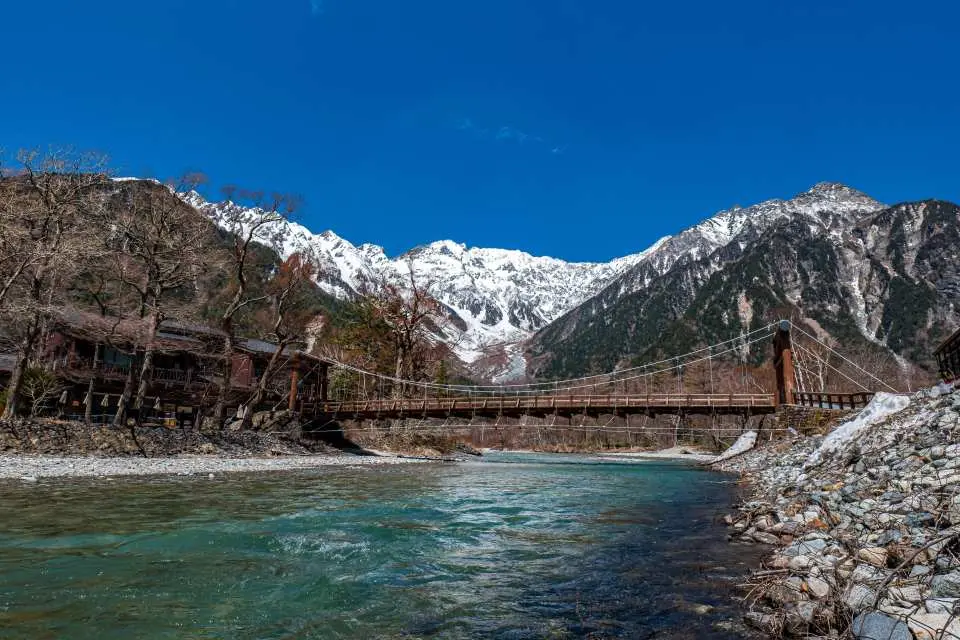

Myojin Pond is located within the Okumiya Shrine grounds of Hotaka Shrine, about a 60-minute walk along the Azusa River from Kappa Bridge. Surrounded by primeval forests and lakes, it is home to a wealth of wildlife, and its tranquil atmosphere is truly soothing. The magnificent mountain scenery of Myojin Mountain seen from Myojin Bridge is also a favorite spot for photographers.

The Hotaka mountain range forms the most iconic and magnificent backdrop of Kamikochi, its majestic silhouette visible from various scenic spots. The main peak, Mount Okuhotaka, at 3,190 meters, is the third highest peak in Japan and boasts numerous accolades, including being named one of Japan's 100 Famous Mountains, one of the "New 100 Famous Mountains of Japan," and one of the "100 Famous Mountains of Flowers." It displays distinctly different landscapes with each passing season; whether lush greenery, vibrant summer, or snow-covered scenery, each is breathtaking, making it a dream destination for photographers and nature lovers.


Nestled in a tranquil forest, the Okumiya Shrine of Hotaka Shrine presents a majestic torii gate, as if stepping into a sacred realm. Limited-edition Okumiya amulets can be purchased at the shrine office, offering unique souvenir value. Kamonji's Hut in front of the shrine, established in 1880, preserves the traditional hearth-style atmosphere. Gather around the hearth and savor freshly grilled rockfish; the warmth and mountain air intertwine, creating a pure and unforgettable mountain experience.


The Tateyama Kurobe Alpine Route is a scenic route that traverses the rooftops of Japan—the majestic Tateyama Alps. It utilizes various modes of transportation to cross the 2400-meter elevation difference between Toyama and Nagano prefectures. The entrance in the Hokuriku region is Tateyama Station on the Toyama side, while the entrance in the Shinshu region is Ogisawa Station on the Nagano side. There are two entrances to the route. The Tateyama Kurobe Alpine Route, traversing the Northern Alps, leads to a plateau at an altitude of 2500 meters and is a 90-kilometer route connecting Toyama and Nagano prefectures. The ever-changing natural scenery will leave you breathless.


Autumn (September-October): This season sees the mountains transformed into ablaze with autumn leaves, and it can get quite chilly. By October, snow begins to fall in Murodo, so please wear several layers to stay warm. Recommended items to bring: a windproof jacket, sunglasses.


Located on the shores of Lake Kawaguchi, facing Mount Fuji, Oishi Park is a hidden gem offering stunning views of both flower fields and mountain scenery. In summer, lavender blooms, creating a romantic purple carpet; in autumn, the broom grass turns vibrant red, its rounded beauty soothing and comforting. With flowers blooming in every season, the combination of the lake and mountain landscape is breathtaking. It's also one of the main venues for the Kawaguchiko Herb Festival, making it an unmissable spot for taking photos.


Purchase Notice
[Tourism Conditions]
Travel Departure Point & Destination: Tokyo, Nagano/Gifu/Yamanashi
Trip duration: 3 days 2 nights
Transportation: Different vehicle types will be arranged according to the number of passengers.
Meals included: 2 breakfasts, 0 lunches, 1 dinner
Transportation: Bus
Bus company names: Lixing Tourism Industry Co., Ltd., etc.
Accommodation: Karuizawa Green Plaza Hotel or similar
Minimum group size: 15 people
Team Leader: 1
Tour guide: 0
Reminders
A minimum of 15 traveler(s) are required for the tour to depart. If the number of participants does not reach the minimum requirement, the tour will be canceled. An email regarding tour cancellation will be sent 15 day(s) before the departure date
In case of delays caused by traffic, weather, or other force majeure factors resulting in the cancellation of some itinerary attractions, please contact customer service. We will arrange a partial refund for you
In the event of inclement weather such as typhoons or snowstorms, a decision on whether to cancel the tour will be made 1 day(s) before departure (local time 18:00). Notifications will then be sent via email
Travelers with the following conditions or other health issues that could be worsened by excessive stimulation should not participate in this activity: High blood pressure, Heart disease, Acrophobia, Asthma, Epilepsy, Pregnant women
Please arrive at the designated location 15 minute(s) before the scheduled departure time, as the tour will depart on time
Meals are not included for children under the age of 2
Infants under 1 year old who do not occupy a seat or bed can participate for free. Each adult can only bring one infant who does not occupy a seat or bed. If you are traveling with someone, please indicate this in the "Remarks" section when making a reservation.
Due to limited luggage storage space, each person is limited to one medium-sized suitcase per person free of charge, and two people are allowed to bring one large suitcase on board. If you have more than two pieces of luggage, please indicate this in the remarks column and contact customer service. Thank you for your cooperation.
If attractions cannot be visited due to inclement weather or traffic conditions, the tour leader reserves the right to modify or cancel parts of the itinerary at any time for the safety of all participants. Participants are not entitled to refunds or fee reductions for such reasons.
If attractions cannot be visited due to weather or traffic conditions, the duration of your stay at the attractions may be adjusted or some attractions may be cancelled. Your return arrival time may also be significantly delayed. Please avoid scheduling any activities that evening.
Room type is subject to availability and cannot be specified. Meals cannot be customized; if you are vegetarian, please indicate this in the remarks section when booking.
If the trip to the Tateyama Kurobe Alpine Route is not possible due to weather or other force majeure events, a refund will be issued for the round trip from Tateyama Station to Murodo, and the trip will be replaced with a walk to Kanazawa or Takayama-Shirakawa-go.
The arrival time at Mount Tateyama depends on the facilities provided. If the arrival time provided by the facilities is earlier than usual and the hotel breakfast cannot be used, a meal box will be provided for consumption on the tour bus; or a voucher of 1,000 yen per person will be provided for travelers to purchase breakfast at their own discretion. No voucher will be provided for infants under 1 year old who participate for free.
Vehicle type: Vehicles will be assigned based on the number of participants. For smaller groups, a driver will also serve as the accompanying staff to provide full-trip tour services. No additional tour leader will be provided. Participants are free to explore the attractions at their own pace. Please be aware of this.
If you have any special requests such as smoking/non-smoking rooms or allergy-related needs, please make a note in advance. The hotel will make the final arrangements, and we apologize that we cannot make specific requests.
Smoking is prohibited throughout the hotel. If you wish to smoke, please use the designated smoking areas. If the hotel does not have designated smoking areas, smoking is prohibited both inside and outside the hotel. If you smoke in areas other than the designated smoking areas, you will be charged a cleaning fee. If the smoke alarm is triggered, the hotel may call the fire department. The hotel will be responsible for the repair costs and liability. Please be aware of this.
FAQ
Traversing the Tateyama Kurobe Alpine Route involves using a unique combination of six different public transportation methods. These typically include cable cars, Kanden Tunnel electric buses, Tateyama Ropeway, trolley buses, and local buses. Each segment offers distinct scenic views and experiences, connecting various points across the mountain range, such as Tateyama Station, Bijodaira, Murodo, Daikanbo, Kurobedaira, and Ogizawa.
The Tateyama Kurobe Alpine Route offers distinct experiences across different seasons. Spring (April-June) is famous for the 'Snow Wall' (Yuki no Otani), where towering snow corridors can be walked through. Summer (June-October) provides a cool escape from the heat, with lush green landscapes and the impressive Kurobe Dam's sightseeing discharge. Autumn (September-early November) transforms the mountains into a vibrant display of red and golden foliage, offering spectacular views along the entire route.
To fully experience the Tateyama Kurobe Alpine Route, including stops at major attractions like Murodo, Kurobe Dam, and other scenic points, it is recommended to allocate a full day, typically 6 to 8 hours. This allows ample time for enjoying the unique transportation methods, walking through the snow corridor (in spring), observing the dam discharge (in summer/autumn), and appreciating the diverse alpine landscapes at a relaxed pace.
Kamikochi, known as 'Japan's Sacred Land,' offers breathtaking natural beauty. Visitors can enjoy leisurely strolls along crystal-clear rivers, marvel at the majestic surrounding mountains from an elevation of 1,500 meters, and discover serene spots like Kappa Bridge and Myojin Bridge. The area is renowned for its pristine lakes, lush forests, and rich wildlife, making it a perfect place to immerse oneself in Japan's untouched natural environment.
In Hida Takayama's charming old town, often called 'Little Kyoto,' visitors can step back into the Edo period with its beautifully preserved streetscapes. Explore traditional merchant houses, sake breweries with centuries of history, and local craft shops. A culinary highlight is sampling local delicacies like premium Hida beef, available in various forms, and traditional sake, offering a true taste of regional Japanese culture and flavors.
For the clearest views of Mount Fuji from the Lake Kawaguchiko area, it is generally recommended to visit during the cooler, drier months, typically from autumn through spring (October to May). Early mornings often provide the best visibility, as the air is usually clearer and less prone to cloud cover. Clear, sunny days increase the chances of capturing the iconic, unobstructed reflection of Mount Fuji on the lake's surface.
The Kurobe Dam's spectacular sightseeing discharge typically occurs from late June to mid-October. During this period, visitors can witness massive volumes of water being released from the dam, creating an impressive and powerful display. The surrounding area during these months enjoys a comfortable, cool climate, lush green scenery, and there's even a possibility of spotting Japanese serow, a local alpine animal.
During autumn, from September to early November, the Tateyama Kurobe Alpine Route and Kamikochi transform into a stunning spectacle of fall colors. Higher elevations along the Alpine Route see the first splashes of red, orange, and gold in September, gradually moving down to lower altitudes. Kamikochi also boasts vibrant foliage, with golden larches and red maples reflecting in its clear waters, creating picturesque landscapes ideal for photography.
Get Help


