



Hida Takayama, Shirakawa-go & Hida Village Light up 2 Day from Osaka
- Stay at the upscale Mercure Hotel Hida Takayama!
- Admire the popular annual Hida Folk Village Illumination
- Indulge in all-you-can-eat Hida Beef Shabu-shabu made with A4 grade or higher beef
- Explore the World Heritage site Shirakawa-go at your own pace!
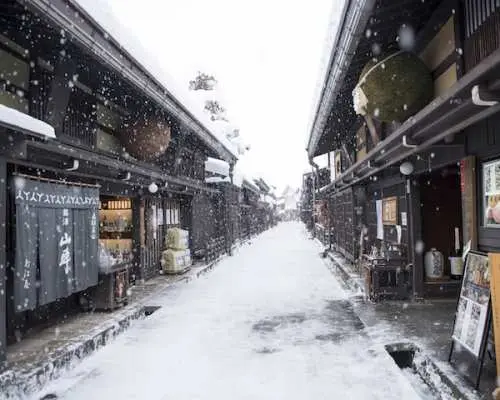
- Enjoy plenty to see on a half-day free stroll in Hida Takayama (until 2 PM)!
Sightseeing Tours
| Tour Type | Shared tour |
Product Info
Purchase Notice
This tour is a Japanese tour. The tour conductor will provide language support using a translator (Pocket Talk).
This is not a private tour; you will enjoy the tour with other guests.
If the minimum number of participants (20) is not met by (14) days before the scheduled date, the tour on that date might be canceled.
Triple rooms are not available.
Hotel check-out is by 11:00 AM.
Normally, the illumination starts from January, but on this tour you can enjoy it from December. Please note that the illumination will be on the same scale as usual.
Depending on weather conditions, snow scenery may not be visible.
This tour shares the same bus as Course No. D-P6027 (Wat Hotel Stay Plan).
The tour conductor and bus staff will stay at Wat Hotel.
Reminders
Important Notes During Bus Tour
Please refrain from drinking alcohol on the bus.
Members of the odd-numbered group may need to share seats with other passengers on the bus.
As stipulated by Japanese law, please wear your seat belt on the tour bus.
Please remain seated and avoid walking while the tour bus is moving.
Seating on the bus is assigned by H.I.S staff. Please do not change your seat during the tour.
Please be punctual and arrive at the designated meeting place on time. The bus will depart on time and will not wait for latecomers.
Latecomers who wish to rejoin the group will be responsible for all transportation fees.
8.Please wear the sticker provided by the tour guide visibly.
Avoid sticking the sticker on leather goods, as it may leave marks.
Do not use the seat reclining function or adjust the seat settings.
Please set all electronic devices, including mobile phones and game consoles, to silent mode.
Talking on mobile phones and making video calls are prohibited on the tour bus.
Smoking is strictly prohibited on the tour bus.
Arrival times at each sightseeing spot may vary depending on traffic conditions.
The use of drones for filming or other purposes is prohibited during the tour.
Please do not use perfume, sprays, or change baby diapers on the bus, as it may disturb other passengers.
Manage your valuable belongings yourself.
After the tour, please take all your trash with you and do not leave any on the bus.
Ensure you do not forget or leave any personal belongings on the bus after the tour.
For fruit-picking tours, please note that fruit is to be consumed only on the farm. Bringing it home in your own bag is strictly prohibited.
If you fail to follow these regulations and cause a disturbance on the bus, you may be asked to leave the bus, even during the tour.
Cancellation Policy
- Cancellations 21 day(s) (inclusive) before the selected date are allowed. Unused orders can be canceled for free
- For cancellations made 8 to 20 days prior to selected date, a cancellation fee of 20% will apply
- For cancellations made 2 to 7 days prior to selected date, a cancellation fee of 30% will apply
- For cancellations made 1 to 1 days prior to selected date, a cancellation fee of 40% will apply
- For cancellations made 0 to 0 days prior to selected date, a cancellation fee of 50% will apply
- Due to time zone differences, the confirmed cancellation date is based on the supplier’s local time. Please allow 2–5 business days to process your cancellation request, after which the cancellation fee will be charged according to the product’s cancellation policy. Once the cancellation is confirmed, you will receive your refund within 14 working days.
FAQ
Hida refers to the historical province in Gifu Prefecture, encompassing a broader region known for its rich culture and traditional craftsmanship. Takayama, often called Hida Takayama, is a city within this Hida region. It serves as a central hub, preserving the old town atmosphere and acting as a gateway to the surrounding Hida area, allowing visitors to experience both the city's charm and the wider region's heritage.
Hida Takayama is renowned for its beautifully preserved Edo-period streets, often referred to as 'Little Kyoto.' Must-see highlights include the Sanmachi Suji historic district with its traditional merchant houses, sake breweries, and craft shops. Visitors can also explore the morning markets (Jinya-mae and Miyagawa), taste local Hida beef, and visit the Takayama Jinya, a former government office. The Hida Folk Village (Hida no Sato) offers an open-air museum experience showcasing traditional Gassho-zukuri farmhouses.
Hida Takayama offers a deep dive into traditional Japanese culture. Travelers can enjoy strolling through the charming old town, savoring exquisite Hida beef cuisine, and sampling local sake. The area is also known for its intricate woodworking and folk crafts, providing unique shopping opportunities. Visiting during specific seasons allows for experiences like the annual Hida Folk Village Illumination, showcasing the beauty of historic architecture under festive lights.
Hida Folk Village (Hida no Sato) is an open-air museum featuring over 30 traditional farmhouses, including several Gassho-zukuri style homes, relocated from around the Hida region. It offers insight into the local lifestyle and architecture of past centuries. During winter, the village hosts a popular annual illumination event, where these historic thatched-roof houses are beautifully lit, creating a magical, picturesque scene against the snowy landscape, offering a unique viewing experience.
Shirakawa-go is famous for its unique Gassho-zukuri style farmhouses, characterized by steeply sloped thatched roofs resembling hands clasped in prayer. These architectural marvels are designed to withstand heavy snowfall and provide vast attic space for silkworm cultivation. The village maintains a traditional, communal way of life amidst stunning natural beauty, offering a living example of a traditional Japanese mountain village, which led to its designation as a UNESCO World Heritage site.
To thoroughly explore the main village of Shirakawa-go (Ogimachi), a recommended duration is typically 2 to 3 hours. This allows ample time to wander through the village streets, admire the Gassho-zukuri houses, visit some of the open-to-the-public homes like Wada House or Kanda House, and walk up to the Shiroyama Viewpoint for a panoramic vista of the entire village. You can also enjoy local snacks and souvenirs during this time.
Shirakawa-go is located in the Shogawa river valley in Gifu Prefecture, within the mountainous region of central Japan. It is situated amidst the Hakusan National Park, known for its scenic beauty. The village is relatively remote but accessible, commonly visited as part of a trip from major cities like Nagoya, Osaka, or Tokyo, often combined with nearby Hida Takayama to form a comprehensive regional exploration.
In Shirakawa-go, don't miss exploring the iconic Gassho-zukuri farmhouses, particularly those open to the public such as Wada House and Kanda House, to see their unique interiors and learn about their history. A visit to the Shiroyama Viewpoint (Ogimachi Castle Ruin Observation Deck) is essential for breathtaking panoramic views of the entire village. Stroll across the suspension bridge, Deaibashi, and sample local delicacies like gohei-mochi or soba noodles.
Get Help


