


Mt. Fuji Pass
- Explore Mount Fuji with unlimited train and bus rides in the region.
- Enjoy exclusive discounts at major Mount Fuji attractions and facilities.
- Perfect for international visitors planning a Fuji area itinerary.
- Book via KKday and redeem quickly with your mobile e-voucher.
- For more information, please check out the ultimate guide to planning a day trip to Mt. Fuji
Package Options
Attraction Tickets
| Ticket type | E-ticket (requires redemption) |
| Attraction type | Theme parks |
| Natural scenery | Lakes, Mountains |
| Additional service & facility | Transfer included |
| Transport convenience | Near bus stop |
Product Info
The content of this product is provided by machine translation and may not reflect the actual information, please take this into consideration before booking.
- Ticket Introduction -
- This voucher can be used for transportation facilities in the Mt. Fuji area, and also offers special discounts on sightseeing and amusement facilities around Mt. Fuji.
- You can also choose a ticket validity period of 1 to 3 days according to your arrangements. For detailed offers, please refer to the official website .
- Product Description -
- Scope of application: Please refer to the official website for the latest available facilities and benefits.
- Fujikyu Railway Line (between Kawaguchiko Station and Otsuki Station)
- bus
a. Tour bus:
Kawaguchiko Sightseeing Bus (Red Line)
West Lake Sightseeing Bus (Green Line)
Narusawa-Shojiko-Motosuko Sightseeing Bus (Blue Line)
b. Bus routes:
Kofu Station ~ Ishiwa Onsen Station ~ Kawaguchiko Station ~ Mt. Fuji Station Kawaguchiko Station ~ Mitsutoge Entrance ~ Tengachaya Mt. Fuji Station ~ Kawaguchiko Station ~ Oishi Puchipension Village Mt. Fuji Station ~ Fuji-Q Highland ~ From Kawaguchiko Station to Shiraito Falls Entrance | Fujinomiya Station ~ Shin-Fuji Station Fujiko-go Kawaguchiko Station ~ Mt. Fuji Station ~ Asahigaoka ~ Gotemba Station ~ Gotemba OUTLETS
Gotemba Station ~ Mishima-Tomei-Gotemba IC ~ Gotemba ~ Grinpa Amusement Park - Boat + Cable Car: Lake Kawaguchi Sightseeing Boat, Lake Yamanaka Sightseeing Boat [Lake Hakucho]
Lake Motosu sightseeing boat 【MOGRUN】 (seasonal only)
Kawaguchikoyama Ropeway - Facilities include Fuji-Q Highland (admission ticket + one ride).
Grinpa, the amusement park at the Mt. Fuji Museum (limited to seasonal use)
Fugaku Wind Cave and Naruse Ice Cave
Yeti Ski Resort (Seasonal Only) - Unreserved seats on regular and express trains are valid for a period of 1, 2, or 3 days, depending on the type of ticket. 2-day and 3-day tickets are valid for 2 or 3 consecutive days.
Please note that even for unreserved seats, an additional fee will be charged.
Begin using your pass once the official sticker is stamped on


Gain access to the following attractions included in your pass

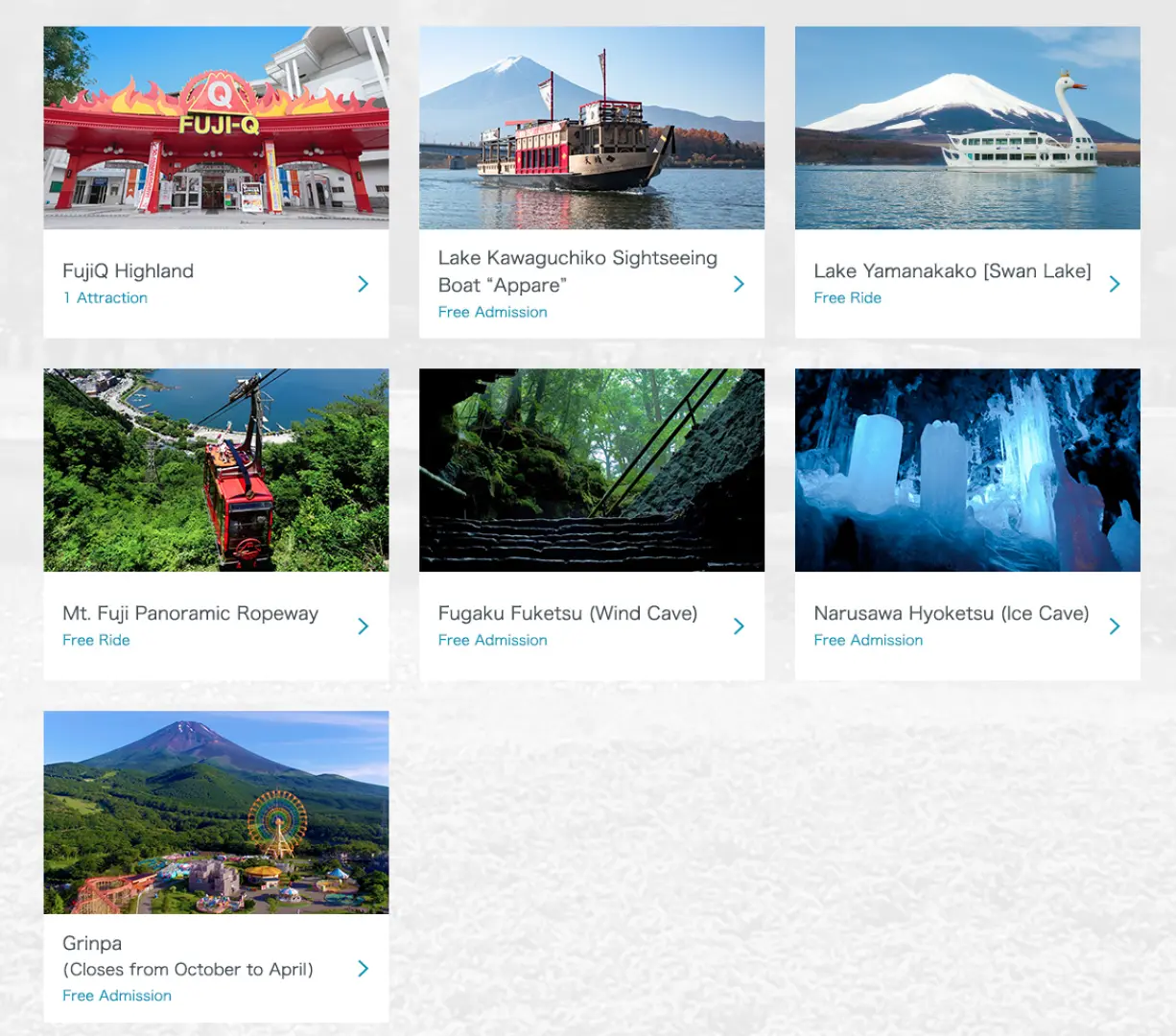
Ascend the Mt. Fuji Panoramic Ropeway


Go on thrilling rides at Fuji-Q Highland


Purchase Notice
- Japanese citizens and tourists residing in Japan are not permitted to purchase this product.
- E-tickets are only valid for use in an online environment. Please ensure your mobile device has internet access beforehand. Printed tickets or screenshots cannot be used.
- Please present your e-ticket to the staff at the ticket counter using your internet-connected smartphone. Before using the service, please be sure to check the operating hours of each facility on the official website .
- As the sightseeing boat service on Lake Motosu is seasonal, there may be periods of temporary closure. The operating schedules of transportation and facilities are subject to change.
- This ticket is an "online ticket".
- This voucher cannot be used in conjunction with other vouchers, coupons, or promotions.
- This ticket is not for resale; any resale of this ticket will render it invalid.
- Tickets sold by resellers on ticket resale platforms or auction websites are considered invalid.
- Tickets purchased on resale platforms are unusable and non-refundable. Please do not purchase tickets from such platforms.
Includes/Excludes
Eligible Users
Ineligible Nationalities/Regions
- Japan
How to Redeem Your Voucher
How to Use Your Voucher
- Please present your e-voucher and passport on-site
Cancellation Policy
- Once the order has been completed, it cannot be canceled, modified, or refunded
- Due to time zone differences, the confirmed cancellation date is based on the supplier’s local time. Please allow 2–5 business days to process your cancellation request, after which the cancellation fee will be charged according to the product’s cancellation policy. Once the cancellation is confirmed, you will receive your refund within 14 working days.
FAQ
The Mt. Fuji Pass is not strictly necessary but is highly recommended if you plan to explore multiple attractions around the Fuji region over several days. It offers unlimited rides on designated trains and buses, which can be very convenient and help manage transportation costs compared to individual tickets. It's particularly beneficial for travelers who want flexibility and extensive sightseeing in the area without purchasing separate tickets for each journey.
The Mt. Fuji Pass grants unlimited rides on specific train lines and buses within the Mt. Fuji region. This typically includes the Fujikyuko Line trains and Fujikyu buses, covering popular areas like Lake Kawaguchiko, Lake Yamanakako, and Oshino Hakkai. Additionally, the pass offers exclusive discounts at various major attractions and facilities throughout the area, such as cable cars and museums, enhancing your exploration experience.
Within the Mt. Fuji area, local transportation primarily consists of the Fujikyuko Line trains and an extensive network of Fujikyu buses. These services connect major towns, lakes, and attractions such as Kawaguchiko Station, Lake Kawaguchiko, Lake Yamanakako, and Oshino Hakkai. Taxis are also available at stations and tourist spots, though they can be a more expensive option for longer distances. Some areas might also offer rental bicycles for short-distance exploration.
The most popular and often recommended way to travel from Tokyo to the Mt. Fuji region is by direct highway bus. Buses depart regularly from major terminals like Shinjuku Expressway Bus Terminal (Busta Shinjuku) to Kawaguchiko Station. Alternatively, you can take a train from Shinjuku Station to Otsuki Station via the JR Chuo Line, then transfer to the Fujikyuko Line to reach Kawaguchiko. Both options offer scenic views during the journey.
Visitors can purchase the Mt. Fuji Pass through various online travel platforms or directly at major train stations and bus terminals in the Mt. Fuji area, such as Kawaguchiko Station. Booking through KKday offers the convenience of an e-voucher, allowing quick redemption and hassle-free planning for your trip, often simplifying the acquisition process for international travelers and ensuring your pass is ready upon arrival.
Ride-sharing services like Uber are not widely available or commonly used for general transportation within the Mt. Fuji area. The primary options for private transport are local taxi services, which can be found at train stations and major tourist spots. For public transit, the extensive bus network and Fujikyuko Line trains included in the Mt. Fuji Pass are the most reliable and comprehensive ways to get around.
The Mt. Fuji Pass offers exclusive discounts at a variety of attractions and facilities across the region, making your exploration more cost-effective. These often include popular sights like the Mt. Fuji Panoramic Ropeway, boat cruises on Lake Kawaguchiko, museums, and certain leisure facilities. Specific participating locations can vary, but generally cover key tourist spots designed to enhance your sightseeing experience around the Fuji Five Lakes and other significant areas.
Yes, the Mt. Fuji Pass is particularly well-suited for international visitors planning a multi-day trip to the Fuji area. It simplifies complex local transportation by offering unlimited rides on designated trains and buses, making it easier to explore various sights without repeatedly buying individual tickets. Its design focuses on convenience and comprehensive access, aligning perfectly with multi-day itineraries for independent travelers and providing a seamless travel experience.
Get Help


