
Get Exclusive App Deals
Gyeongbuk











Top 10 Must-Do Experiences and Attractions in Gyeongbuk


![[Daegu City & Deagu Airport TAE Departure] Pohang Small Private Tour (Spacewalk, Yeongildae Beach, Homigot, Guryongpo Market)](https://image.kkday.com/image/get/c_fill%2Ch_153%2Cq_55%2Ct_webp%2Cw_272/s1.kkday.com/product_251349/20241011011650_T2A4P/png)

![[Departing from Daegu] Gyeongju One-Day Tour (Bulguksa Temple, Daereungwon, Cheomseongdae, Gyeongju National Museum, Hwangridan-gil)](https://image.kkday.com/image/get/c_fill%2Ch_153%2Cq_55%2Ct_webp%2Cw_272/s1.kkday.com/product_250452/20240927082229_QPE3R/png)
Gyeongbuk Trending place to visit
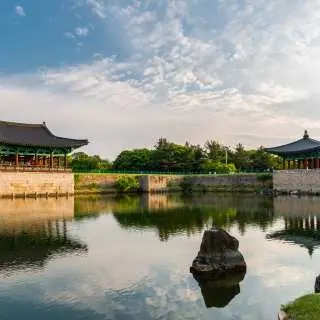
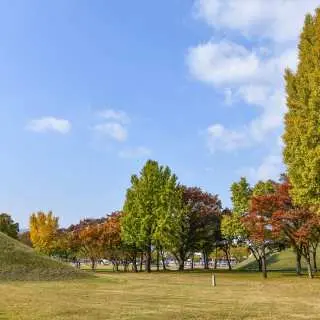
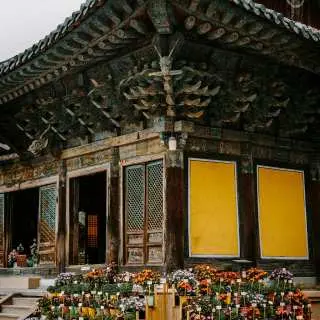


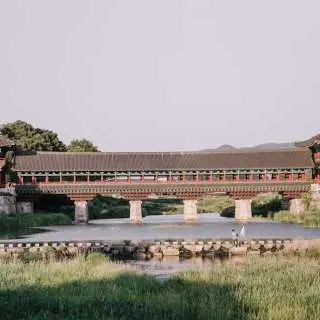

Latest launches and promotions in Gyeongbuk





![[South Korea] Busan & Gyeongju 5-Day Tour - Guaranteed Departure from June to August | Direct Flight from Hong Kong - Departure at Midnight - 5 Days of Fun | Gamcheon Culture Village | Haeundae Beach (One of the Eight Scenic Wonders of Korea) | Capsule Train Experience | Bulguksa Temple (World Heritage Site) | 4-Night Stay in a 4-Star Hotel | Complimentary Gift](https://image.kkday.com/image/get/c_fill%2Ch_153%2Cq_55%2Ct_webp%2Cw_272/s1.kkday.com/product_594311/20260601030040_GljJ0/png)


Recommended travel destinations near Gyeongbuk





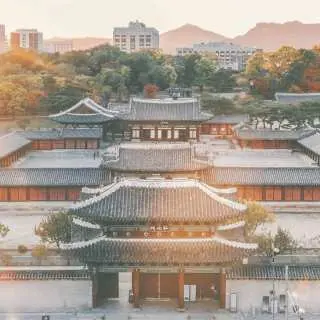
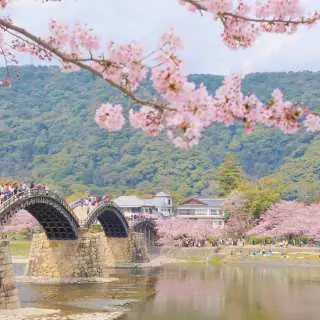
Reviews of Gyeongbuk activities
![[Departing from Daegu] Gyeongju One-Day Tour (Bulguksa Temple, Daereungwon, Cheomseongdae, Gyeongju National Museum, Hwangridan-gil)](https://image.kkday.com/v2/image/get/w_600%2Cc_fit/s1.kkday.com/product_250452/20240927082229_QPE3R/png)
Gyeongbuk Weather, Climate and Best Time to Visit
Data source:Meteostat
Update date:2025-09
Gyeongbuk year round climate
- Spring (March–May): 7.3–18.4°C on average, mild climate. Cherry blossoms may bloom in March–April, but generally less so than in southern regions. Common activities: picnics, flower viewing, visiting historical sites. Recommended clothing: light jacket, long-sleeved shirt, additional warm clothing for mornings and evenings.
- Summer (June–August): 23.2–26.7°C on average, hot and humid, with more rainfall, especially in July. Common activities: visiting summer resorts, playing in streams. Recommended clothing: light and breathable clothing, short sleeves, shorts, sunscreen is essential.
- Autumn (September–November): 7.5–22.4°C on average, pleasant climate, beautiful autumn scenery. Common activities: maple leaf viewing, hiking. Recommended clothing: light jacket, long-sleeved shirt, additional warm clothing for mornings and evenings.
- Winter (December–February): -1.5–1.2°C on average, cold and dry, occasional snowfall. Common activities: skiing, onsen (hot springs). Recommended clothing: warm coat, sweater, scarf, hat, gloves.
Gyeongbuk climatological average
Annual average temperature: approx. 13.2°C / Annual rainfall: approx. 1254 mm / Summer humidity: 70%–80% / Rainiest month: July
Gyeongbuk monthly average temperature and precipitation
Month
Air temperature (°C)
Precipitation (mm)
January
-1.5°C
16.9
February
1.2°C
22.5
March
7.3°C
57.3
April
13.6°C
62.6
May
18.4°C
92.5
June
23.2°C
140.2
July
26.1°C
357.5
August
26.7°C
210.9
September
22.4°C
156.1
October
13.8°C
60.6
November
7.5°C
48.5
December
-0.6°C
28.6
Gyeongbuk weather for the next seven days
6/24
Wednesday
Partly Cloudy
23°C/12.7°C
6/25
Thursday
Patchy rain nearby
22.4°C/16.7°C
6/26
Friday
Patchy rain nearby
28°C/16.1°C
6/27
Saturday
Patchy rain nearby
27.7°C/15.4°C
6/28
Sunday
Sunny
30.3°C/14.4°C
6/29
Monday
Sunny
30.4°C/14.9°C
6/30
Tuesday
Sunny
30.9°C/15°C


