
Get Exclusive App Deals
Hokuriku











Top 10 Must-Do Experiences and Attractions in Hokuriku

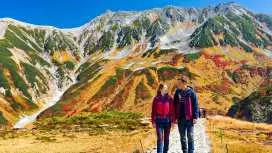


Hokuriku Trending place to visit


Latest launches and promotions in Hokuriku

![Selected Yamaguchi Prefecture Highlights 3-Day Tour | 15 Scenic Spots & Tourist Attractions | [Departing from Shin-Osaka]](https://image.kkday.com/image/get/c_fill%2Ch_153%2Cq_55%2Ct_webp%2Cw_272/s1.kkday.com/product_scm_26580/20260714062052_PKiu6/jpg)
![Echizen Crab x Hokuriku Scenic Autumn Foliage Tour | A Superb Crab Course at a Traditional Japanese Inn (2 Days) [Departing from Nagoya]](https://image.kkday.com/image/get/c_fill%2Ch_153%2Cq_55%2Ct_webp%2Cw_272/s1.kkday.com/product_scm_26014/20260702064339_hlZb9/jpg)
![Private car hire in Nagoya, Japan | Nagoya city center, Takayama-Shirakawa-go, Kanazawa, Ena Gorge, Tateyama-Kurobe Alpine Route, Kamikochi, Mitsui Outlet Mall [One-day/Multi-day private car hire & Chinese/Japanese language service]](https://image.kkday.com/image/get/c_fill%2Ch_153%2Cq_55%2Ct_webp%2Cw_272/s1.kkday.com/product_scm_27278/20260723074422_bDysz/jpg)


![Chubu Gifu Toyama 2-Day Tour | Shirakawa-go & Hida Takayama | Club Tourism Special Event "Tsukimi no Owara" 2-Day Tour [Departing from Nagoya Station]](https://image.kkday.com/image/get/c_fill%2Ch_153%2Cq_55%2Ct_webp%2Cw_272/s1.kkday.com/product_scm_26040/20260701062511_UmDsE/jpg)
Recommended travel destinations near Hokuriku






Reviews of Hokuriku activities


Hokuriku Weather, Climate and Best Time to Visit
Data source:Meteostat
Update date:2025-09
Hokuriku year round climate
- Spring (March–May): Average 3.1–14.1°C, mild climate, but still rather cold in early spring, moderate rainfall. Common activities: Cherry blossom viewing (depending on the cherry blossom blooming time), hiking. Recommended clothing: Warm jacket, long-sleeved clothing, comfortable shoes.
- Summer (June–August): Average 18.9–25.1°C, warm and humid climate, higher rainfall, especially in July and August. Common activities: Mountain hiking, visiting summer resorts. Recommended clothing: Breathable and sweat-wicking clothing, light rain gear.
- Autumn (September–November): Average 12.9–21.0°C, comfortable and pleasant climate, moderate rainfall, gradually cooling down. Common activities: Autumn leaves viewing, hot spring bathing. Recommended clothing: Light jacket, long-sleeved clothing.
- Winter (December–February): Average -1.6–-0.0°C, cold climate, higher chance of snowfall, moderate rainfall. Common activities: Skiing, hot spring experience. Recommended clothing: Warm jacket, hat, gloves, scarf, non-slip shoes.
Hokuriku climatological average
Annual average temperature: approx. 10°C / Annual rainfall: approx. 1975 mm / Summer humidity: 70%–80% / Rainiest month: August
Hokuriku monthly average temperature and precipitation
Month
Air temperature (°C)
Precipitation (mm)
January
-1.6°C
103.4
February
-1°C
72.2
March
3.1°C
118.9
April
9.7°C
89.5
May
14.1°C
131.6
June
18.9°C
188
July
23.3°C
259.1
August
25.1°C
321.5
September
21°C
214.7
October
12.9°C
148.4
November
6.9°C
189.2
December
0°C
138.6
Hokuriku weather for the next seven days
7/31
Friday
Fog
24.2°C/18.9°C
8/1
Saturday
Light rain
19.7°C/18.7°C
8/2
Sunday
Patchy rain nearby
20.4°C/18.2°C
8/3
Monday
Mist
29.2°C/17.1°C
8/4
Tuesday
Sunny
30.8°C/15.4°C
8/5
Wednesday
Sunny
32°C/17.2°C
8/6
Thursday
Sunny
33.4°C/19.7°C


