
Get Exclusive App Deals
Product #568058


Depart from Hakata! One-day bus tour to Nyoirin-ji, Kumamoto Castle( Aso Kusasenri ),Yachiyoza
To be confirmed within 10 hour(s)
Duration:11 hour(s)
Guided language: English / Japanese / Mandarin
Free cancellation 11 day(s) prior to experience date
Please present the e-voucher on-site
Also known as the "Frog Temple," Nyoirinji Temple is home to approximately 10,000 frog figurines and objects, making it a fun and open temple that anyone can visit.
Kumamoto Castle has been an important stage in various aspects of Japanese history for 400 years, and since its construction it has attracted many people and is a spiritual anchor for the people of Kumamoto. There are many events throughout the year. At Josaien, located at the foot of the castle, there are restaurants and souvenir shops lined up, so you can enjoy eating and shopping. Kumamon is the mascot that represents Kumamoto.
Summer is hot, so instead of visiting Kumamoto Castle, we'll head to Aso Kusasenri.
Kusasenrigahama, located at an altitude of about 1,100m, is a great location from which you can see the horses leisurely grazing and the dynamic crater of Aso-Nakadake, spewing smoke.
In summer, the area is bright with vibrant greenery and cool to spend time in. We also recommend Kusasenrigahama Parking Lot, where you'll find the Aso Volcano Museum, cafes, restaurants, souvenir shops, and more.
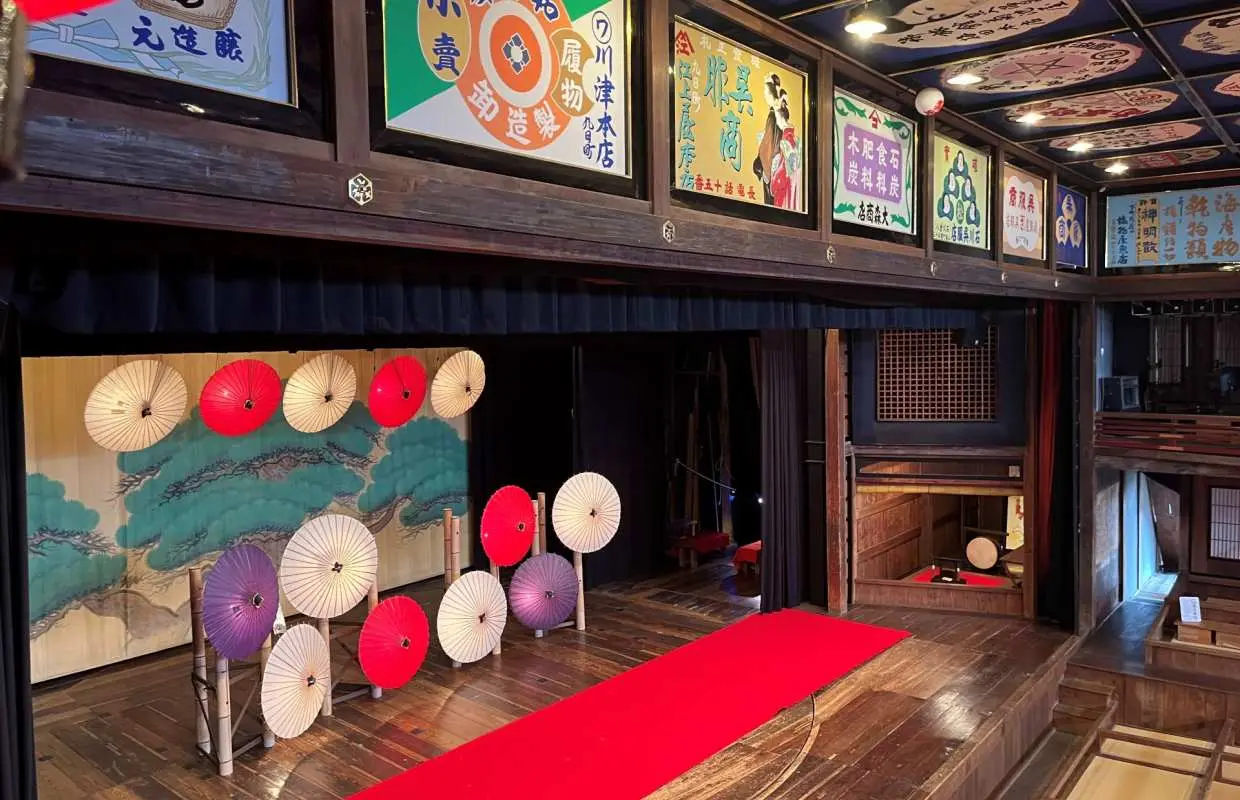
Built in 1910, the Yachiyoza playhouse is a designated National Important Cultural Property of Japan. Travel back 100 years in time and explore Japan's unique culture, art and architecture. The area where Yachiyoza is located is also home to the Yamaga Onsen region. Relax after a long day with a soak in Sakura no Yu, a natural free-flowing hot spring built in 1640.
Kumamoto Castle has been an important stage in various aspects of Japanese history for 400 years, and since its construction it has attracted many people and is a spiritual anchor for the people of Kumamoto. There are many events throughout the year. At Josaien, located at the foot of the castle, there are restaurants and souvenir shops lined up, so you can enjoy eating and shopping. Kumamon is the mascot that represents Kumamoto.
Summer is hot, so instead of visiting Kumamoto Castle, we'll head to Aso Kusasenri.
Kusasenrigahama, located at an altitude of about 1,100m, is a great location from which you can see the horses leisurely grazing and the dynamic crater of Aso-Nakadake, spewing smoke.
In summer, the area is bright with vibrant greenery and cool to spend time in. We also recommend Kusasenrigahama Parking Lot, where you'll find the Aso Volcano Museum, cafes, restaurants, souvenir shops, and more.
Built in 1910, the Yachiyoza playhouse is a designated National Important Cultural Property of Japan. Travel back 100 years in time and explore Japan's unique culture, art and architecture. The area where Yachiyoza is located is also home to the Yamaga Onsen region. Relax after a long day with a soak in Sakura no Yu, a natural free-flowing hot spring built in 1640.
Product Info
Purchase Notice
・This tour is guided by a professional guide who speaks Japanese and Chinese (Japanese and English).
・If you are bringing an infant, please let us know in advance.
・We do not provide seats for infants who ride for free.
[Important]
・Meeting time: 7:45 (May 1st - September 30th) 8:45 (October 1st - April 40th)
・Departure time: 8:00 (May 1st - September 30th) 9:00 (October 1st - April 40th)
・Meeting place: In front of Lawson, 1st floor, Oriental Hotel, Chikushi Exit, Hakata Station
・The bus departs on time. There are no refunds even if you are late and cannot board the bus.
★Things that are forbidden at Kusasenri
Horses grazing are dangerous. Please pay close attention to the following points.
①Do not approach the horses
Touching or getting too close to the horses is extremely dangerous. Please do not touch them under any circumstances.
②Do not make sudden movements or speak loudly
Horses are easily startled. Please do not startle them with sudden movements or loud voices.
③Do not feed the horses
Feeding the horses is prohibited. To protect the horses' health, please do not feed them.
・If you are bringing an infant, please let us know in advance.
・We do not provide seats for infants who ride for free.
[Important]
・Meeting time: 7:45 (May 1st - September 30th) 8:45 (October 1st - April 40th)
・Departure time: 8:00 (May 1st - September 30th) 9:00 (October 1st - April 40th)
・Meeting place: In front of Lawson, 1st floor, Oriental Hotel, Chikushi Exit, Hakata Station
・The bus departs on time. There are no refunds even if you are late and cannot board the bus.
★Things that are forbidden at Kusasenri
Horses grazing are dangerous. Please pay close attention to the following points.
①Do not approach the horses
Touching or getting too close to the horses is extremely dangerous. Please do not touch them under any circumstances.
②Do not make sudden movements or speak loudly
Horses are easily startled. Please do not startle them with sudden movements or loud voices.
③Do not feed the horses
Feeding the horses is prohibited. To protect the horses' health, please do not feed them.
Reminders
Depending on the number of people, it may be a large bus or a small bus.
If the minimum number of 10 participants is not reached 7 days before the departure date, we will cancel the tour and issue a full refund.
Please wear your seat belt on the tour bus.
Schedule stops and timing are subject to change with or without notice. In case of traffic congestion or any other reasons that affect the tour schedule, the staying time at each sightseeing spot will be shortened and arrival time will be delayed.
The bus is not provided with a toilet onboard.
After the tour, please kindly take all the garbage with you and do not leave them on the bus.
Please do not forget and leave any personal belongings on the bus after the tour.
Cancellation Policy
- Cancellations 11 day(s) (inclusive) before the selected date are allowed. Unused orders can be canceled for free
- For cancellations made 8 to 10 days prior to selected date, a cancellation fee of 20% will apply
- For cancellations made 2 to 7 days prior to selected date, a cancellation fee of 30% will apply
- For cancellations made 1 to 1 days prior to selected date, a cancellation fee of 40% will apply
- Cancellation is not allowed between 0–0 days from the selected date. Orders cannot be canceled or modified, and refunds will not be granted.
NOTE
- Due to time zone differences, the confirmed cancellation date is based on the supplier’s local time. Please allow 2–5 business days to process your cancellation request, after which the cancellation fee will be charged according to the product’s cancellation policy. Once your refund request is confirmed, KKday will initiate the refund to your original payment method within 15 days. The actual refund timing depends on your card-issuing bank’s policy.


