
![[Guaranteed Departure from 1 Person] Hakone & Mount Fuji & Enoshima Day Tour | Enoshima, Owakudani, Lake Ashi Torii, Hakone Ropeway, Hakone Pirate Ship](https://image.kkday.com/v2/image/get/c_fill%2Ch_800%2Cq_55%2Ct_webp%2Cw_1240/s1.kkday.com/product_529501/20250908093637_0hu3o/jpg)
![[Guaranteed Departure from 1 Person] Hakone & Mount Fuji & Enoshima Day Tour | Enoshima, Owakudani, Lake Ashi Torii, Hakone Ropeway, Hakone Pirate Ship](https://image.kkday.com/v2/image/get/c_fill%2Ch_400%2Cq_55%2Ct_webp%2Cw_500/s1.kkday.com/product_529501/20250823074250_PtA15/png)
![[Guaranteed Departure from 1 Person] Hakone & Mount Fuji & Enoshima Day Tour | Enoshima, Owakudani, Lake Ashi Torii, Hakone Ropeway, Hakone Pirate Ship](https://image.kkday.com/v2/image/get/c_fill%2Ch_400%2Cq_55%2Ct_webp%2Cw_500/s1.kkday.com/product_529501/20250823074412_p54ev/jpg)
![[Guaranteed Departure from 1 Person] Hakone & Mount Fuji & Enoshima Day Tour | Enoshima, Owakudani, Lake Ashi Torii, Hakone Ropeway, Hakone Pirate Ship](https://image.kkday.com/v2/image/get/c_fill%2Ch_400%2Cq_55%2Ct_webp%2Cw_500/s1.kkday.com/product_529501/20250823074234_5Z5mC/png)
![[Guaranteed Departure from 1 Person] Hakone & Mount Fuji & Enoshima Day Tour | Enoshima, Owakudani, Lake Ashi Torii, Hakone Ropeway, Hakone Pirate Ship](https://image.kkday.com/v2/image/get/c_fill%2Ch_400%2Cq_55%2Ct_webp%2Cw_500/s1.kkday.com/product_529501/20250823084433_GFCz8/jpg)
[Guaranteed Departure from 1 Person] Hakone & Mount Fuji & Enoshima Day Tour | Enoshima, Owakudani, Lake Ashi Torii, Hakone Ropeway, Hakone Pirate Ship
- Enjoy a day trip to Hakone & Kamakura, with worry-free round-trip flights from Tokyo.
- Enjoy stunning views of Mount Fuji, Lake Ashi, and the red torii gates from the pirate ship on Lake Ashi.
- Take the Hakone Ropeway and overlook the spectacular volcanic landscape of Owakudani.
- Savor the longevity-enhancing "black eggs" and experience their unique volcanic flavor.
- Stroll around Enoshima, visit the thousand-year-old shrine, and take photos at the Shonan Sea View Lighthouse.
Package Options


Sightseeing Tours
| Tour Type | Shared tour |
| Transportation method | Transfer from meeting point |
| Luggage limit | 1 piece |
| Minimum participant requirement | 1 traveler |
| Meal arrangement | Arrange yourself |
| Family-friendly | Free for children under 2 (no seat) |
| Sightseeing type | Natural sights, Temples & shrines |
| Transport | Bus tour |
Product Info
The content of this product is provided by machine translation and may not reflect the actual information, please take this into consideration before booking.
- Each person can bring one piece of luggage for free, regardless of size. Please note this when registering (if you do not note this and the carriage is crowded, the driver has the right to refuse you boarding and the fee will not be refunded); if the number of pieces of luggage exceeds the limit, a fee of 2,000 yen per piece will be charged.
- Reference vehicle types: 5-8 seater: Toyota Alphard or similar; 9-14 seater: Toyota HAICE or similar; 18-22 seater: minibus; 22 seater and above: large bus. The above vehicles are for reference only and will be adjusted according to the number of people on the day of departure.
- Driver-Guide Service: Small groups of 1-13 people (with the driver also providing tour guidance); bus groups of 14-45 people, the actual number of people in the group will be adjusted based on the number of people leaving on the day.
- Due to unpredictable factors such as traffic conditions, weather, holidays, and crowds, the arrival time of each tour is subject to change. Japanese law stipulates that drivers' maximum working hours are 10 hours. To ensure driver safety and smooth driving, we may adjust the itinerary based on actual circumstances, including shortening the time spent at attractions, adjusting the order of attractions, or even eliminating certain attractions. We sincerely hope that our passengers will understand and support these adjustments made while ensuring safety. In the event of these or other force majeure factors, we deeply regret any inconvenience caused. Please understand that we cannot provide refunds. This decision is made out of a sense of responsibility for the safety of our drivers and passengers, and to ensure the smooth operation of the entire tour. We always strive to provide you with the best travel experience, but in some cases, we need to flexibly adjust the itinerary based on actual circumstances. Thank you for your understanding and support.
Hakone Shrine, a famous scenic spot on the shore of Lake Ashi, is a sacred place for praying for good fortune and traffic safety.


The torii gates on the lake, reflecting the silhouette of Mount Fuji, are a sight so breathtaking it's hard to find a better word to describe them. Optional excursion: Hakone Pirate Ship - Motohakone Port - Togendai Port (approximately 30 minutes; please manage your time accordingly). One-way fare from Motohakone Port to Togendai Port: 1200 yen/adult, 600 yen/child (at your own expense).


Hakone Ropeway - Togendai Station - Owakudani Route: Ropeway ticket price: 1500 yen/adult, 500 yen/child.


Owakudani is a famous volcanic landscape in Hakone, known for its sulfurous fumes and black eggs, and offers stunning views of Mount Fuji.


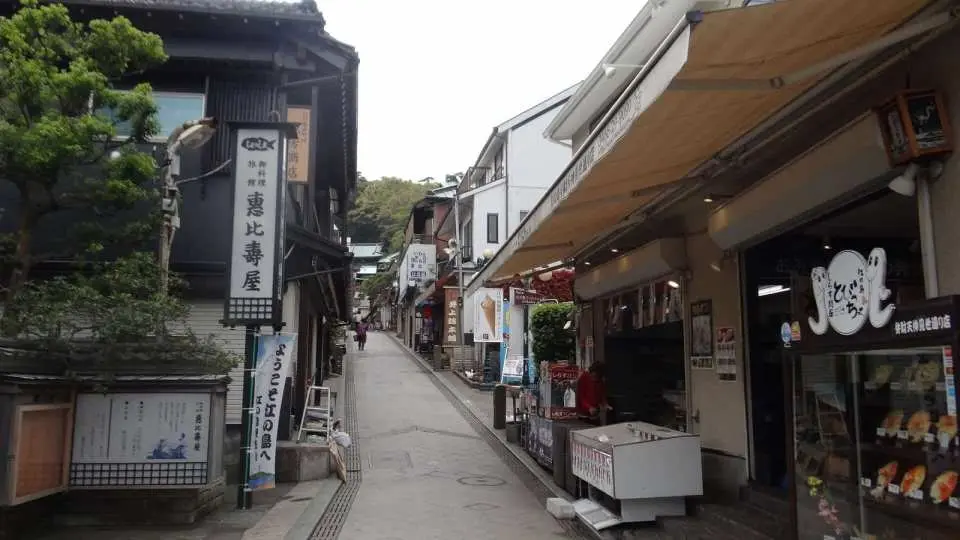
Enoshima Benzaiten Nakamise-dori is the main shopping street leading to Enoshima Shrine. Lined with shops selling various local products, sweets, and souvenirs, it combines traditional culture with tourist experiences, making it a bustling area that visitors must pass through before worshipping Benzaiten.

Enoshima Shrine, located on the Shonan coast, has been a popular shrine for 1500 years. It enshrines Benzai Tenjo, considered the goddess of music, wisdom, and wealth. The shrine's serene environment and panoramic views of Mount Fuji and Sagami Bay from its steps attract countless worshippers and tourists.


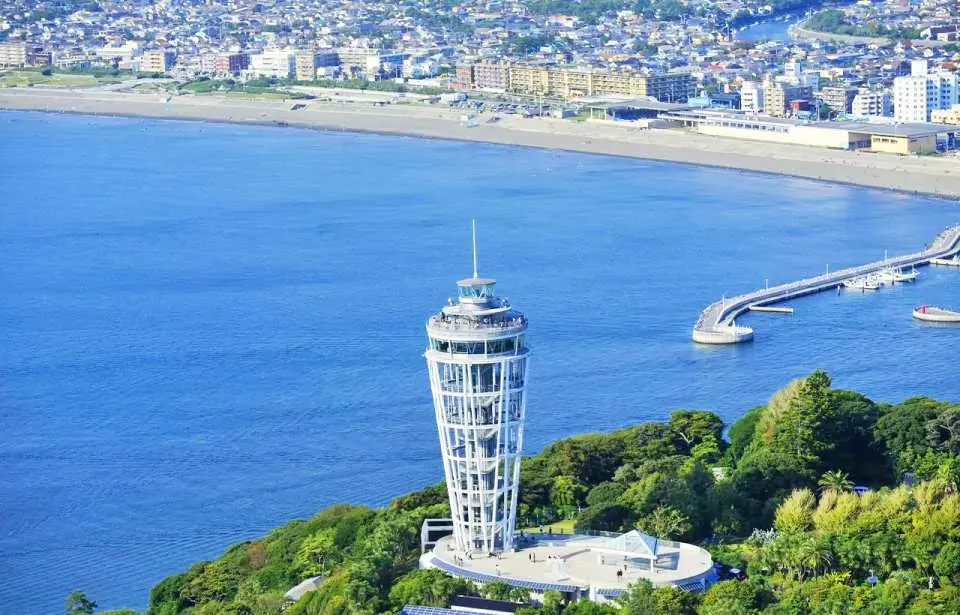
Enoshima Observation Lighthouse is a landmark observation lighthouse in southern Shonan. From its glass-floored floors, one can enjoy a panoramic view of Mount Fuji and Sagami Bay.

Purchase Notice
【Travel Conditions】
Departure place and destination: Tokyo and Kanagawa
Trip duration: Day trip
Utilizing transportation: Bus
Using the transportation bus company: Iroha Kanko Kotsu Co., Ltd.
Meal conditions: Breakfast 0 times, Lunch 0 times, Dinner 0 times
Accommodation facilities: None
Minimum number of people to urge: 1
Team Leader: 1
【Travel Planning/Implementation】
Operating Company Name: Shuzenji Takitei Co., Ltd.
Address: Shuzenji 722, Shizuoka Prefecture I▖ City
License number: Shizuoka Prefecture Governor Registration Tourism No. 2-723
Bus company name: Iroha Kanko Kotsu Co., Ltd.
Reminders
In the event of inclement weather such as typhoons or snowstorms, a decision on whether to cancel the tour will be made 1 day(s) before departure (local time 18:00). Notifications will then be sent via email
Travelers with the following conditions or other health issues that could be worsened by excessive stimulation should not participate in this activity: High blood pressure, Heart disease, Acrophobia, Asthma, Pregnant women, Epilepsy
Please arrive at the designated location 10 minute(s) before the scheduled departure time, as the tour will depart on time
This is a shared ride with fixed itinerary. Customers participating in this tour are requested to adhere to the time allotted at each attraction and follow the instructions of the driver/guide.
If you leave the group midway through the trip, the transaction will be considered invalid, and no refund will be given. Furthermore, you will be solely responsible for any personal injury or property damage resulting from this.
No refunds will be given for any absences or cancellations due to personal issues, lateness, or other reasons. Please take note.
Arrival times for each itinerary may vary depending on traffic conditions, weather, holidays, and crowds. We apologize for any delays or cancellations caused by the aforementioned factors or other unforeseen circumstances, and no refunds will be provided on such grounds.
When there are fewer passengers, a small vehicle with a driver/guide providing simple explanations will be used. Please be aware that this is a shared ride service, and other guests will be traveling with you. Stops are not allowed outside of designated attractions.
The transportation and tourist attractions in this itinerary will be kept as faithful as possible to the original plan. However, in the event of special circumstances such as traffic congestion, inclement weather, large tourist crowds, or other force majeure events, the company reserves the right to make changes to the itinerary to ensure the safety of travelers and the smoothness of the trip.
According to Japanese law, the maximum working hours for drivers are 10 hours. To ensure driver safety and the stability of the itinerary, adjustments may be made based on actual circumstances, including reducing sightseeing time at attractions or canceling certain attractions. We apologize for any inconvenience. Refunds cannot be issued without prior notice. We sincerely hope for your understanding and support.
Tokyo Station and Shinjuku Station depart from different trains, so the boarding and alighting points must be the same and cannot be changed. Thank you for your understanding and support.
FAQ
The easiest and most convenient way to reach the Hakone Ropeway from Tokyo is by joining a day tour that includes the experience, which saves you the hassle of multiple transfers. If you prefer public transportation, you can take the Hakone Tozan Railway from Hakone-Yumoto Station to Gora Station, then transfer to the Hakone Tozan Cable Car to Sounzan Station, and finally board the Hakone Ropeway to reach your destination. Along the way, you can enjoy diverse natural scenery.
The fare for the Hakone Ropeway varies depending on the section you choose to ride (e.g., from Sounzan to Owakudani, or from Owakudani to Togendai). You can typically purchase one-way or round-trip tickets. You can easily book a day tour that includes the ropeway experience through KKday, enjoying the convenience of itinerary planning and dedicated transportation, saving you the trouble of purchasing tickets and researching transportation yourself, making your journey smoother and more worry-free.
While riding the Hakone Ropeway, both the section from Sounzan Station to Owakudani Station and the section from Owakudani Station to Togendai Station offer opportunities to admire the majestic scenery of Mt. Fuji and the volcanic terrain of Owakudani. Especially near Owakudani Station, Mt. Fuji's summit is clearly visible on clear days. It is recommended to choose a window seat for the best possible views.
Owakudani is the center of volcanic activity in Hakone, and its most unique landscape features continuously erupting sulfurous steam and hot springs. Visitors can experience the grandeur of the volcanic terrain up close and taste the local specialty, 'Owakudani black eggs,' which are said to prolong life by seven years if you eat one. Furthermore, it is an excellent spot for viewing Mt. Fuji and the surrounding Hakone mountains.
When taking photos with the iconic red torii gate of Hakone Shrine at Lake Ashi, the best times to capture a dreamy atmosphere are early morning or late evening when the light is soft and crowds are smaller. You can stand by the lake and frame Mt. Fuji, the water, and the distinctive torii gate together, or use the lake's reflection to create a symmetrical beauty. Finding the right angle to avoid crowds is key to successful photography.
In the Hakone area, visibility of Mt. Fuji is typically best in the early mornings from autumn to winter (around October to March), when the weather is clear, the air is clean, and humidity is low. During this time, Mt. Fuji's summit is often covered in snow, making the scenery particularly spectacular. In summer or on cloudy, rainy days, it is more likely to be obscured by clouds and fog, affecting the viewing experience.
The Enoshima Sea Candle (also known as the Enoshima Observation Lighthouse) is best visited in the evening to admire the panoramic views of Mt. Fuji and Sagami Bay. At this time, as the sun sets, the sky turns orange and red, allowing you to witness the stunning 'red Fuji' beauty, while also capturing the illuminated lighthouse and the night scenery of Sagami Bay, creating an unforgettable view.
In addition to visiting the 1500-year-old Enoshima Shrine and ascending the observation lighthouse, Enoshima boasts a lively Nakamise-dori street where you can sample local snacks and buy souvenirs. The island also features many scenic walking paths and parks, such as the Iwaya Caves, where you can explore their historical legends and natural scenery, experiencing the unique island atmosphere of Shonan.
Get Help


