


Korankei Gorge, Obara Shikizakura & Shirakawago 2 Days from Osaka
- Brilliant Autumn Colors with 4,000 Maple Trees at Korankei Gorge
- Twice-Blooming Shikizakura Cherry Blossoms in Obara Village
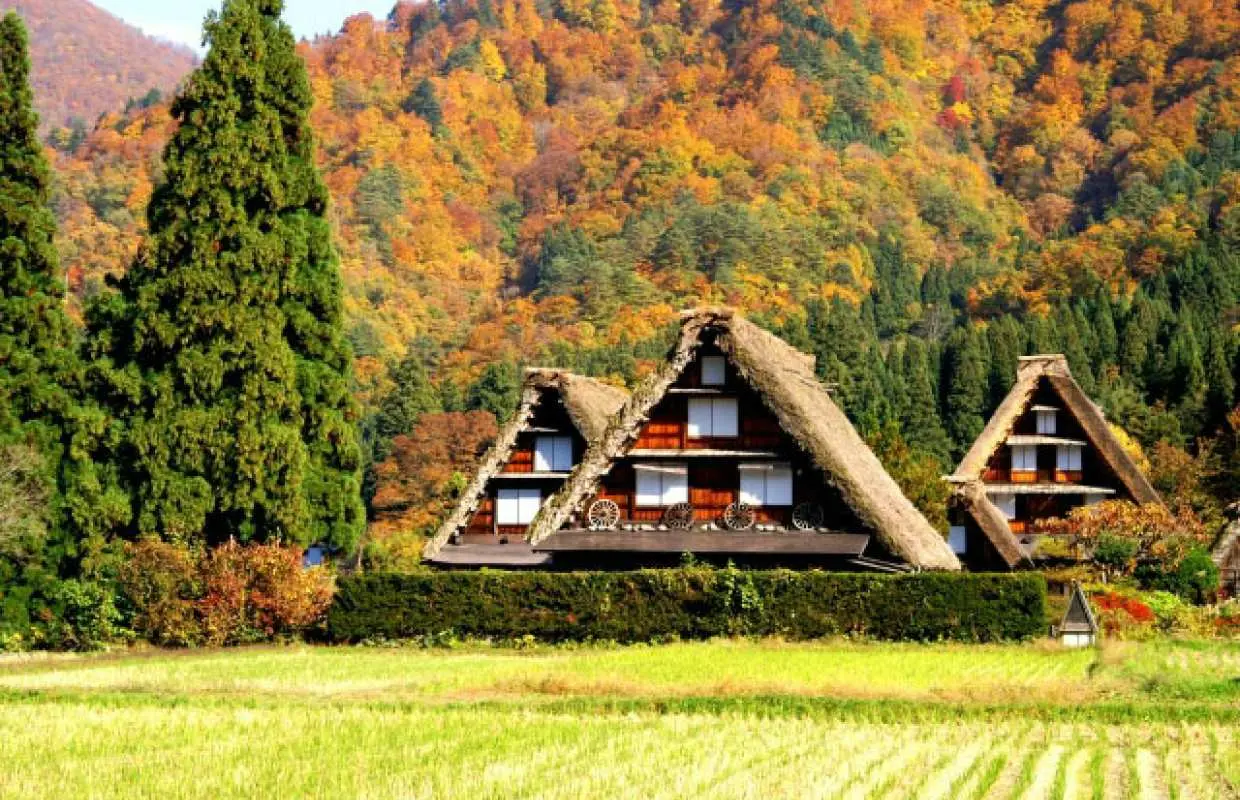
- Enjoy plenty of time to explore the UNESCO World Heritage site Shirakawa-go!
- For dinner, a half-buffet featuring boiled red snow crab awaits you
- Stay at Gero Onsen – Breezbay Hotel & Resort Gero.
Sightseeing Tours
| Tour Type | Shared tour |
Product Info
Purchase Notice
This tour is a Japanese tour. The tour conductor will provide language support using a translator (Pocket Talk).
This is not a private tour; you will enjoy the tour with other guests.
If the minimum number of participants (20) is not met by (14) days before the scheduled date, the tour on that date might be canceled.
Please note that odd-numbered groups will generally share seats on the bus.
The best time to see the autumn leaves in Korankei is mid- to late November, but this may vary depending on the weather, so please be aware of this in advance.
For the first hour after checking into the inn, enjoy free all-you-can-drink welcome drinks such as draft beer, highballs, and coffee as happy hour!
From 9pm to 10pm, we serve "Takayama Ramen" as a midnight noodle dish!
For dinner, we offer a half-buffet, including all-you-can-eat red snow crab!
Reminders
Important Notes During Bus Tour
Please refrain from drinking alcohol on the bus.
Members of the odd-numbered group may need to share seats with other passengers on the bus.
As stipulated by Japanese law, please wear your seat belt on the tour bus.
Please remain seated and avoid walking while the tour bus is moving.
Seating on the bus is assigned by H.I.S staff. Please do not change your seat during the tour.
Please be punctual and arrive at the designated meeting place on time. The bus will depart on time and will not wait for latecomers.
Latecomers who wish to rejoin the group will be responsible for all transportation fees.
Please wear the sticker provided by the tour guide visibly.
Avoid sticking the sticker on leather goods, as it may leave marks.
Do not use the seat reclining function or adjust the seat settings.
Please set all electronic devices, including mobile phones and game consoles, to silent mode.
Talking on mobile phones and making video calls are prohibited on the tour bus.
Smoking is strictly prohibited on the tour bus.
Arrival times at each sightseeing spot may vary depending on traffic conditions.
The use of drones for filming or other purposes is prohibited during the tour.
Please do not use perfume, sprays, or change baby diapers on the bus, as it may disturb other passengers.
Manage your valuable belongings yourself.
After the tour, please take all your trash with you and do not leave any on the bus.
Ensure you do not forget or leave any personal belongings on the bus after the tour.
If you fail to follow these regulations and cause a disturbance on the bus, you may be asked to leave the bus, even during the tour.
Cancellation Policy
- Cancellations 21 day(s) (inclusive) before the selected date are allowed. Unused orders can be canceled for free
- For cancellations made 8 to 20 days prior to selected date, a cancellation fee of 20% will apply
- For cancellations made 2 to 7 days prior to selected date, a cancellation fee of 30% will apply
- For cancellations made 1 to 1 days prior to selected date, a cancellation fee of 40% will apply
- For cancellations made 0 to 0 days prior to selected date, a cancellation fee of 50% will apply
- Due to time zone differences, the confirmed cancellation date is based on the supplier’s local time. Please allow 2–5 business days to process your cancellation request, after which the cancellation fee will be charged according to the product’s cancellation policy. Once the cancellation is confirmed, you will receive your refund within 14 working days.
FAQ
Shirakawa-go is renowned for its unique gassho-zukuri (praying hands) farmhouses, characterized by steeply sloped thatched roofs designed to withstand heavy snowfall and provide large attic spaces for silkworm cultivation. This traditional architectural style and the village's sustainable way of life in harmony with nature led to its designation as a UNESCO World Heritage site, preserving a rare example of traditional Japanese mountain village culture.
To fully experience Shirakawa-go and its unique charm, a visit of 2 to 3 hours is generally recommended. This allows sufficient time to explore the main village area, visit a few gassho-zukuri houses converted into museums (like Wada House or Kanda House), browse local craft shops, and walk up to the Shiroyama Viewpoint for panoramic views of the village. The unhurried pace lets visitors appreciate the traditional atmosphere.
Shirakawa-go is located in the remote mountain region of Gifu Prefecture, in central Japan. It lies in the Shogawa river valley, nestled among the Hakusan mountain range. Its isolated location contributed to the preservation of its distinctive traditional architecture and cultural practices, making it a significant historical and cultural site.
When visiting Shirakawa-go, must-see attractions include the iconic Shiroyama Viewpoint, offering breathtaking panoramic views of the entire gassho-zukuri village. Exploring the Wada House and Kanda House, which are open to the public, provides insight into traditional life. Walking across the Deai-bashi Bridge and strolling through the main streets, where you can observe the unique architecture up close and enjoy local cuisine, are also highly recommended experiences.
Korankei Gorge is primarily accessible by bus from Toyota-shi Station, which can be reached via train from Nagoya. During the autumn foliage season, special bus services often operate to handle the increased number of visitors. While public transportation is available, it involves transfers. Many visitors opt for organized tours, which often provide convenient direct transportation, allowing for a more relaxed travel experience without the complexities of navigating multiple public transport routes.
To fully appreciate the beauty of Korankei Gorge, especially during the autumn foliage season, it's recommended to spend approximately 2 to 3 hours. This allows ample time to stroll along the pathways by the Tomoe River, cross the picturesque Taigetsukyo Bridge, visit the historical Kojakuji Temple, and find various vantage points to admire the brilliant 4,000 maple trees. Visiting later in the day offers a chance to see the trees illuminated after dusk.
Korankei Gorge offers a spectacular natural experience, particularly during autumn when its 4,000 maple trees transform into a vibrant display of red, orange, and yellow. The unique experience includes leisurely walks along the Tomoe River, crossing the iconic Taigetsukyo Bridge, and visiting the historic Kojakuji Temple with its serene atmosphere. The gorge is especially captivating in the evening when the autumn leaves are illuminated, creating a magical ambiance that draws visitors from all over.
There is no general admission fee to enter Korankei Gorge itself. Visitors can freely enjoy the walking trails, scenic views, and explore the area, including the Taigetsukyo Bridge and Kojakuji Temple, without an entry charge. However, if driving, there might be parking fees at designated lots during peak seasons, particularly during the popular autumn foliage period.
Get Help


