


【By Osaka Castle】Learning Zen of Japanese Beauty Calligraphy in kimono
Even beginners can learn how to use the brush by practicing repeatedly. It is important to note, however, that it is important to understand the technique used, rather than just practicing in the dark. Practice will be more effective after you understand the technique.
➤Please observe and learn from the teacher's demonstration by example.
Calligraphy is a traditional Japanese culture that uses brush and ink to express characters artistically, and is appreciated for the neatness of the characters, the way the brush is carried, the shade of the ink, and the beauty of the overall arrangement.
➤Calligraphy is a traditional Japanese culture that uses brush and ink to ex
Your name is converted into Kanji characters and a calligraphy master writes a stroke on a wooden plaque. Each kanji character has its own meaning, so find out what the characters used in your name mean.
➤When writing, it is important to keep the mind quiet and focused.
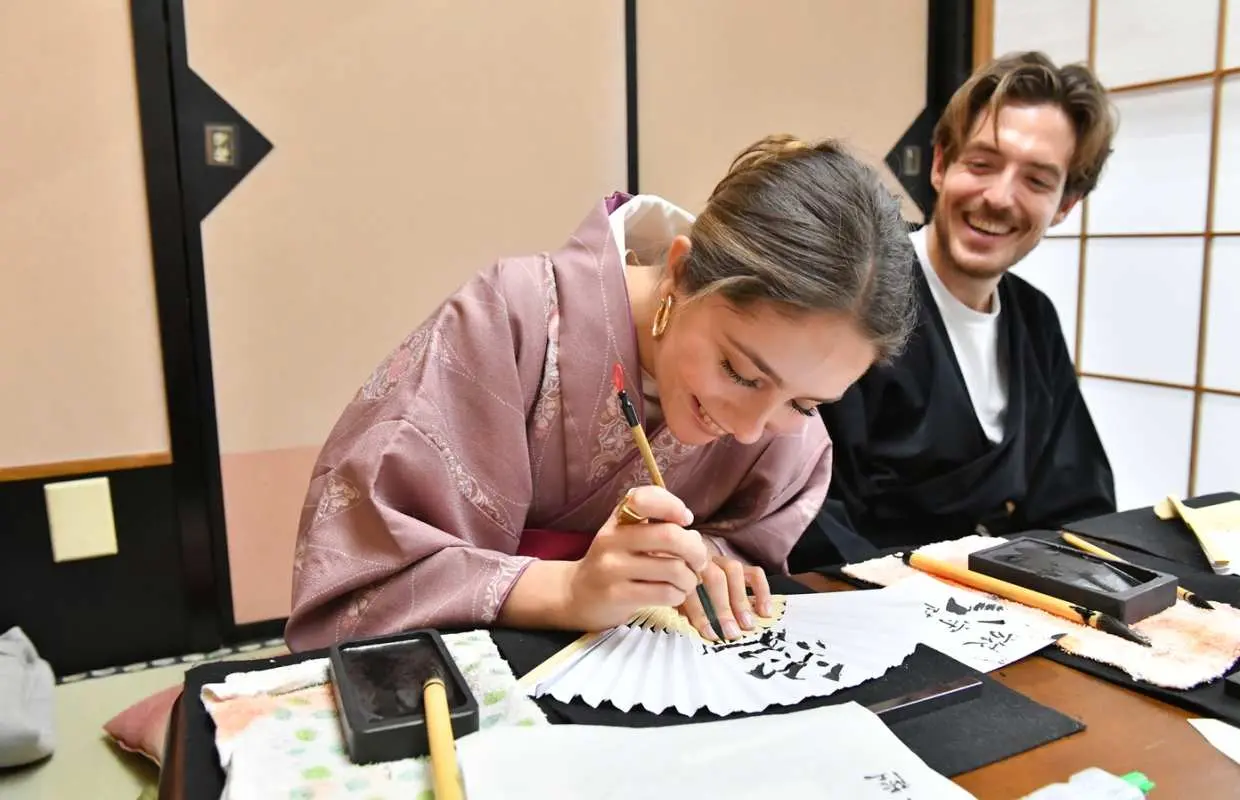
Seisho] Participants will be asked to write selected kanji characters on a fan or a piece of colored paper for calligraphy, keeping in mind what they have learned so far. The folding fan is a tool that is still very familiar to the Japanese people as it appears at milestones in their lives. You will also write on a fan, which was born in Japan.
➤ This experience plan is fun and challenging for children.
Children can also feel a sense of Japan by wearing kimonos, and the experience of calligraphy, a traditional Japanese culture, will bring children closer to the history of Japan.
➤ The whole family can enjoy it together.
For family travelers with children, experiencing traditional culture together as a family will become a precious family memory that will last for a long time to come.
Package Options
Cultural Experiences
| Activity time | Morning, Afternoon, Evening |
| Transportation method | Get there on your own |
| Location | Indoor |
| Activity level | Beginner |
| Experience type | Language learning, Costume rental, Art |
| Rental duration | 2 hours |
| Outfit type | Kimono |
| Additional service & facility | Photography service |
| Minimum participant requirement | 1 traveler |
| Cultural experience type | Ninja/Samurai experience, Calligraphy, Traditional culture experience |
Product Info
What You Can Expect
1 Day
- Preparation] ・The calligraphy contains the aesthetic sense of Japanese culture. Before experiencing calligraphy, you will be asked to change into traditional Japanese clothing. Men should wear Hakama and Dorogi and become a Samurai. Women should wear a kimono and become a Yamato Nadeshiko.
- ➤Last kanji character Reflecting on your life so far, choose one kanji character as your last word in this world. Each kanji character has its own meaning Kanji characters themselves are very popular among foreigners, as each character has its own meaning and the appearance of the calligraphic style is perceived as beautiful. Customers are asked to choose such Kanji characters.
- 【Description】 The students will gain a deeper understanding of the difference between calligraphy as a form of character decoration , which also exists overseas, and Japanese “shodo” Calligraphy is a traditional Japanese culture that uses brush and ink to express characters in an artistic way, and is appreciated for the neatness of the characters, the way the brush is carried, the shade of the ink, and the beauty of the overall arrangement.
- [Practice] Calligraphy has a delicate sense of beauty, and the subtle changes in fine lines, dots, and shading enhance its beauty. There is also an aesthetic sense of stillness, and it is important to keep one's mind quiet and focused when writing. In addition, it is important to have basic manners, such as sitting upright, keeping the back straight, and holding the brush in a straight line. ・Practice basic calligraphy techniques such as “tome,” “hane,” and "harai.
- Learn the stroke order of the chosen kanji. Please learn by observing the teacher's demonstration with a model. Japanese aesthetic sense includes “beauty of margins,” and it is believed that by being conscious of margins, not only letters but also spaces become more beautiful.
- [Basic Practice] There are basic calligraphy techniques such as “tome”, ‘hane’, and “harai” that you should practice. Each kanji character has its own meaning, so please be aware of what meaning the last character you chose has.
- Please observe and learn from the teacher's demonstration by example.
- [Seisho] With an awareness of what you have learned so far, you will write the kanji you have chosen on a half-sheet of paper for Seisho.
- The fan is still a familiar tool for Japanese people as it appears at every milestone in their lives. We will also write calligraphy on this fan, which was born in Japan.
- [Photography] ・Why don't you record your work and this experience in a space with a Japanese atmosphere and make it a memory?
- Your name is converted into Kanji characters and a calligraphy master writes a stroke on a wooden plaque. Each kanji character has its own meaning, so find out what the characters used in your name mean.
- Kakejiku/The Essence of Traditional JpnArt with 1300years of History Kakejiku in the tokonoma (alcove) can remind family members and visitors of the beauty and cultural value of the four seasons. Challenge yourself to write the kanji you have practiced on the hanging scroll or ask a master to write your mastery skills on it as a souvenir.
- This experience plan is fun and challenging for children. Children can also feel a sense of Japan by wearing kimonos, and the experience of calligraphy, a traditional Japanese culture, will bring children closer to the history of Japan.
- The whole family can enjoy it together. For family travelers with children, experiencing traditional culture together as a family will become a precious family memory that will last for a long time to come.
- The Japanese aesthetic sense includes the “beauty of margins,” and it is believed that by being conscious of margins, not only the text but also the space becomes more beautiful.


Purchase Notice
Clothing and personal belongings
You will change from casual clothes to Iaidogi (Hakama), so you can wear whatever you want.
About Rental Items (FREE)
Dressing of guests when dressing
When you wear hakama for a sword fight, you will sweat and get sweaty easily, so please wear the following clothing.
① His upper body is a long-sleeved undershirt. I ask you to put on a samue.
② The lower part of the body is an easy to move samue.
③ We have tabi socks for your feet.
④ Swim caps are available for the head.
Assistant staff will do things like wearing hakama and armor. You can't wear it alone
Includes/Excludes
- Bottled water
- Tips
- Consumption tax
- Service charge
- Tickets
- Photo Shooting - Send data to designated e-mail address
- Samurai Calligraphy Works
- English guide
- 10% Service charge
- Material fee
- Taxes
- Experience fees
- Professional coach
- Clean clothes
- Personal expenses
- Accommodation
- Transportation fare
- Insurance
- Hotel transfer
- Movie Shooting *Paid option
- Round-trip shuttle
Eligible Users
Notes
- Children (6 years and older) Adults (90 years and younger)
Reminders
time one is supposed to meet
Please arrive 30 minutes before your appointment time to change into kimono and prepare for your appointment.
Cancellation
Cancellations and changes must be notified by e-mail at least 24 hours in advance.
How to Redeem Your Voucher
How to Use Your Voucher
- Please present the e-voucher on-site
Experience Location
Location Name: SAMURAI HONOR
Address: 日本、〒536-0014 大阪府大阪市城東区鴫野西2丁目3−19 エクセレンス高山 1F
Monday 10:00–21:00 (Last Entry Time: 20:00)
Tuesday 10:00–21:00 (Last Entry Time: 20:00)
Wednesday 10:00–21:00 (Last Entry Time: 20:00)
Thursday 10:00–21:00 (Last Entry Time: 20:00)
Friday 10:00–21:00 (Last Entry Time: 20:00)
Saturday 10:00–21:00 (Last Entry Time: 20:00)
Sunday 10:00–21:00 (Last Entry Time: 20:00)

Cancellation Policy
- Cancellations 1 day(s) (inclusive) before the selected date are allowed. Unused orders can be canceled for free
- Cancellation is not allowed between 0–0 days from the selected date. Orders cannot be canceled or modified, and refunds will not be granted.
- Due to time zone differences, the confirmed cancellation date is based on the supplier’s local time. Please allow 2–5 business days to process your cancellation request, after which the cancellation fee will be charged according to the product’s cancellation policy. Once the cancellation is confirmed, you will receive your refund within 14 working days.
FAQ
The traditional name for Japanese calligraphy is "Shodo," which translates to "the way of writing." It is an esteemed art form where characters are expressed artistically using a brush and ink. This practice is appreciated for the neatness of the characters, the technique of carrying the brush, the shades of ink, and the overall beauty of the arrangement.
Yes, the Japanese calligraphy experience is thoughtfully designed to be welcoming for absolute beginners. You will receive personalized hospitality and guidance from a master calligrapher, who will teach you how to effectively use the brush. The emphasis is on understanding proper techniques through demonstration and practice, ensuring a supportive and engaging learning environment.
Beyond the art of writing, this experience integrates several enriching cultural elements. Participants have the unique opportunity to wear traditional kimonos, enhancing their immersion in Japanese aesthetics. The session also emphasizes cultivating a quiet and focused mind, embodying the Zen principles often associated with calligraphy, which fosters a deeper connection to Japanese history and culture.
Japanese calligraphy distinguishes itself through its profound emphasis on expressing artistic beauty and philosophical depth using brush and ink. It transcends mere legibility, focusing instead on the aesthetic qualities of brushstrokes, the harmony of ink shades, and the overall composition. This transforms writing into a meditative practice, reflecting inner focus, discipline, and a rich cultural heritage, setting it apart from purely functional writing or Western lettering.
Key principles for practicing Japanese calligraphy include maintaining a straight back and holding the brush in a precise, upright position, especially when adopting the traditional "seiza" sitting style (chairs are also available for comfort). Crucial focus points involve observing the teacher's demonstrations to grasp specific techniques for brush control and ink modulation, alongside cultivating a quiet and focused mind to achieve harmonious and expressive characters.
Yes, participants will receive direct hospitality and dedicated guidance from a master calligrapher throughout the session. The master provides personalized demonstrations and instructions for each student, ensuring one-on-one attention. This hands-on approach is vital for helping even beginners learn effective brush usage and understand the fundamental techniques before engaging in repeated practice.
Participants will create unique and personalized mementos to cherish. Your name will be converted into Kanji characters, with their meanings thoughtfully explained, and a calligraphy master will then write it on a wooden plaque for you. Additionally, you will have the opportunity to write selected Kanji characters on a traditional folding fan or a piece of colored paper for calligraphy, which you can keep as a meaningful souvenir.
Absolutely, this calligraphy experience is thoughtfully designed for the entire family, including children. Children can fully immerse themselves in Japanese culture by wearing kimonos and participating in the traditional art of calligraphy, which helps them connect with Japan's rich history. It offers a fun, challenging, and profoundly memorable cultural activity for families to enjoy collaboratively.
Get Help


