

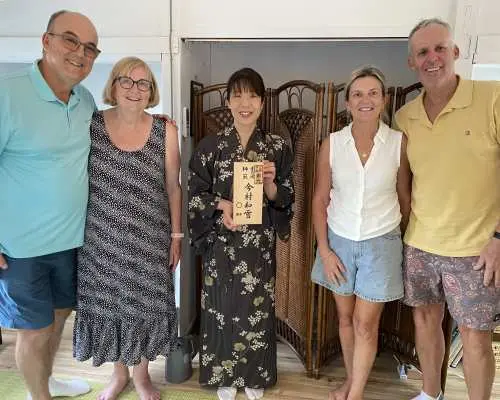


Tea Ceremony in a Century-old Japanese Town House(Oita Beppu, Japanese Culture Experience)
- Experience an authentic Japanese tea ceremony with expert guidance.
- Enjoy the ceremony in a renovated century-old town house.
- Learn from a local instructor dressed in traditional kimono.
- Understand the history and rituals of the tea ceremony.
- Savor traditional Japanese sweets with your tea.
Cultural Experiences
| Location | Indoor |
| Cuisine type | Wagashi (Japanese sweets) |
| Outfit type | Kimono |
| Cultural experience type | Japanese tea ceremony |
Product Info
What You Can Expect
1 Day
- Meet at Space Beppu
- Explanation of the process, method, and terms of use
- Greet the tea ceremony instructor
- Begin the experience


Important Info
Includes/Excludes
How to Redeem Your Voucher
How to Use Your Voucher
- Please present the e-voucher on-site
Experience Location
Location Name: Space Beppu
Address: 12-9 Chiyo-machi, Beppu City, Oita 874-0942, Space BeppuCancellation Policy
- Cancellations 11 day(s) (inclusive) before the selected date are allowed. Unused orders can be canceled for free
- For cancellations made 8 to 10 days prior to selected date, a cancellation fee of 20% will apply
- For cancellations made 2 to 7 days prior to selected date, a cancellation fee of 30% will apply
- For cancellations made 1 to 1 days prior to selected date, a cancellation fee of 50% will apply
- Cancellation is not allowed between 0–0 days from the selected date. Orders cannot be canceled or modified, and refunds will not be granted.
- Due to time zone differences, the confirmed cancellation date is based on the supplier’s local time. Please allow 2–5 business days to process your cancellation request, after which the cancellation fee will be charged according to the product’s cancellation policy. Once the cancellation is confirmed, you will receive your refund within 14 working days.
FAQ
Visitors should observe several etiquette points during a Japanese tea ceremony. These include removing shoes before entering, bowing upon entry and exit, and handling the tea bowl with respect. It's customary to turn the tea bowl to appreciate its design before drinking. The instructor will guide guests through each step, ensuring a comfortable and respectful experience in the traditional setting.
For a participation-based Japanese tea ceremony experience, guests are generally not expected to bring gifts for the host. The focus is on immersing yourself in the cultural practice and enjoying the hospitality. Your presence and respectful engagement are considered the most valued gesture. If you wish to show appreciation, a heartfelt thank you in Japanese or English is always welcome.
The Japanese tea ceremony is deeply rooted in principles like harmony (wa), respect (kei), purity (sei), and tranquility (jaku). These values guide every aspect, from the preparation of the tea to the interaction between host and guest, fostering a peaceful and reflective environment. The ceremony emphasizes mindfulness, appreciating the present moment, and finding beauty in simplicity.
This tea ceremony offers a unique cultural immersion by being held in a beautifully renovated century-old Japanese town house in Beppu. The historical architecture provides an authentic ambiance, enhancing the traditional experience. Guests learn directly from a local instructor dressed in a kimono, offering insights into the history and intricate rituals of the tea ceremony in a truly immersive setting.
To participate in a Japanese tea ceremony experience in Beppu, you typically book online in advance. Most platforms offer various secure payment options, allowing you to confirm your reservation conveniently. Booking through KKday allows for easy selection of your preferred date and time, ensuring a seamless reservation process and securing your spot for this authentic cultural activity. The experience usually includes the tea ceremony itself, instruction, and traditional Japanese sweets.
Guests can expect a truly authentic experience, beginning with the serene atmosphere of a traditional tea room. You will observe or participate in the precise preparation of matcha green tea using traditional utensils like the chawan (tea bowl) and chasen (bamboo whisk). An expert instructor in a kimono will guide you through the rituals, explaining the significance of each step and encouraging mindfulness.
The century-old town house provides an authentic glimpse into traditional Japanese architecture and lifestyle. Such a historical setting offers a profound connection to the past, making the tea ceremony experience more immersive and meaningful. It allows guests to appreciate the art form within its intended cultural context, away from modern distractions, reflecting a preserved slice of Japanese heritage in Beppu.
Yes, traditional Japanese sweets, known as 'wagashi,' are an integral part of the Beppu tea ceremony experience. These beautifully crafted sweets are served before the matcha tea. Their delicate sweetness helps to balance the slight bitterness of the matcha and cleanse the palate. Wagashi often reflect the current season, adding another layer of cultural appreciation to the ceremony.
Get Help


