



New Taipei City Art Museum | Thomas Salacheno: Co-weaving the Universe
- The "Weaving the Universe" exhibition brings together the essence of Tomás Salacheno's work over the past two decades, delivering a stunning visual experience.
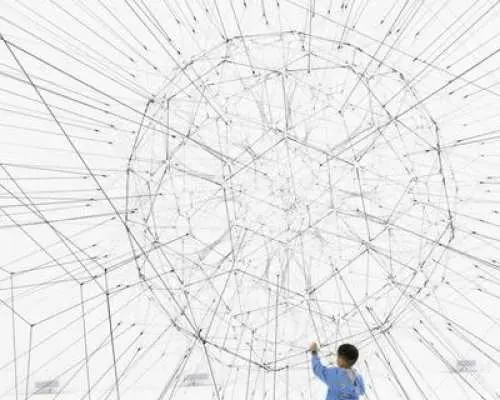
- Through sculptures, sound, and light installations, viewers will be placed in a relational field that resembles a spider web.
- The exhibition, centered on ecological philosophy, invites visitors to rediscover the possibility of air, light, and the coexistence of all things.
- Book your tickets now and experience firsthand the shift in perspective from "human-centered" to "atmospheric-centered".
Package Options
Attraction Tickets
| Ticket type | E-ticket (direct entry) |
| Attraction type | Modern art, Classical art |
Product Info
"Weaving the Universe" is Tomás Saraceno's first major solo exhibition in Taiwan. The exhibition invites viewers to perceive the world through the "Web of Life," learning from air, spiders, clouds, spores, seeds, dark matter, soot and particulate matter, and the universe itself. In the immersive installations, the structure of spiders and their webs, along with a "flying museum" made from recycled materials, serve as vehicles for imagining multiple futures. Simultaneously, viewers will also witness the results of the artist's long-term collaboration with the indigenous communities of the Salinas Grandes in northern Argentina.
This collaboration, centered on eco-social justice, draws upon ancestral knowledge and combats the socio-political and economic structures underlying the global majority and minority forces driving ecological crises and resource exploitation. Within this context, "sustainability" is no longer merely an abstract ideal, but a coexistence issue requiring continuous questioning, reflection, and practice.
The environmental movement that emerged in the 1970s was strongly driven by a desire for redemption, viewing "nature" as something in need of protection and restoration, and attempting to return the world to its pre-industrial, pristine state. However, in the 21st century, humanities and social science scholars proposed the concept of the "Anthropocene," arguing that humans are no longer merely influencing the environment, but have become a geological force altering the planet. Climate, oceans, land, and life are now inextricably intertwined with human history and actions. Therefore, environmental issues have shifted from prevention and remediation to a more fundamental question: when we cannot return to an unpolluted world, how can we coexist with this world and with other life forms?
Some scholars argue that the contemporary world should be called the "Capitalocene." This concept emphasizes that the current global crisis does not stem from "all of humanity," but is closely related to the capitalist system's relentless pursuit of profit, growth, and resource extraction—leading to climate change, mass extinctions, and pollution. This critique also challenges the notion of "primitive nature," pointing out that this view has long neglected the worldview of indigenous peoples, which recognizes that humanity and nature have never been separate but have always been interdependent.
Throughout the exhibition, visitors will traverse between microscopic and planetary scales—from the spatial perception of spiders to the thermodynamic movements of the atmosphere—experiencing the invisible threads that connect our shared existence. Salaceno proposes a shift in perspective: from a capital-centric understanding to a state of perception of the "Aero(s)cenic"—a way of seeing the atmosphere and all that it intertwines with (both living and non-living things).
The exhibition invites visitors into a relational space, where art, sensory experience, and collective imagination prompt us to rethink how we interact with the world, with other life forms, and with matter itself. It encourages us to reflect on how every action and "response-ability" shapes the future of our planet and guides us to learn from diverse knowledge towards a more just, ecologically conscious, and interconnected way of coexisting like planets.
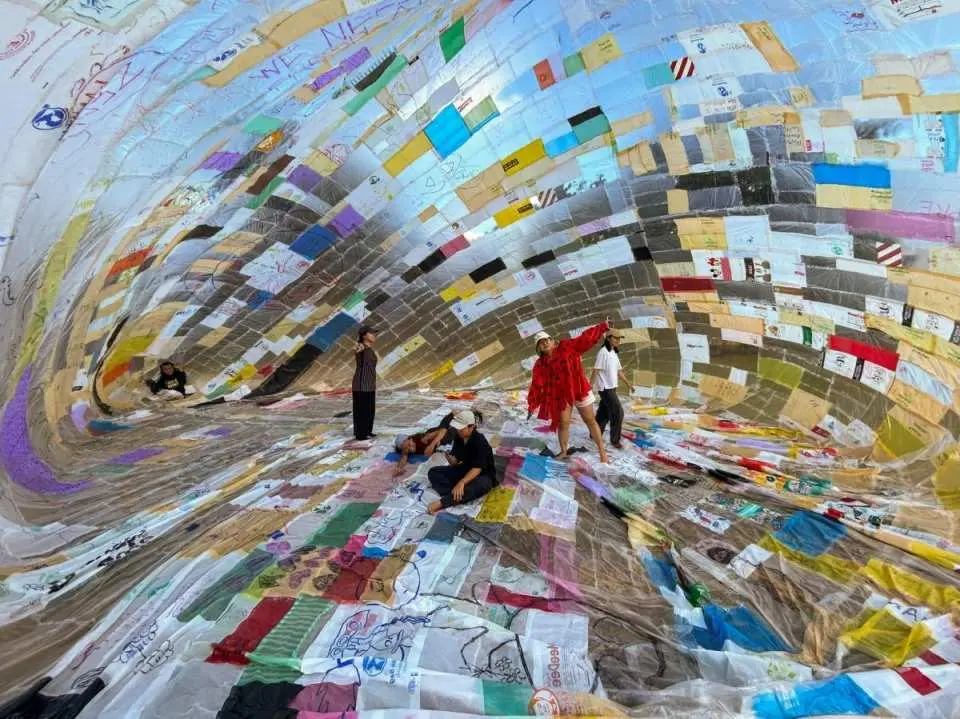
"Air and Sun Museum" at the Thailand Biennale, Chiang Rai, Thailand, 2023. Photo: Joaquín Ezcurra. Image courtesy of the Aerocene Foundation, licensed under CC BY-SA 4.0.

"Flying with the Air Age Pacha," 2020. Artwork courtesy of the Aerocene Foundation, Salinas Grandes and the Guayata-Yok Lake Indigenous Community, and Neugheim-Schneider Gallery (Berlin). Image courtesy of the Aerocene Foundation under a CC BY-SA 4.0 license.
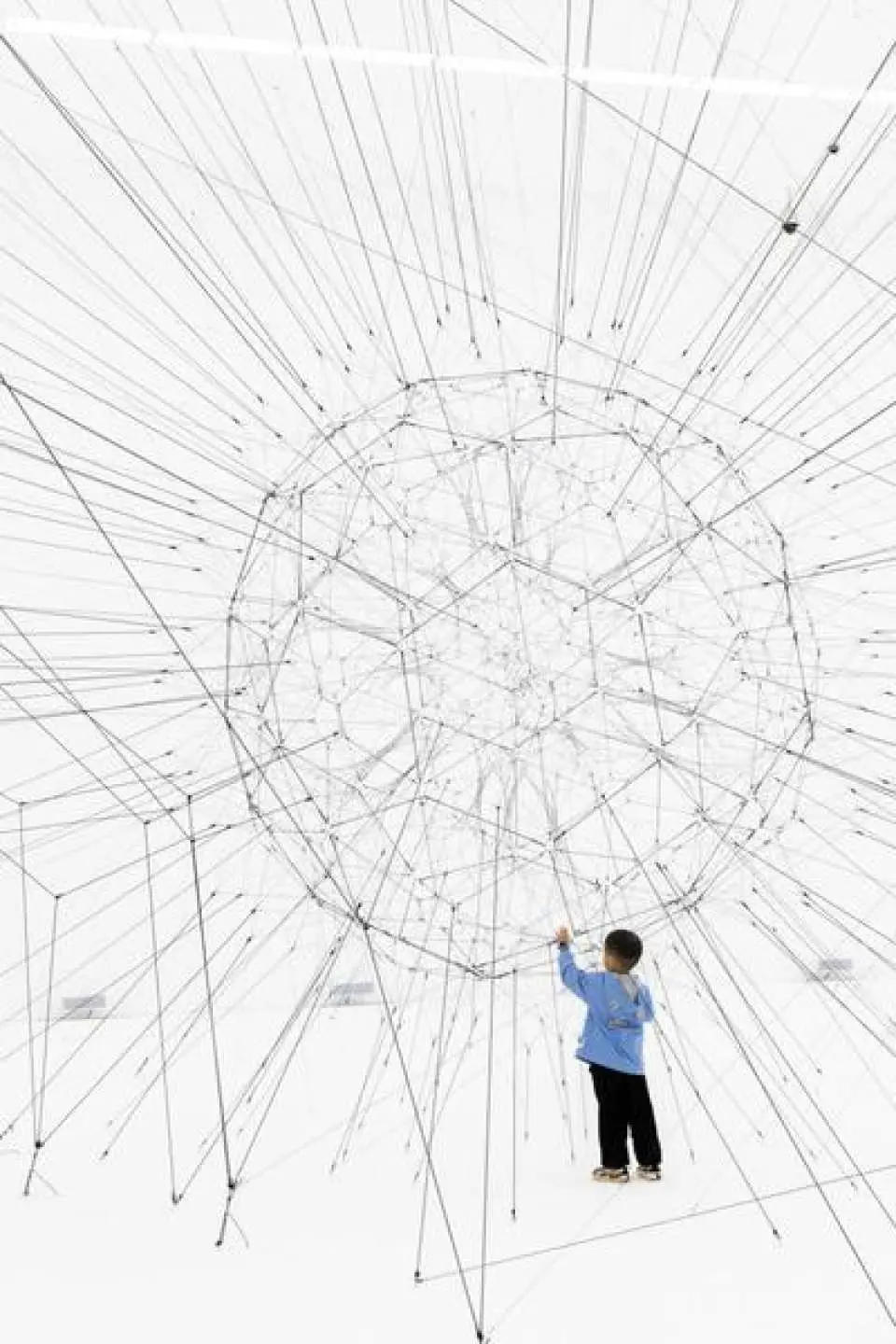
Tomás Salácerno, "Algorithm. Rhythm", 2024. View from the "Symbiosis" exhibition, Red Brick Art Museum, Beijing, 2024. Image courtesy of Tomás Salácerno Studio.
Purchase Notice
To celebrate the opening of the Sanying Line of the New Taipei City Art Museum, tickets for the special exhibition "Tomas Salaceno: Weaving the Universe" are 20% off when purchased through the New Taipei City Art Museum website or at the venue before July 30th (Thursday). This offer does not apply to KKday; please note this before purchasing tickets. To enjoy the discount, please purchase tickets through the New Taipei City Art Museum website or at the venue.
To maintain a good visitor experience and a safe environment, please cooperate with the following visitor guidelines :
- Please keep quiet while visiting the exhibition hall. Please put your mobile phone on vibrate or silent mode. If you need to answer a phone call, please do so outside the exhibition area.
- Children under the age of 12 must be accompanied by an adult aged 18 or older to enter the museum.
- Please do not touch the exhibits. When visiting, please maintain a safe distance from the artworks. For interactive exhibits, please follow the guidance of on-site staff or the instructions on the signs.
- Please refrain from eating, smoking, chewing betel nuts, and chewing gum inside the exhibition area. Please store your water bottle in your bag. If you need a drink, please go to the visitor rest area outside the exhibition hall.
- Please do not bring food, long-handled umbrellas, flammable or corrosive liquids, sharp instruments, or animals (except working dogs) into the museum. Short (folding) umbrellas, water bottles, and small personal items should be placed in your bag. Plants (including bouquets, fruits, and vegetables) must be checked in; if not retrieved on the same day, they will be destroyed. For other items that the museum deems necessary to check in or remove, please follow the instructions of on-site staff.
- Backpacks of any size or items exceeding 40x30x20 cm must be checked in. Large luggage exceeding the locker size should be checked in at the service desk.
- To ensure the safety of the exhibits, please do not wear roller shoes or use skateboards, bicycles, or push tricycles inside the venue. Wheelchairs and strollers are available for borrowing at the service desk.
- Visitors are not permitted to be shirtless, wearing t-shirts, indoor slippers, or inappropriate clothing when entering the museum.
- To avoid causing irreversible damage to the exhibits, please do not use drawing boards, clipboards, sketchbooks, etc. larger than 40x30x20 cm when sketching or taking notes in the exhibition area. Only pencils are allowed. Pencils are available for borrowing at the service desk.
- Unless otherwise specified, non-commercial photography is permitted inside the museum, but the use of professional equipment or auxiliary devices such as flash, tripods, selfie sticks, or handheld stabilizers is prohibited. To respect the intellectual property rights of the creators, please do not reproduce any video works displayed in the exhibition area.
- Commercial photography (e.g., wedding photos, product catalogs, photography lessons, etc.) or other photography that may affect the safety of the venue and the quality of the visit is not permitted inside the museum.
- The sale and distribution of advertisements, promotional materials, or other commercial, religious, and political propaganda activities are prohibited inside the museum.
Reminders
The system does not offer an order modification function. If you wish to change the quantity, you must cancel your ticket and rebook.
Once any item or gift in the package has been redeemed, returns and refunds are not accepted.
During holidays, there are large crowds, and the surrounding parking lots are likely to be full. To avoid long waits, we encourage you to use public transportation to visit. For parking information, please refer to our official website.
If there are large crowds and entry restrictions are implemented, those with limited early bird tickets will still need to enter in order according to the instructions of on-site staff.
Please be sure to pay attention to the store's business hours. If you cannot redeem during that time, please redeem during other normal business hours within the validity period.
In the event of force majeure (including but not limited to natural disasters such as typhoons, earthquakes, and torrential rains), the museum will prioritize visitor safety and reserves the right to adjust, postpone, or cancel opening hours and related activities. Such information will be announced in advance. The museum also reserves the right to modify, alter, or terminate the content of any events.
To celebrate the opening of the Sanying Line of the New Taipei City Art Museum, tickets for the special exhibition "Tomas Salaceno: Weaving the Universe" are 20% off when purchased through the New Taipei City Art Museum website or at the museum before July 30th (Thursday). This offer does not apply to KKday; please note this before purchasing tickets. To enjoy the discount, please purchase tickets through the New Taipei City Art Museum website or at the museum.
How to Redeem Your Voucher
How to Use Your Voucher
- Please present your QR code on-site
Experience Location
Location Name: New Taipei City Art Museum
Address: No. 300, Guanqian Road, Dongying Village, Yingge District, New Taipei City
- Weekdays 10:00-17:30
- Regular holidays 10:00 - 18:00
- The museum is closed every Monday, from Lunar New Year's Eve to the first day of the Lunar New Year. If a Monday falls on a national holiday, the museum will remain open as usual and close the following day.
- The museum remains open as usual during winter and summer vacations, national holidays, and consecutive holidays.
Cancellation Policy
- Free cancellation is available for unused vouchers until 2026-09-06 (inclusive)
- Due to time zone differences, the confirmed cancellation date is based on the supplier’s local time. Please allow 2–5 business days to process your cancellation request, after which the cancellation fee will be charged according to the product’s cancellation policy. Once your refund request is confirmed, KKday will initiate the refund to your original payment method within 15 days. The actual refund timing depends on your card-issuing bank’s policy.
FAQ
1. Is a ticket required to visit the 'Tomás Saraceno: Web of Life' exhibition at the New Taipei City Museum of Art, and how can I purchase one?
Yes, a ticket is required to experience the 'Tomás Saraceno: Web of Life' exhibition. You can conveniently pre-book your tickets through KKday, which allows you to secure your admission in advance and enjoy a seamless entry process upon arrival. This helps avoid potential queues at the venue.
2. What are the best public transportation options to reach the New Taipei City Museum of Art for the 'Web of Life' exhibition?
To reach the New Taipei City Museum of Art, visitors can take a train to Yingge Station. From there, the museum is accessible via local bus routes or a short taxi ride. Alternatively, buses that serve the museum area also connect from various points in New Taipei City, making public transport a convenient option for your visit.
3. What are the main highlights and unique features of the 'Tomás Saraceno: Web of Life' exhibition?
The 'Tomás Saraceno: Web of Life' exhibition presents a stunning collection of the artist's two decades of work. Visitors will experience immersive sculptures, soundscapes, and light installations that create a sensation of being within a vast, interconnected web. The exhibition encourages a profound shift in perspective, moving from an anthropocentric view to an aerocentric understanding of co-existence with air, light, and all living things.
4. What is the recommended duration for visiting the 'Tomás Saraceno: Web of Life' exhibition at the New Taipei City Museum of Art?
While specific operating hours are not provided in the product details, it is generally recommended to allocate approximately 1.5 to 2 hours to fully explore the 'Tomás Saraceno: Web of Life' exhibition. This allows ample time to engage with the sculptures, sound, and light installations and appreciate the ecological philosophical concepts presented throughout the immersive experience.
5. Are there any specific dress code requirements or visitor guidelines for entering the New Taipei City Museum of Art?
While specific dress code requirements for the New Taipei City Museum of Art are not detailed, it is generally advised to wear comfortable attire suitable for walking and extended viewing. Visitors should also be mindful of general museum etiquette, such as refraining from touching artworks and keeping noise levels down, to ensure a pleasant experience for everyone.
6. How does the 'Tomás Saraceno: Web of Life' exhibition engage visitors with its core themes of ecological philosophy and co-existence?
The 'Tomás Saraceno: Web of Life' exhibition deeply engages visitors through its multi-sensory approach. Guests are placed within intricate, web-like installations using sculpture, sound, and light, encouraging a tactile and auditory exploration of interconnectedness. This design fosters a shift from human-centered thinking to an "aerocentric" view, promoting a profound re-perception of air, light, and the shared existence of all beings in the universe.
7. What amenities and facilities are typically available for visitors at the New Taipei City Museum of Art?
While detailed information on specific amenities within the New Taipei City Museum of Art is not provided, visitors can typically expect standard museum facilities. These often include restrooms, accessibility features, and potentially areas for relaxation or light refreshments. It is always a good idea for visitors with specific needs to plan ahead.
8. What kind of artistic style or message does Tomás Saraceno convey through the 'Web of Life' exhibition?
In the 'Web of Life' exhibition, Tomás Saraceno conveys an artistic message rooted in ecological philosophy. Through his intricate installations, he challenges viewers to move beyond a human-centric worldview, encouraging an "aerocentric" perspective. This style emphasizes the interconnectedness of all life forms and the environment, inviting a deeper appreciation for air, light, and the delicate balance of our shared universe.


