


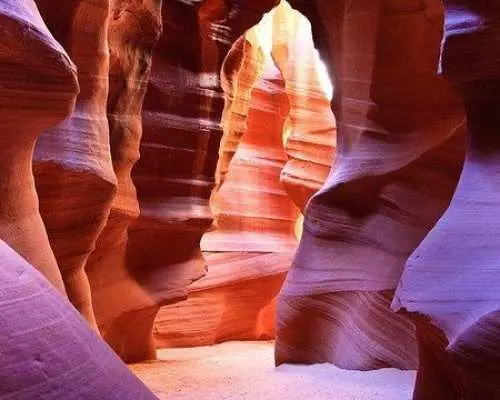


Upper Antelope Canyon Guided Tour | Arizona
- Venture out into America's scenic desert and witness the natural wonders of Arizona
- Upper Antelope Canyon is one of the great photography hotspots of the world—so keep your camera handy!
- Discover mesmerizing rock formations and light beams, and learn more about them from your guide
Package Options


Sightseeing Tours
| Tour Type | Shared tour |
| Transportation method | Transfer from meeting point |
| Sightseeing type | Natural sights |
Product Info
Purchase Notice
- Please fill in your English name as it is shown on your passport when booking. If you provide an incorrect name, you may not be able to use your ticket
- Refunds or compensation will not be granted to travelers who leave the tour halfway through or miss the entire tour due to personal reasons (e.g. lack of travel documents, late arrival, sickness, accidents)
- Bringing the following is not allowed: suitcases(including carry-on luggages), selfie sticks, tripods, strollers, drones, and pets
Reminders
Travelers with the following conditions or other health issues that could be worsened by excessive stimulation should not participate in this activity: Pregnant women
Please arrive at the designated location 30 minute(s) before the scheduled departure time, as the tour will depart on time
Travellers are not allowed to bring any bags into the canyon apart from personal belongings in a transparent bag that shows clearly what's inside. Failure to comply with this rule will result in denied participation without a refund
Please be sure to fill in the number and age of any children joining the tour. Proof of age is required on the day of the tour
Bringing the following is not allowed: bags, selfie sticks, tripods, strollers, drones, and pets
In the winter, Antelope Canyon time is an hour ahead of Las Vegas time; in the summer, Antelope Canyon time is the same as Las Vegas time
Travelers are advised to bring sunglasses, sun protection, hats, camera, and advised to wear comfortable and durable clothes
Pets and Service Animals are not allowed on the tour
FAQ
Upper Antelope Canyon is generally wider with a flat, sandy floor, making it easier to walk through. It's famous for its dramatic light beams that penetrate from above. Lower Antelope Canyon is narrower and deeper, requiring visitors to navigate ladders and stairs, offering a more adventurous, slot-canyon-like experience. Upper Canyon typically has an 'A-frame' shape, while Lower has a 'V-shape'.
Visiting Upper Antelope Canyon is considered easy with minimal physical demands. The walk inside the canyon is mostly flat on a sandy floor. There are no steep climbs, descents, or obstacles to navigate, making it accessible for most visitors. The main challenge might be walking on soft sand for the duration of the tour.
A typical guided tour for Upper Antelope Canyon usually lasts between 1 to 1.5 hours in total, including transportation to and from the canyon entrance by a local Navajo guide. The actual walking path inside the canyon is relatively short, focusing on a leisurely pace to allow for photography and appreciation of the formations.
Yes, a guided tour is mandatory to visit Upper Antelope Canyon. The canyon is located on Navajo Nation land, and access is restricted to authorized tour operators who provide certified Navajo guides. This policy ensures visitor safety, canyon preservation, and respect for the local culture.
To best capture the light beams in Upper Antelope Canyon, use a wide-angle lens and set your camera to a higher ISO and slower shutter speed due to the low light. A tripod can be beneficial, though often challenging to use in crowds. Look for the dust in the air, which makes the beams more visible. Focus on adjusting white balance to enhance the vibrant rock colors.
Visitors to Upper Antelope Canyon can expect to witness breathtaking smooth, flowing sandstone walls sculpted by water and wind over millennia. These formations create mesmerizing patterns and textures. The canyon's 'A-frame' structure allows for dramatic overhead light, illuminating the walls in shades of orange, red, and purple, and forming the famous light beams.
Upper Antelope Canyon is generally considered more accessible than Lower Antelope Canyon due to its flat, sandy floor. However, the sandy terrain might be challenging for wheelchairs or strollers. While there are no stairs or ladders, visitors with limited mobility should assess their comfort with walking on uneven, soft sand. Young children can typically navigate the path with ease.
The ideal time to witness the famous light beams in Upper Antelope Canyon is typically between late morning and early afternoon, roughly from 10:00 AM to 1:30 PM. During these hours, especially from late March to early October, the sun is positioned directly overhead, allowing its rays to penetrate deep into the slot canyon, creating the stunning light beam effect.
Get Help


