








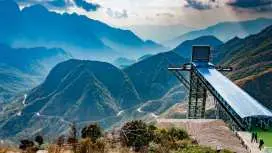





Sun World Fansipan Legend Ticket | Sapa
This package has everything including lunch at fansipan. Excellent views all round.
Anonymous user
Family


Sabah is a tropical paradise filled with natural wonders and historical sites. From climbing the Malayan Mountains, Malaysia’s highest peak, to enjoying the world’s three most beautiful sunset spots at Tanjung Aru Beach, Sabah offers countless outdoor activities and cultural experiences. Visit the capitals of Kota Kinabalu and Sandakan to explore Chinese temples, churches and English teahouses, as well as memorials and war memorials. Village tours and self-guided tours in Sabah are also very popular, allowing you to experience local life and culture in depth.
Sun World Fansipan Legend Ticket | Sapa
This package has everything including lunch at fansipan. Excellent views all round.
Anonymous user
Family
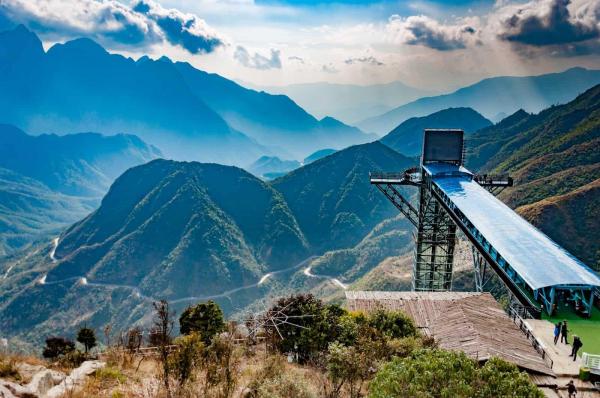
Rong May Glass Bridge in Sapa Admission Ticket | Vietnam
I really like it. The transportation is a bit inconvenient, so you have to figure out how to get there yourself.
Anonymous user
Family

Sleeper Train Ticket: Hanoi - Sapa - Hanoi
The train is very tall, and the doors aren't very big, so I suggest not bringing large luggage! If possible, you can store large luggage at the station or a hotel in Hanoi. On the day I arrived at Hanoi station with my small luggage, I wanted to store it first and then go sightseeing. As soon as I got off the train, a woman in a blue shirt ran up to me and asked if I needed to store my luggage. I said yes, and she led me to a luggage room on the right, then asked for 100k VND. I immediately contacted the sleeper train's customer service via WhatsApp, and they told me to just go to the second floor where I could store my luggage. So I quickly went to the second floor and successfully stored my luggage. The toilets and rooms on the train were very clean. Overall, it was a very good experience.
Anonymous user
Family

Shared Limousine Transfer | Route Hanoi – Sa Pa (And vice versa)
The car was in excellent condition, the driver was very friendly and punctual, providing point-to-point pick-up and drop-off services.
Anonymous user
Family
Data source: Meteostat・Last updated: 2025-09
Spring (March-May): Average 69–81°F, warm and comfortable climate with less rainfall. Common activities: Hiking, exploring rice terraces, visiting local villages. Recommended clothing: Light jacket, long-sleeved shirt, comfortable hiking shoes.
Summer (June-August): Average 78–79°F, hot and humid climate with less rainfall. Common activities: Relaxing by the river, visiting Sapa town market, enjoying coffee. Recommended clothing: Light and breathable clothing, sun hat, sunscreen.
Autumn (September-November): Average 77–68°F, comfortable climate, with more rainfall in September, gradually drying up afterwards. Common activities: Hiking, admiring rice terrace views, experiencing local culture. Recommended clothing: Comfortable and breathable clothing, adjust clothing according to weather changes.
Winter (December-February): Average 58–63°F, cool and dry climate with lower temperatures. Common activities: Admiring mountain scenery, experiencing traditional Sapa culture, enjoying hot drinks. Recommended clothing: Warm jacket, sweater, long pants, scarf.
Annual average temperature: approx. 72.1°F / Annual rainfall: approx. 70 mm / Summer humidity: 60%–70% / Rainiest month: September
| Month | January | February | March | April | May | June | July | August | September | October | November | December |
|---|---|---|---|---|---|---|---|---|---|---|---|---|
| Temperature | 58.5°F | 63.9°F | 70°F | 81.3°F | 78.1°F | 78.8°F | 79.2°F | 78.4°F | 77.5°F | 73.4°F | 68.7°F | 58.5°F |
| Rainfall (mm) | 2.3 | 0.5 | 1.8 | 1.4 | 9.7 | 9.9 | 8.5 | 9.8 | 18.5 | 6.5 | 0.2 | 1 |
| Date | 11/9Monday | 11/10Tuesday | 11/11Wednesday | 11/12Thursday | 11/13Friday | 11/14Saturday | 11/15Sunday |
|---|---|---|---|---|---|---|---|
| Weather |  Light drizzle |  Overcast | Overcast | Light drizzle |  Fog |  Sunny |  Patchy rain nearby |
| High | 63°F | 56°F | 57.2°F | 54.2°F | 58.1°F | 65.7°F | 67.4°F |
| Low | 43°F | 43.5°F | 47.6°F | 50.4°F | 50°F | 52.5°F | 57.7°F |


