

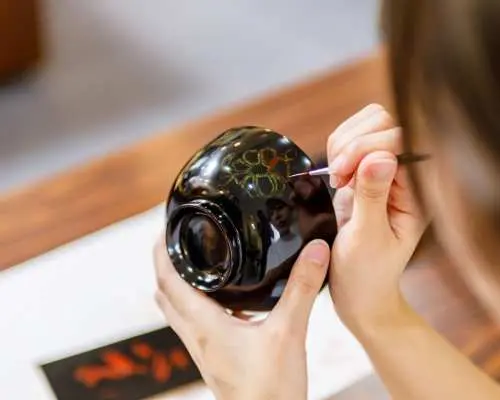


【Akita-Yuzawa】Make your own pattern lacquerware! Lacquerware craft work Experience
- Make your own pattern lacquerware! One of Japanese traditional technique is Lacquerware craft work. You can experience lacquerware craft work in traditional area. 【Provider: Satoshoji】
Product Info
What You Can Expect
Purchase Notice
Includes/Excludes
- Experience fees
Reminders
From December to March, Yuzawa City becomes a snowy land. If you are coming by public transport or car, please be careful on snowy roads.
How to Redeem Your Voucher
How to Use Your Voucher
- Please present your e-voucher and passport on-site
Experience Location
Location Name: Sato Shoji
Address: 秋田県湯沢市川連町大舘字大舘35-1Cancellation Policy
- Free cancellation!
- Due to time zone differences, the confirmed cancellation date is based on the supplier’s local time. Please allow 2–5 business days to process your cancellation request, after which the cancellation fee will be charged according to the product’s cancellation policy. Once your refund request is confirmed, KKday will initiate the refund to your original payment method within 15 days. The actual refund timing depends on your card-issuing bank’s policy.
FAQ
1. What type of craft is Akita-Yuzawa lacquerware?
Akita-Yuzawa lacquerware is a traditional Japanese craft known for its durable and beautiful finishes. It involves applying multiple layers of natural lacquer (urushi) derived from the sap of lacquer trees onto various base materials like wood. This technique not only protects the items but also creates deep, lustrous surfaces, often adorned with intricate patterns and designs, making each piece a work of art and a practical item.
2. What is the traditional name for Japanese lacquerware?
Traditional Japanese lacquerware is commonly known as "urushi" or "urushi-nuri." The term "urushi" refers both to the natural lacquer sap used and the art form itself. This ancient craft has a rich history in Japan, with various regions developing their unique styles and techniques, such as the Akita-Yuzawa lacquerware, which carries on this esteemed tradition.
3. What steps are typically involved in making Akita-Yuzawa lacquerware?
The creation of Akita-Yuzawa lacquerware involves several intricate steps. It begins with preparing a base material, often wood. Then, multiple thin layers of urushi lacquer are applied, with each layer requiring careful drying and polishing. This meticulous process can take a significant amount of time, sometimes months, to achieve the desired depth, strength, and brilliant sheen. Decorative techniques like drawing patterns or inlaying materials are often added between layers.
4. What kind of patterns can be created in an Akita-Yuzawa lacquerware craft experience?
During an Akita-Yuzawa lacquerware craft experience focused on creating your own patterns, you can typically explore various design possibilities. Participants often use techniques to draw or engrave unique designs onto the lacquered surface. This allows for personalized expressions, from traditional Japanese motifs like flowers, birds, or landscapes, to contemporary abstract patterns, making each crafted piece distinctly your own.
5. What are some typical examples of items made from Akita-Yuzawa lacquerware?
Akita-Yuzawa lacquerware is traditionally used to craft a wide array of functional and decorative items. Common examples include tableware such as bowls, trays, and chopsticks, which are highly valued for their beauty and durability. Other items include decorative boxes, traditional writing instruments, and various personal accessories. These pieces often showcase the distinct regional craftsmanship and artistic elements unique to Akita-Yuzawa.
6. How can one identify authentic Akita-Yuzawa lacquerware?
Identifying authentic Akita-Yuzawa lacquerware often involves looking for specific characteristics. Genuine lacquerware has a deep, smooth, and lustrous finish that feels warm to the touch. It is typically lightweight yet remarkably durable. Look for the precision of the decorative work, the evenness of the lacquer layers, and craftsmanship details that speak to traditional techniques. Reputable artisans and established workshops in the Akita-Yuzawa region usually guarantee authenticity.
7. Is Akita-Yuzawa lacquerware safe for use with food?
Yes, high-quality Akita-Yuzawa lacquerware is generally safe for use with food. The natural urushi lacquer, once fully cured, is food-safe, hygienic, and non-toxic. It provides a durable, water-resistant surface ideal for tableware like bowls and trays. However, it's important to ensure the lacquerware is properly made and fully cured to ensure its safety and longevity when in contact with food.
8. What is the recommended way to care for Akita-Yuzawa lacquerware items?
To preserve the beauty and longevity of Akita-Yuzawa lacquerware, avoid prolonged exposure to direct sunlight, extreme temperatures, and excessive humidity. When cleaning, use a soft cloth dampened with lukewarm water; abrasive sponges or harsh detergents should not be used. After washing, gently wipe it dry immediately. Proper care ensures the lacquerware maintains its exquisite finish for many years.
Get Help


