
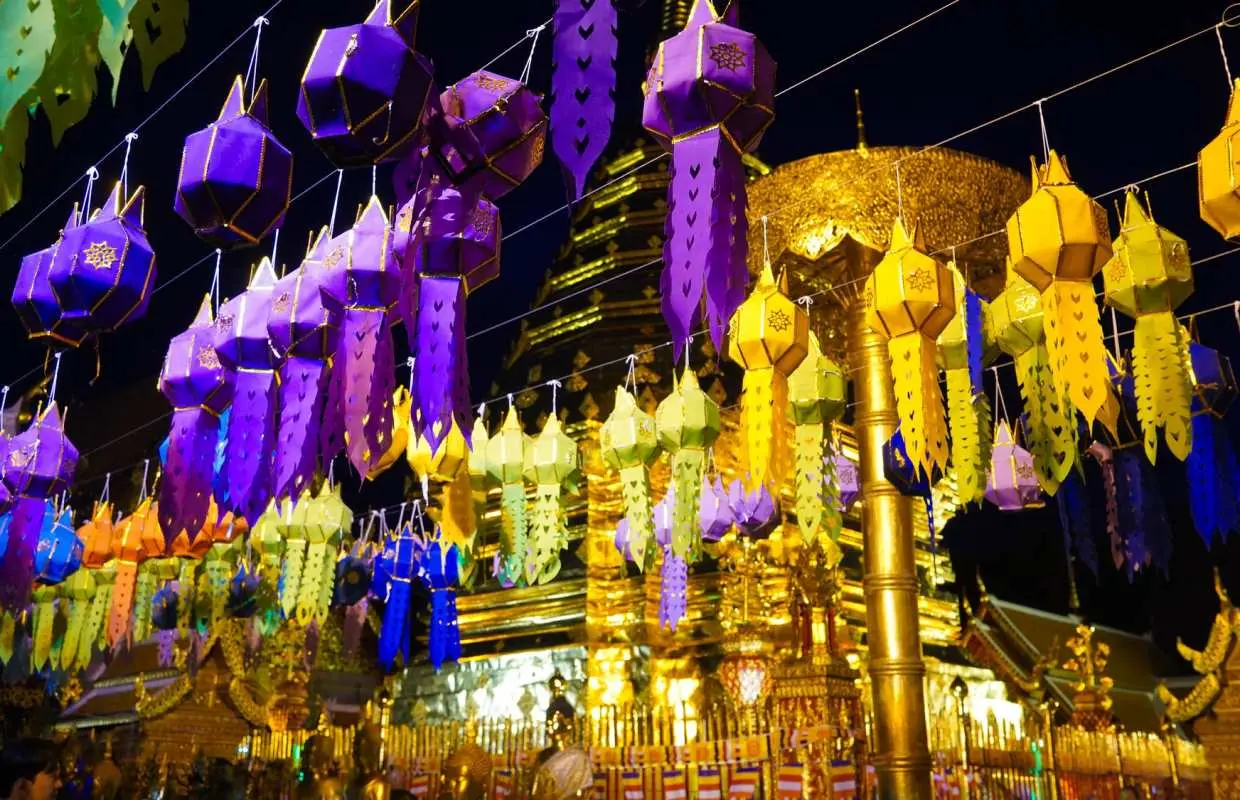


Wat Umong + Night Doi Suthep Tour Chiang Mai - Korean Speaking Guide
- 치앙마이 필수 코스인 왓우몽 사원, 도이수텝 사원을 둘러보실 수 있어요.
- 치앙마이 감성을 느낄 수 있는 명소들에서 인생샷을 남겨보세요.
- 한국어 가이드가 진행하기 때문에 편안하게 이용하실 수 있어요.
Product Info
Purchase Notice
- Children under 2 years old are free of charge. However, since they are not assigned a separate vehicle seat, they must be carried by a guardian.
- Pickup at the deer statue in front of the main entrance of the Yu Nimman Chiang Mai Hotel will be after the Night Bazaar pick-up, so the vehicle may be delayed by 5-10 minutes depending on local traffic conditions. (However, if the vehicle arrives before 17:00, it will wait until 17:00 and then depart.)
- If you are late for the meeting time, please contact us in advance, but we will not be able to wait for you due to other guests joining. If you are late, you will be processed as a no-show and cannot be changed, cancelled, or refunded, so please arrive early and on time.
- The vehicle is a passenger van with a maximum seating capacity of 12, and child seats are not provided.
- You cannot bring carriers, strollers, or wheelchairs on the join tour.
- Although it rains frequently during the rainy season, the tour will proceed as normal. (Cancellation or change on the same day due to rain is difficult.)
- If departure is not possible, we will contact you individually to inform you of schedule changes/cancellations.
- The time and schedule may change depending on the tour progress on the day.
- After the tour, you can tell your guide where you would like to get off: Nimman or Night Bazaar.
Reminders
A minimum of 4 traveler(s) are required for the tour to depart. If the number of participants does not reach the minimum requirement, the tour will be canceled. An email regarding tour cancellation will be sent 2 day(s) before the departure date
FAQ
1. What can visitors experience at Wat Umong in Chiang Mai?
Wat Umong offers a serene escape with its unique network of ancient meditation tunnels, providing a cool and quiet environment for reflection. Visitors can explore the dimly lit tunnels, admire Buddha statues, and visit the temple's ancient stupa. The surrounding forest temple grounds, known as 'Tunnel Temple,' also feature a dharma talk area, a pond, and a 'talking trees' area with wise sayings, fostering a peaceful and spiritual atmosphere.
2. What is the cultural significance of Wat Umong and its unique features?
Wat Umong is significant as one of Chiang Mai's oldest forest temples, established in the late 13th century. It serves as a center for meditation and Buddhist learning, emphasizing practical application of Dharma. Its most unique feature is the labyrinthine system of tunnels, built for monks to meditate in solitude. The temple's ancient stupa, set within lush greenery, further adds to its historical and spiritual importance as a tranquil sanctuary.
3. Is it recommended to visit Doi Suthep for its night view, and what are the highlights?
Visiting Doi Suthep at night is highly recommended for a truly magical experience. The primary highlight is the breathtaking panoramic view of Chiang Mai city, sparkling with countless lights below. The temple itself, Wat Phra That Doi Suthep, is beautifully illuminated, with its golden chedi glowing against the dark sky. The cooler temperatures and fewer crowds at night create a more tranquil and intimate atmosphere for appreciating this iconic landmark.
4. How much time should travelers expect to spend at Wat Umong and Doi Suthep?
For Wat Umong, travelers typically spend about 1 to 1.5 hours exploring the tunnels, stupa, and forest grounds. For Doi Suthep, allow approximately 1.5 to 2 hours to ascend the Naga staircase, explore the main temple complex, admire the golden chedi, and take in the panoramic city views. When visiting both on a joint tour, the total experience, including travel between sites, usually spans several hours, making for a comprehensive cultural immersion.
5. What is the appropriate temple etiquette and dress code for visiting Wat Umong and Doi Suthep?
When visiting sacred sites like Wat Umong and Doi Suthep, it's essential to show respect. The dress code requires covering shoulders and knees; wear long pants, skirts, or dresses, and shirts with sleeves. Before entering temple buildings, remember to remove your shoes. Maintain a respectful demeanor, speak softly, and avoid pointing your feet at Buddha images or monks. If taking photos, be discreet and respectful of those praying or meditating.
6. What tips are useful for capturing memorable night view photos at Doi Suthep?
To capture stunning night photos at Doi Suthep, consider using a tripod for stability during long exposures. A wider aperture lens can help gather more light, and keeping the ISO low minimizes noise. Arriving just before sunset allows you to capture the 'blue hour,' where the sky turns a deep blue while city lights begin to twinkle. Experiment with different compositions, focusing on the illuminated golden chedi and the sprawling city lights below.
7. How does a Korean guide enhance the visit to Wat Umong and Doi Suthep?
A Korean guide significantly enhances the visit by bridging language barriers, allowing for deeper engagement with the rich history and cultural nuances of both Wat Umong and Doi Suthep. They can provide detailed explanations of Buddhist traditions, local customs, and the significance of various temple features. This expert guidance ensures a smoother, more informative, and culturally immersive experience, transforming sightseeing into a meaningful journey with local insights.
8. What makes visiting both Wat Umong and Doi Suthep together a popular choice for tourists in Chiang Mai?
Visiting Wat Umong and Doi Suthep together is popular because they offer contrasting yet complementary cultural and scenic experiences. Wat Umong provides a unique, serene forest temple atmosphere, ideal for quiet contemplation within its ancient tunnels. Doi Suthep, perched high on a mountain, delivers grand architectural splendor and magnificent panoramic views of Chiang Mai, especially captivating at night. This combination allows tourists to experience both the peaceful spiritual depth and the iconic grandeur of Chiang Mai's temples.


