The tour offered excellent value for money, taking us to the places we wanted to see. Each stop was reasonably long, allowing us a brief look at several famous Hokkaido attractions.
However, the tour bus was rather small, with narrow seats, and the ride was quite bumpy.
I was going from Sapporo to Hakodate, so I bought a five-day JR pass for 22,000 yen, which was quite expensive. But I was guaranteed a seat in the reserved area, so it was acceptable!
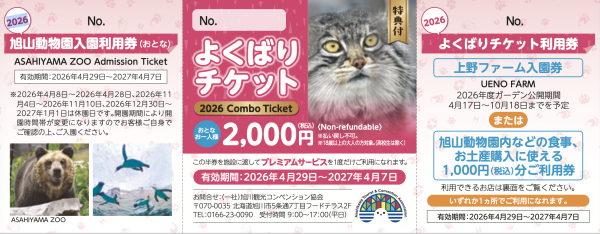
A proper meal at the restaurants or other shops near the East Gate will easily cost over 1000 yen. I was able to use coupons to get a better deal than usual.
My visit to Asahiyama Zoo was a very pleasant experience, especially the smooth ticket purchase and entry process. I bought my tickets through KKday, so I didn't need to queue at the machines or windows; I could simply show my QR code to enter, saving a lot of valuable time.
The zoo's layout is very well-designed, and the animals have ample space to roam, allowing them to showcase their natural habitats. The zoo also houses many animals unique to Hokkaido. I visited in early July, and it started pouring rain as I entered through the main gate. There was no rain shelter along the path from the main gate to the penguin enclosure, but thankfully I had brought an umbrella and raincoat. To save time, I braved the rain and only stopped briefly at the penguin enclosure. There, I observed the penguins up close, noting their adorable postures and their graceful swimming. I waited until the rain subsided before continuing my journey.
Asahiyama Zoo boasts a variety of animals from land, sea, and air, but the Pallas's cat was a delightful surprise for me. This was the first time I had ever seen such a high-altitude creature in a zoo. The Pallas's cat is the oldest living species of feline, its posture unchanged for 15 million years. Living in cold regions, its long, dense fur gives it a round, plump appearance, and its thick coat keeps its belly warm even on snowy ground. Its low-set ears and high-set eyes allow it to easily observe its surroundings in rocky areas with little cover, making it quite fascinating.
Another must-see is the Ezo deer, Hokkaido's signature animal. Although common in the wild in Hokkaido, it can be observed up close here. The white spots on its fur are summer-only, resembling sunspots in the forest, helping to camouflage its form; both calves and adults have these spots in summer. Ezo deer have incredibly keen senses, with a field of vision reaching 300 degrees Celsius and a sense of smell so acute it can detect the scent of wolves. Furthermore, the male deer's antlers naturally shed each spring and regrow, fully mature by autumn—a feature evolved to compete for mates.
Regarding visiting recommendations, there are restaurants and gift shops at both the main entrance and the east entrance, but I highly recommend dining and buying souvenirs at the east entrance. Because the East Gate is located on a hill, the adjacent observation deck offers a panoramic view of the entire city of Asahikawa, providing excellent visibility. My itinerary was to enter the park at 11:00 AM, have lunch and do some shopping at the East Gate, and leave the park by 3:00 PM – a perfect time allocation. Overall, Asahikawa Zoo is a well-designed and ecologically rich destination, highly recommended.
Anonymous user
Solo traveler
Best time to visit Asahikawa
Data source:Meteostat Last updated:2025-09
Weather in Asahikawa throughout the year
Spring (March–May): Average 0–13°C, with fluctuating temperatures and a significant difference between day and night temperatures. Rainfall is moderate. Common activities: Viewing the melting snow scenery, enjoying spring outings, and visiting facilities related to the Asahikawa Winter Festival. Recommended clothing: Warm jacket, sweater, long pants, and rain gear.
Summer (June–August): Average 18–23°C, warm and humid, with relatively high rainfall, particularly in August. Common activities: Outdoor activities, mountain climbing, and visiting Asahiyama Zoo. Recommended clothing: Light and breathable clothing, short-sleeved shirts, and rain gear.
Autumn (September–November): Average 4–18°C, cool and comfortable, with relatively high rainfall and a large temperature difference between morning and evening. Common activities: Autumn foliage viewing, enjoying onsen (hot springs), and savoring seasonal autumn cuisine. Recommended clothing: Light jacket, long-sleeved shirts, and comfortable shoes.
Winter (December–February): Average -7–0°C, cold and dry, with frequent snowfall and low temperatures. Common activities: Skiing, ice sculpture festivals, and snow activities. Recommended clothing: Thick warm clothing, down jacket, snow boots, hat, gloves, and scarf.
Weather in Asahikawa
Annual average temperature: approx. 8°C / Annual rainfall: approx. 1198 mm / Summer humidity: 65%–75% / Rainiest month: August
Asahikawa weather by month
Month
Temperature (°C)
Rainfall (mm)
January
-7.2°C
66.7
February
-5.8°C
47.3
March
0.4°C
51
April
8°C
49.3
May
13.4°C
70.3
June
18°C
121.7
July
22.8°C
142.7
August
23.2°C
186
September
18.1°C
120.7
October
10.5°C
120.7
November
4°C
115.3
December
-4.5°C
106.3
7-day weather forecast for Asahikawa
11/5
Thursday
Overcast
12.8°C/-0.9°C
11/6
Friday
Patchy rain nearby
11°C/2.8°C
11/7
Saturday
Blizzard
2°C/-1.7°C
11/8
Sunday
Heavy snow
1.3°C/-3.6°C
11/9
Monday
Heavy snow
-0.4°C/-8.4°C
11/10
Tuesday
Light freezing rain
-0.1°C/-9.9°C
11/11
Wednesday
Light snow
2.8°C/-3.2°C
KKday App
Your Best Travel Buddy
Use the code APP5OFF to enjoy an exclusive in-app deal of 5% off (cap at USD$3) on your 1st orderScan here to download the app