


【Departing from Nagoya】Inuyama Castle + Kokeizan Eiho-ji Temple + Magome-juku + Tsumago-juku | Light Luxury Small Group Day Tour (Tickets Included)
【Pure Tour Small Group】Bookable from 1 person, 4 people required for a group
【Thoughtful Service】Experienced driver, lunch booking service available for the day
【Door-to-door pick-up available】Door-to-door pick-up/drop-off for hotels within 2km of Nagoya Station, or meet at a designated meeting point
Package options


Sightseeing Tours
| Tour Type | Shared tour, Small Group |
| Transportation method | Hotel transfer |
| Minimum participant requirement | 4 travelers |
| Meal arrangement | Arrange yourself |
| Additional service & facility | Transfer included |
| Sightseeing type | Japanese castles, Temples & shrines, Historic site tour |
| Transport | Charter car |
Product Info
—— 4 people to form a group · Comfortable business vehicle · Travel through the Edo Nakasendo · Explore national treasure castles and hidden Zen gardens ——
- Itinerary Highlights: Depart from Nagoya and travel through time in one day. Visit Inuyama Castle, one of Japan's four national treasure castles, explore Kokeizan Eiho-ji Temple with its 700-year-old ginkgo tree, and stroll through the two best-preserved post stations on the Nakasendo—Magome-juku and Tsumago-juku. Say goodbye to the superficial sightseeing of large bus tours; this tour is designed for those who seek historical depth, natural tranquility, and a comfortable experience.
Why choose this route?
- National Treasure Historical Pilgrimage:
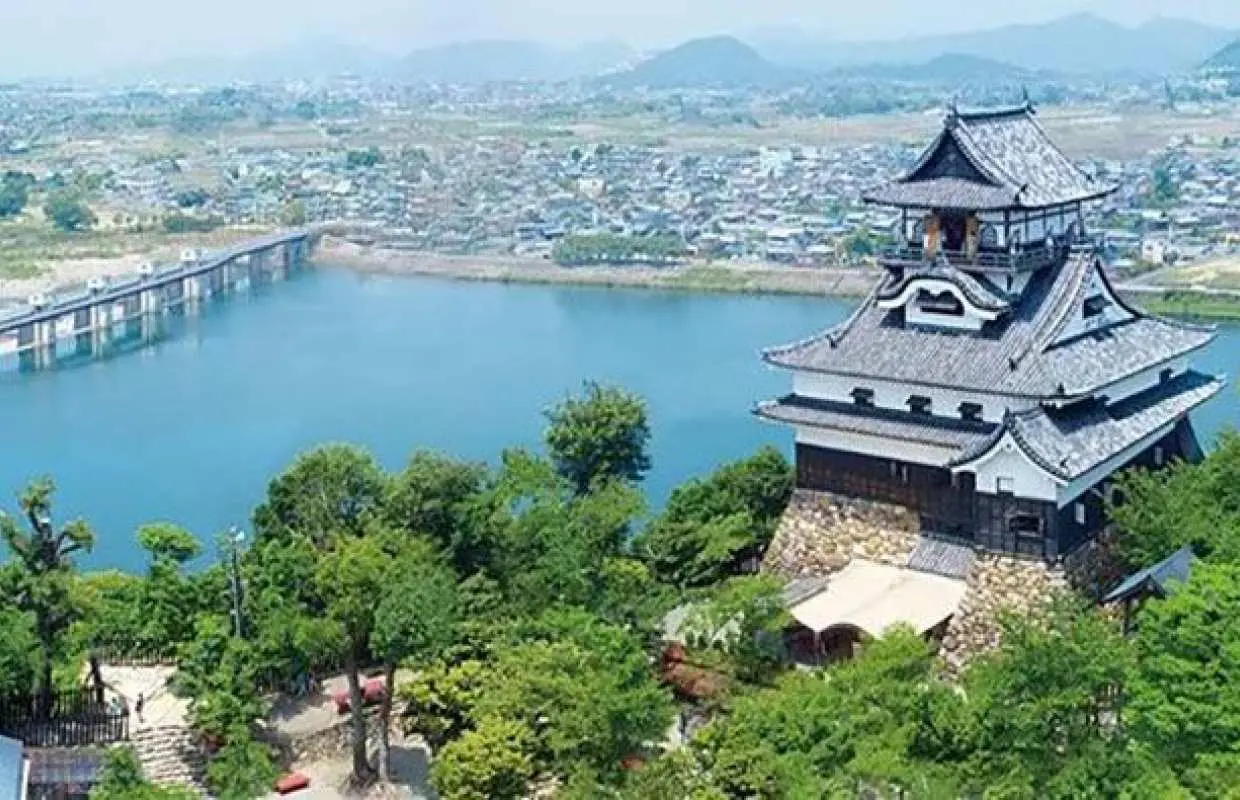
Inuyama Castle: One of the oldest existing castle keeps in Japan (built in 1537), known as one of the 'Four National Treasure Castles of Japan' along with Himeji Castle, Matsumoto Castle, and Hikone Castle. Standing on the banks of the Kiso River, it is known as the 'Hakutei-jo' (White Emperor Castle), offering expansive views and deep history.
Magome-juku & Tsumago-juku: Japan's first 'Important Preservation Districts for Groups of Traditional Buildings.' The original appearance of the Edo-period Nakasendo post stations is perfectly preserved here, with stone-paved roads, wooden lattice windows, and ancient water wheels, making it feel as if time has stood still. Compared to the crowded streets of Kyoto, this place is more serene and distant.
- Hidden Zen Gardens and Natural Wonders:
Kokeizan Eiho-ji Temple: A famous temple of the Myoshin-ji school of the Rinzai sect, designed by Muso Soseki. It features a 700-year-old national treasure ginkgo tree (brilliant gold in autumn) and an exquisite pond-strolling garden. This is a little-known photography paradise with few tourists and a strong Zen atmosphere.
Kiso Valley Scenery: Travel through the Kiso Mountains along the way, enjoy the clear Kiso River and canyon scenery, and experience the unique charm of the 'Kiso Road.'
- Ultimate Light Luxury Experience:
4 people to form a group: Minimized group size ensures privacy and flexibility. Whether traveling with family, a partner, or friends, enjoy an exclusive feeling close to a private charter car.
Comfortable Business Vehicle: Using a Toyota Alphard or equivalent luxury business vehicle, with spacious seats and independent air conditioning, ensuring a smooth and comfortable ride even on winding mountain roads.
Pure Tour, No Shopping: No shopping stops throughout the entire trip; all time is reserved for scenery, culture, and free exploration.

▼Inuyama Castle (90-minute visit) A castle with a rich historical background. Located on a hill overlooking the Kiso River, its geographical location is particularly important. Inuyama Castle is a flat-roofed castle with a retro-style keep, consisting of three stories and four tiers, commonly known as Hakutei Castle. Originally built in 1469 by Oda Nobuyasu, it was later officially constructed in 1537 after Oda Nobuyasu demolished the nearby Kinoshita Castle. During the Sengoku period, Inuyama Castle changed hands several times due to its strategic importance. Notable figures of the Sengoku period, such as Oda Nobunaga, Toyotomi Hideyoshi, and Tokugawa Ieyasu, all had close ties to Inuyama Castle. The castle keep is one of the oldest existing castle keeps in Japan and was designated a National Treasure in 1935. In 1952, it was again designated a National Treasure under the new Cultural Properties Protection Law. The existing ruins of the castle include the keep, stone walls, and earthen ramparts, while the turrets and gates are later reconstructions.

▼ Kokeizan Eihoji Temple (40-minute visit) Located in Tajimi City, Gifu Prefecture, Japan, Kokeizan Eihoji Temple was founded in 1313 by the Zen master Musō Kokushi. It is a temple that blends Zen Buddhist spirit with natural beauty. The temple houses two National Treasure buildings—the Kannon-dō and the Kaizan-dō—as well as a strolling garden with a pond, designated a National Scenic Spot. The Kannon-dō and Kaizan-dō are not only National Treasures but also house important cultural properties such as memorial tablets and calligraphy from the Nanboku-chō period to the early Muromachi period. Eihoji Temple's garden is one of Musō Kokushi's masterpieces, skillfully utilizing the natural terrain and landscape to showcase the high value of medieval Zen temple gardens. The Wolong Pond and Mukei Bridge in front of the Kannon-dō are highlights of the garden, creating an atmosphere reminiscent of Pure Land Buddhism. In addition, the temple grounds feature a 700-year-old ginkgo tree, planted by the founding abbot, Bōtoku Zenji, becoming a distinctive feature of Eihoji. In autumn, the red leaves in the garden complement the large ginkgo trees, creating a particularly enchanting scene.

▼Magome-juku (120 minutes sightseeing time) Magome-juku is renowned for its well-preserved Edo-era architecture and stone-paved streets, making it an excellent place to experience traditional Japanese culture. The buildings here were destroyed in fires in 1895 and 1915, but were later restored and rebuilt. Despite this, the old street buildings along the stone-paved ramp still retain their Edo-era appearance. Magome-juku's streets are a continuous uphill path about 800 meters long, lined with stone walls and old-fashioned wooden buildings, including inns, teahouses, restaurants, and souvenir shops. It is also the hometown of the famous Japanese novelist Shimazaki Toson, and therefore the Shimazaki Toson Memorial Museum is located here.

▼Tsumago-juku (60-minute sightseeing tour) Located at the 42nd post station on the Nakasendo Road, this ancient road connected Tokyo and Kyoto during the Edo period. Tsumago-juku is renowned for its well-preserved Edo-period architecture and atmosphere, and was designated a National Important Preservation District for Groups of Traditional Buildings in Japan in 1976.
Purchase Notice
[Tourism Conditions]
Travel departure point and destination: Gifu-Nagano
Trip duration: Day trip
Transportation: Business van, luxury business van
Bus company name: RBC Earth Tourism and similar
Meals provided: Breakfast 0 times, Lunch 0 times, Dinner 0 times
Accommodation facilities: None
Minimum group size: 4
Team Leader: None
Tour guide: None
【Travel Planning/Implementation】
Operating Company Name: Chuwa Travel Co., Ltd.
Address: No. 18, 2-chome, Chuketsucho, Gifu City
License exemption number: Gifu Prefectural Governor Registration Travel Industry No. 2-328
Travel Association Name: ANTA National Tourism Association (Regular Member)
Reminders
A minimum of 4 traveler(s) are required for the tour to depart. If the number of participants does not reach the minimum requirement, the tour will be canceled. An email regarding tour cancellation will be sent 4 day(s) before the departure date
In the event of inclement weather such as typhoons or snowstorms, a decision on whether to cancel the tour will be made 1 day(s) before departure (local time 09:00). Notifications will then be sent via email
Travelers with the following conditions or other health issues that could be worsened by excessive stimulation should not participate in this activity: High blood pressure, Heart disease, Acrophobia, Asthma, Epilepsy, Pregnant women
Please arrive at the designated location 10 minute(s) before the scheduled departure time, as the tour will depart on time
Once the order is confirmed, the date cannot be changed arbitrarily. Any losses incurred will be borne by the order holder.
Please make sure to provide complete information when making a reservation to avoid errors that could affect your trip.
Please keep your passport and valuables with you at all times during the trip. You will be responsible for any loss, theft, or damage.
Elderly individuals, those with hypertension, heart disease or other cardiovascular diseases, and pregnant women are advised to have family members accompany them.
This tour does not accept bookings from customers under the age of 18 who are traveling alone. If you wish to book this tour, please have a guardian book it with you.
This is a fixed-route shared tour. Customers participating in this tour are requested to adhere to the designated time limits at each attraction and follow the driver/guide's instructions. For a more flexible itinerary, please refer to private charter car tour service.
No refunds will be given for any absences or cancellations due to personal issues, lateness, or other reasons. Please take note.
If you leave the group midway through the trip, the transaction will be considered invalid, and no refund will be given. Furthermore, you will be solely responsible for any personal injury or property damage resulting from this.
Arrival times for each itinerary may vary depending on traffic conditions, weather, holidays, and crowds. We apologize for any delays or cancellations caused by the aforementioned factors or other unforeseen circumstances, and no refunds will be provided on such grounds.
Please wear comfortable, travel-appropriate clothing and shoes for this trip.
Please be sure to comply with local Japanese laws and regulations, and do not bring any items prohibited by Japanese law, so as to avoid violating the law and affecting your own rights.
During free time, you should pay attention to your personal safety and property security. If you do not heed the advice and an accident or loss occurs, you will be responsible for the consequences.
Senior citizens aged 70 and above must ensure they are in good health and suitable for travel, and must be accompanied by a family member or friend aged 22 or above throughout the trip.
Minors under the age of 18 must be accompanied by at least one adult passenger throughout the trip.
Due to the unpredictability of factors such as traffic conditions, weather, holidays, and crowds on the day of travel, arrival times for each itinerary may vary. According to Japanese law, the maximum working time for a driver is 10 hours. To ensure driver safety and smooth driving, itineraries may be adjusted based on actual circumstances, including reducing sightseeing time at attractions or canceling certain attractions. We sincerely hope that our passengers will understand and support these adjustments made while prioritizing safety.
We sincerely apologize for any inconvenience this may cause due to the aforementioned or other unforeseen circumstances. Please understand our position; we will not be able to offer a refund. This decision is made out of responsibility for the safety of the driver and passengers, and to ensure the smooth operation of the entire team.
We are always committed to providing you with the best travel experience, but in some cases, we need to flexibly adjust our itinerary plans based on actual circumstances. Thank you for your understanding and support.
Other force majeure events may include, but are not limited to: Natural disasters: Natural disasters such as earthquakes, volcanic eruptions, floods, and typhoons may affect the itinerary. Traffic accidents: Road traffic accidents and traffic jams may cause itinerary delays. Weather conditions: Severe weather conditions, such as heavy snow, heavy rain, and dense fog, may affect transportation and itinerary arrangements. Government regulations: Emergency regulations and traffic controls issued by the government may lead to itinerary changes. Health emergencies: Sudden health problems of passengers or group members may require first aid and emergency treatment, leading to itinerary changes. Social events: Events such as strikes, protests, and social unrest may have unpredictable impacts on transportation and itinerary. Mechanical failures: Mechanical failures of means of transport (such as vehicles) may cause itinerary delays.
FAQs
1. Where is Inuyama Castle located, and how can I reach it from Nagoya?
Inuyama Castle is located in Inuyama City, Aichi Prefecture, Japan, situated north of Nagoya. It is approximately a 30-40 minute drive from central Nagoya. As part of a private small group tour originating from Nagoya, you will enjoy convenient round-trip transportation directly from your hotel within 2km of Nagoya Station, or from a designated meeting point. This service eliminates the need to navigate public transport, ensuring a seamless journey to the castle and other tour destinations.
2. What is the recommended duration to explore Inuyama Castle and its surrounding town?
To thoroughly explore Inuyama Castle, including its main keep and grounds, a visit of 1 to 1.5 hours is generally recommended. If you also plan to explore the charming Inuyama Castle Town (Jokamachi) with its traditional shops and eateries, an additional 1 to 2 hours would allow for a leisurely experience. In total, allocating 2.5 to 3.5 hours for both the castle and its surrounding town offers a well-rounded visit, allowing you to appreciate both the historical site and its vibrant surroundings.
3. What are the main sights and unique features to experience at Inuyama Castle?
Inuyama Castle is renowned for being one of Japan's oldest original castles and a designated National Treasure. Its main features include the authentic wooden keep, which offers panoramic 360-degree views of the Kiso River and surrounding area from its top floor. Visitors can explore the interior, climb its steep stairs, and appreciate the traditional architecture that has stood for centuries. The castle grounds also feature a beautiful garden and various historical structures, providing a glimpse into Japan's feudal past.
4. How can one acquire tickets for Inuyama Castle and its castle town attractions?
Tickets for Inuyama Castle can typically be purchased at the entrance gate. For many visitors, it is common to consider combination tickets that also grant access to specific attractions within the Inuyama Castle Town, offering comprehensive exploration. When booking a small group tour, often the castle entrance fees are included, or your tour driver can assist with the purchase on-site. You can conveniently arrange your tour and confirm ticket inclusion details through KKday, which offers a streamlined booking experience and clear product inclusions.
5. How convenient is it to visit Inuyama Castle as part of a private small group tour from Nagoya?
Visiting Inuyama Castle as part of a private small group tour from Nagoya offers significant convenience. The tour includes hotel pickup and drop-off within 2km of Nagoya Station, eliminating the hassle of public transportation. With a dedicated driver, you will travel comfortably between Inuyama Castle and other destinations like Torikeisan Eihōji, Magome-juku, and Tsumago-juku, ensuring an efficient and relaxed exploration of each site. This allows for a stress-free travel experience, maximizing your time for sightseeing.
6. Besides the castle, what other attractions or activities can be found in the Inuyama area?
The Inuyama area offers several other attractions beyond the castle. The Inuyama Castle Town (Jokamachi) immediately surrounding the castle is a highlight, featuring traditional Edo-period streets lined with shops selling local crafts, sweets, and snacks. Nearby, you can also find the Karakuri Exhibition Museum, showcasing traditional mechanical dolls, and the historic Sanko Inari Shrine, known for its tunnels of red torii gates. The scenic Kiso River also provides opportunities for river cruises during certain seasons, adding to the area's charm.
7. What kind of historical significance does Inuyama Castle hold, and what makes it unique among Japanese castles?
Inuyama Castle holds immense historical significance as one of only five Japanese castles designated as National Treasures, and notably, one of the twelve original castles still standing. It is considered Japan's oldest surviving castle main keep, dating back to 1537. Its uniqueness stems from its rare original wooden construction and strategic location overlooking the Kiso River, which served as a natural defense. Exploring its authentic interior offers an unparalleled glimpse into Japan's feudal era and samurai history.
8. Are there any specific viewpoints or photo opportunities at Inuyama Castle that visitors should not miss?
Absolutely, Inuyama Castle offers several fantastic photo opportunities. From the top floor of the castle keep, you can capture breathtaking panoramic views of the Kiso River and the surrounding cityscape. The castle's exterior, especially when viewed from the Kiso River banks or the nearby Urakuen Garden, provides picturesque shots of its impressive wooden architecture. Additionally, the vibrant red torii gates of Sanko Inari Shrine, located on the approach to the castle, offer a unique and colorful backdrop for photos.


