




Classic Kyoto Day Tour in Japan|Ginkaku-ji Temple・Nijo Castle・Fushimi Inari Taisha・Arashiyama Tenryuji Temple・Bamboo Forest Trail|Depart from Osaka/Kyoto
- Witness of power and history: World Heritage Nijo Castle, visit the symbol of power of the Tokugawa Shogunate, and walk into the historical sites of the "crows singing floor" and the Restoration of Imperial Rule
- The Golden Pavilion is one of the most representative attractions in Kyoto.
- Check out the natural beauty of Arashiyama, the Togetsukyo Bridge and the bamboo forest trails, and visit Kyoto's most popular natural and artistic sanctuary at once
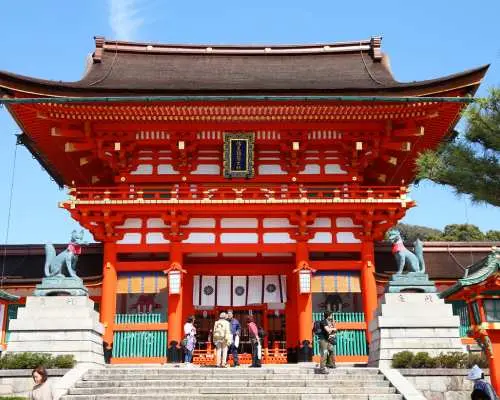
- Walk along the thousands of torii gates at Fushimi Inari Taisha Shrine and experience Japan's most efficacious Inari Shrine and the mysterious fox faith culture
- There are many scenic spots, suitable for taking photos, praying, and enjoying the scenery. There are both guided tours and free time, suitable for in-depth experience of Kyoto's charm
Package Options


Sightseeing Tours
| Tour Type | Shared tour |
| Transportation method | Transfer from meeting point |
| Luggage limit | 1 piece |
| Minimum participant requirement | 4 travelers |
| Meal arrangement | Arrange yourself |
| Sightseeing type | Japanese castles, Temples & shrines |
| Transport | Bus tour |
Product Info
- Each person can bring one piece of luggage for free, with no size limit. Please make a note when registering (if the carriage is crowded due to failure to make a note, the driver has the right to refuse you boarding and the fee will not be refunded); if the number of luggage exceeds the limit, a fee of 2,000 yen per piece will be required.
- Reference vehicle types: 5-8 seater: Toyota Alphard or equivalent; 9-14 seater: Toyota HAICE or equivalent; 18-22 seater: mini bus; 22 seater and above: large bus. The above vehicles are for reference only and will be adjusted according to the number of people in the group on the day.
- Driver-guide service fee (for a small group of 1-13 people (the driver also takes care of the tour guide); for a bus group of 14-45 people, the actual fee will be adjusted based on the number of people on the day of departure)
- Due to the unpredictability of traffic conditions, weather, festivals or crowds on the day, the arrival time of each itinerary may change. According to Japanese law, the maximum working time of the driver is 10 hours. In order to ensure the safety of the driver and the stability of driving, the itinerary may be adjusted according to the actual situation, including reducing the time for visiting attractions, adjusting the order of attractions or canceling certain attractions. We sincerely hope that all passengers can understand and support the adjustments we make under the premise of ensuring safety. In the case of the above or other force majeure factors, we deeply regret the inconvenience that may be caused to you. Please understand our position that we will not be able to provide a refund service for this reason. This decision is made out of responsibility for the safety of drivers and passengers and to ensure the smooth operation of the entire team. We are always committed to providing you with the best travel experience, but in some cases, we need to flexibly adjust the itinerary plan according to actual conditions. Thank you for your understanding and support.

Nijo Castle is a representative castle of Japan's Edo period and a symbol of Japan's feudal system and shogunate culture. The castle contains several buildings, including the castle tower and Seiryuen Garden, showcasing the superb skills of ancient Japanese architecture and garden art. If the castle is closed, a visit to Heian Shrine Outer Garden will be made instead (closed every Tuesday in January, July, August, and December).

Kinkaku-ji (Golden Pavilion) is not only a symbol of Kyoto, but also represents the architectural art and aesthetic ideals of Japan's Muromachi period. It embodies the pursuit of beauty and respect for nature, while also carrying the profound heritage of Japanese history and culture.

The Bamboo Grove and Togetsukyo Bridge in Arashiyama are considered symbols of Arashiyama and must-see attractions in Kyoto. Strolling through it, you can feel the tranquility and seclusion of the bamboo grove, as if entering a green tunnel.

Togetsukyo Bridge is located in the Arashiyama area and is an old wooden bridge spanning the Katsura River. The bridge is 155 meters long and 7 meters wide, with a beautiful arched shape, making it a magnificent sight.

Tenryu-ji Temple: A World Heritage Site in Kyoto, its gardens exude a strong Zen atmosphere and offer beautiful scenery in all four seasons, near a bamboo grove path.

Fushimi Inari Taisha Shrine is famous for its "Thousand Torii Gates" and is one of the most famous shrines in Japan. The shrine has thousands of red torii gates forming a long, spectacular passageway.

Fushimi Inari Taisha Shrine enshrines Inari, the god of commerce and agriculture in Japan. The red torii gate symbolizes prosperity and good fortune, and people pray here for thriving businesses and abundant harvests.
Purchase Notice
【Travel conditions】
Travel origin and destination: Osaka and Kyoto
Travel days: Round trip
Transportation: Bus
Bus company name: Iguchihachi Tourism Co., Ltd.
Meals: Breakfast 0 Lunch 0 Dinner 0
Accommodation facilities: None
Minimum number of people in a group: 4
Team Leader:1
Tour Guide:0
【Travel planning/implementation】
Operating company name: Shuzenji Takitei Co., Ltd.
Address: Shuzenji 722, Shizuoka Prefecture I▖ City
License exemption number: Shizuoka Prefecture Governor Registration Tourism No. 2-723
Bus company name: Iloha Tourist Transportation Co., Ltd.
Reminders
A minimum of 4 traveler(s) are required for the tour to depart. If the number of participants does not reach the minimum requirement, the tour will be canceled. An email regarding tour cancellation will be sent 4 day(s) before the departure date
In the event of inclement weather such as typhoons or snowstorms, a decision on whether to cancel the tour will be made 1 day(s) before departure (local time 18:00). Notifications will then be sent via email
Travelers with the following conditions or other health issues that could be worsened by excessive stimulation should not participate in this activity: High blood pressure, Heart disease, Acrophobia, Asthma, Epilepsy, Pregnant women
Please arrive at the designated location 10 minute(s) before the scheduled departure time, as the tour will depart on time
This is a fixed-route shared tour. Customers participating in this tour are requested to adhere to the designated time limits at each attraction and follow the driver/guide's instructions. For a more flexible itinerary, please refer to our private charter car tour services.
If you leave the group midway through the trip, the transaction will be considered invalid, and no refund will be given. Furthermore, you will be solely responsible for any personal injury or property damage resulting from this.
No refunds will be given for any absences or cancellations due to personal issues, lateness, or other reasons. Please take note.
Arrival times for each itinerary may vary depending on traffic conditions, weather, holidays, and crowds. We apologize for any delays or cancellations caused by the aforementioned factors or other unforeseen circumstances, and no refunds will be provided on such grounds.
When there are fewer passengers, a small vehicle with a driver/guide providing simple explanations will be used. Please be aware that this is a shared ride service, and other guests will be traveling with you. Stops are not allowed outside of designated attractions.
The transportation and tourist attractions in this itinerary will be kept as faithful as possible to the original plan. However, in the event of special circumstances such as traffic congestion, inclement weather, large tourist crowds, or other force majeure events, the company reserves the right to make changes to the itinerary to ensure the safety of travelers and the smoothness of the trip.
According to Japanese law, the maximum working hours for drivers are 10 hours. To ensure driver safety and the stability of the itinerary, adjustments may be made based on actual circumstances, including reducing sightseeing time at attractions or canceling certain attractions. We apologize for any inconvenience. Refunds cannot be issued without prior notice. We sincerely hope for your understanding and support.
Osaka Station and Kyoto Station depart from different trains, so the boarding and alighting points must be the same and cannot be changed. Thank you for your understanding and support.
FAQ
1. What is Ginkaku-ji Temple known for in Kyoto?
Ginkaku-ji, or the Silver Pavilion, is renowned for its serene dry sand garden, Ginshadan, which features a meticulously raked sand cone representing Mount Fuji. It's also famous for its beautiful moss garden, which creates a tranquil atmosphere. The temple showcases Higashiyama culture, a period of aesthetic development in the 15th century, influencing traditional Japanese architecture and arts, offering a glimpse into Kyoto's rich history.
2. Can visitors access the interior of Ginkaku-ji Temple's main buildings?
While the main temple buildings at Ginkaku-ji are generally not open for interior public access, visitors can fully explore the temple grounds and magnificent gardens. The walking path leads through the moss garden, past various sub-temples, and offers stunning views of the dry sand garden and the surrounding landscape. The exterior architecture and meticulously designed gardens are the primary highlights of the visit, providing a comprehensive experience.
3. What makes Ginkaku-ji Temple's moss garden unique among Kyoto's attractions?
Ginkaku-ji Temple's moss garden is highly esteemed for its lush, diverse collection of mosses covering the ground, rocks, and trees, creating a vibrant green carpet. This carefully cultivated garden is integral to the temple's aesthetic, fostering a sense of profound tranquility and natural beauty. It’s designed to harmonize with the dry sand garden and the surrounding landscape, providing a serene and contemplative experience for visitors throughout the seasons.
4. Why is Ginkaku-ji Temple referred to as the 'Silver Pavilion' when it doesn't appear silver?
Ginkaku-ji, meaning 'Silver Pavilion,' was originally intended by Ashikaga Yoshimasa to be covered in silver leaf, much like Kinkaku-ji (Golden Pavilion) is covered in gold. However, this grand plan was never realized due to financial constraints and the shogun's untimely death. The name 'Silver Pavilion' was given posthumously, contrasting it with the Golden Pavilion and reflecting its elegant, understated aesthetic rather than an actual silver exterior.
5. Is a classic Kyoto day tour sufficient to experience key attractions like Fushimi Inari Taisha and Arashiyama?
Yes, a well-planned classic Kyoto day tour is an excellent way to experience major attractions such as Fushimi Inari Taisha and the scenic Arashiyama area within a single day. These tours are specifically designed to optimize travel time between locations, often including comfortable transportation and guided insights. This allows visitors to efficiently cover multiple iconic sites and immerse themselves in Kyoto's rich culture and natural beauty without the hassle of navigating public transport independently.
6. What are the must-see attractions included in a Kyoto day tour, such as Kinkaku-ji and Nijo Castle?
A classic Kyoto day tour typically features several iconic attractions. Highlights often include the majestic Kinkaku-ji (Golden Pavilion), famous for its striking gold leaf exterior, and the historic Nijo Castle, a UNESCO World Heritage site known for its 'nightingale floors' and exquisite traditional gardens. Other popular stops are Fushimi Inari Taisha, with its thousands of vibrant torii gates, and the serene Arashiyama area, featuring Tenryu-ji Temple and the famous Bamboo Forest Trail.
7. What transportation options are available for visiting Kyoto's major sites like Fushimi Inari Taisha and the Arashiyama Bamboo Forest Trail?
For visiting major Kyoto sites such as Fushimi Inari Taisha and the Arashiyama Bamboo Forest Trail, public transportation like trains and buses is widely available. Fushimi Inari Taisha is easily accessible by the JR Nara Line, while Arashiyama can be reached via the JR Sagano Line or Keifuku Randen Tram. Alternatively, taxis offer direct routes, or an organized day tour provides convenient, seamless transportation between multiple key attractions, eliminating the need for self-navigation.
8. What makes the thousands of torii gates at Fushimi Inari Taisha Shrine a significant cultural experience?
The thousands of vibrant orange torii gates at Fushimi Inari Taisha Shrine create an incredibly unique and immersive cultural experience. Each gate is a donation by an individual or company, making the winding mountain paths a visual representation of devotion and prosperity. Walking through this 'tunnel' of gates offers a spiritual journey, leading to various sub-shrines and providing stunning views of Kyoto. It deeply connects visitors with Japan's fox faith culture, honoring Inari, the god of rice.


