
![[Japanese Cherry Blossom Season Only] Kyoto Daigoji Temple, Mihide Museum of Art, Uji Byodo-in Temple|Group of 4 people|Chinese and Japanese service](https://image.kkday.com/v2/image/get/c_fill%2Ch_800%2Cq_55%2Ct_webp%2Cw_1240/s1.kkday.com/product_163613/20240228021411_mGD27/png)
![[Japanese Cherry Blossom Season Only] Kyoto Daigoji Temple, Mihide Museum of Art, Uji Byodo-in Temple|Group of 4 people|Chinese and Japanese service](https://image.kkday.com/v2/image/get/c_fill%2Ch_400%2Cq_55%2Ct_webp%2Cw_500/s1.kkday.com/product_163613/20240228021412_wKW7y/jpg)
![[Japanese Cherry Blossom Season Only] Kyoto Daigoji Temple, Mihide Museum of Art, Uji Byodo-in Temple|Group of 4 people|Chinese and Japanese service](https://image.kkday.com/v2/image/get/c_fill%2Ch_400%2Cq_55%2Ct_webp%2Cw_500/s1.kkday.com/product_163613/20240228021412_75k1r/jpg)
![[Japanese Cherry Blossom Season Only] Kyoto Daigoji Temple, Mihide Museum of Art, Uji Byodo-in Temple|Group of 4 people|Chinese and Japanese service](https://image.kkday.com/v2/image/get/c_fill%2Ch_400%2Cq_55%2Ct_webp%2Cw_500/s1.kkday.com/product_163613/20240228021412_jnvD2/jpg)
![[Japanese Cherry Blossom Season Only] Kyoto Daigoji Temple, Mihide Museum of Art, Uji Byodo-in Temple|Group of 4 people|Chinese and Japanese service](https://image.kkday.com/v2/image/get/c_fill%2Ch_400%2Cq_55%2Ct_webp%2Cw_500/s1.kkday.com/product_163613/20240228021413_rpcm1/jpg)
[Japanese Cherry Blossom Season Only] Kyoto Daigoji Temple, Mihide Museum of Art, Uji Byodo-in Temple|Group of 4 people|Chinese and Japanese service
- Explore Kyoto’s cherry blossoms and historic temples
- Visit the MIHO Art Museum designed by the world-class master I.M. Pei
- Enjoy pure cherry blossom viewing time, no commercial shopping, ensuring a comfortable journey
- Drivers who are fluent in Chinese and Japanese provide worry-free and convenient travel services
Product Info
What You Can Expect
1 Day
- 07:50(Departing from Osaka) Meet at Nihonbashi Exit 6 7-11 Convenience Store and depart at 08:00.
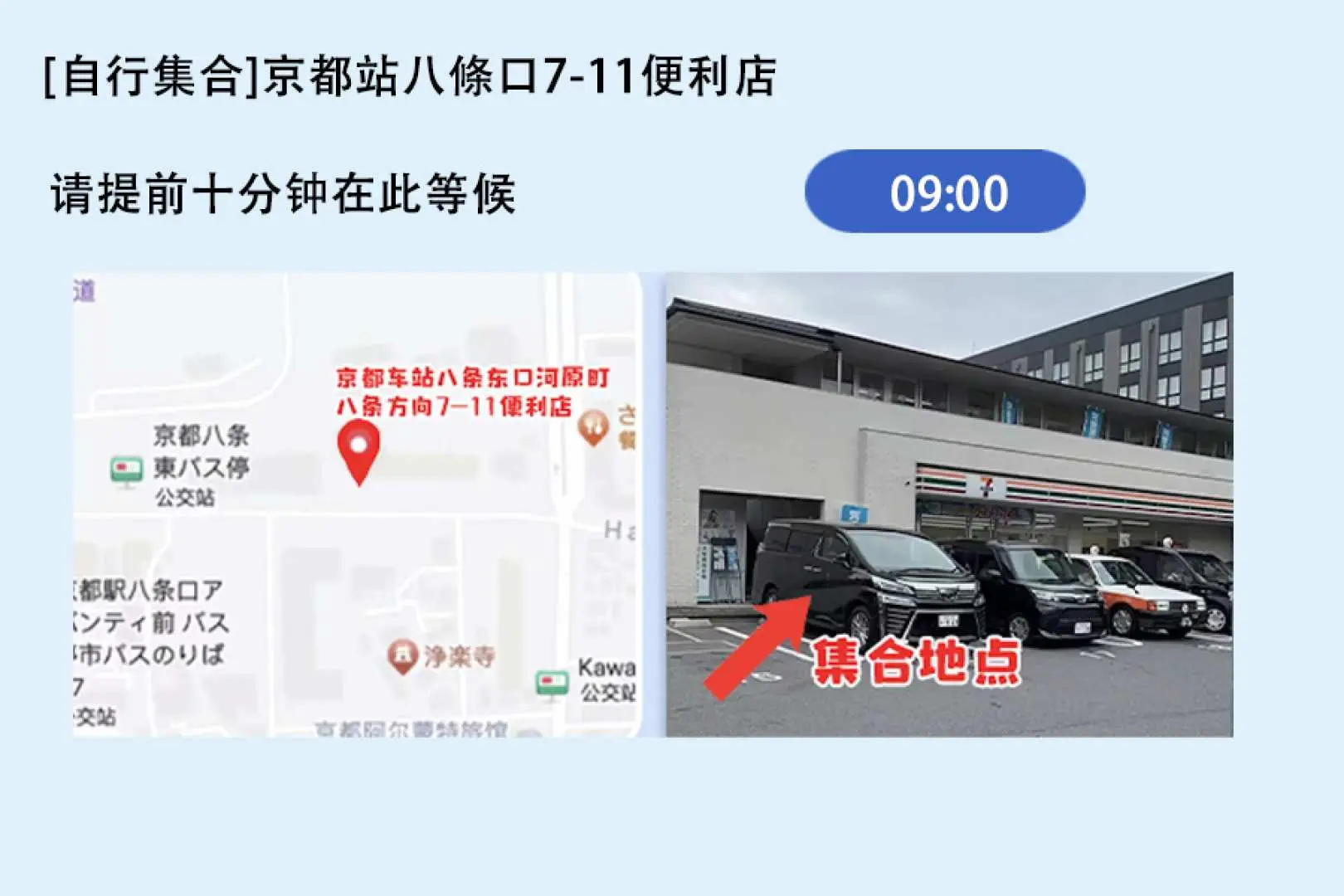
- 08:50(Departing from Kyoto) Meet at Kyoto Station 7-11 Convenience Store Kyoto Hachijo-dori East Branch and depart at 09:00.
- ※The driver or tour guide will contact you the day before departure to confirm the itinerary. Please pay attention to your communication software and messages.
- 09:30Daigoji Temple, a world cultural heritage famous cherry blossom spot (stay for 1.5 hours)
- 12:10Inspired by "Taoyuan Township" (MIHO) Meixiu Art Museum (stay 2.5 hours) *Tickets are 1,100 yen, please pay for yourself. It is recommended to have lunch here at your own expense.
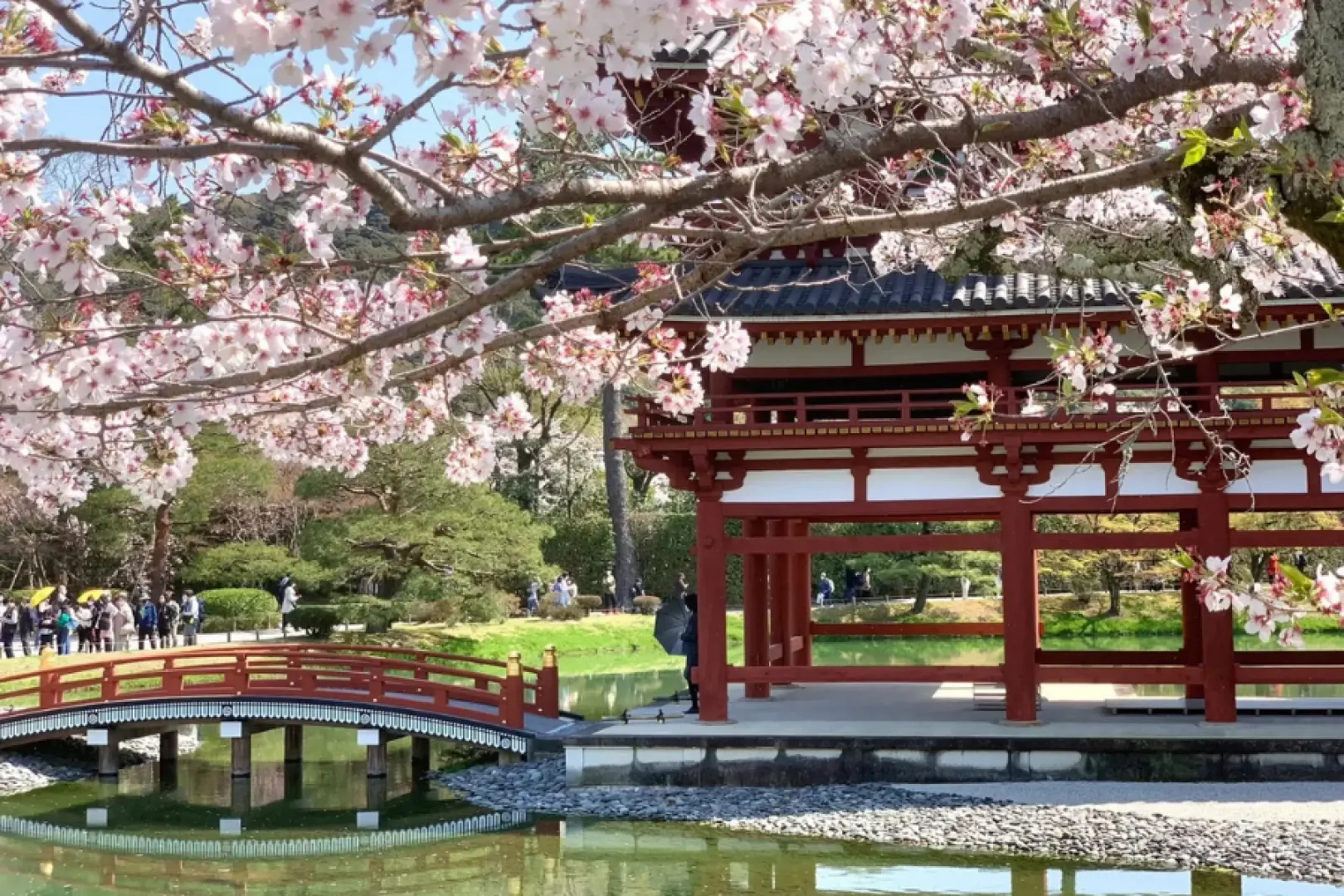
- 15:40World Cultural Heritage Byodo-in Temple, the building on the Japanese currency "Phoenix Hall" (a total stay of 1 hour in Byodo-in Temple and Omotesando)
- Omotesando: A commercial street with a strong Japanese cultural atmosphere, matcha lovers should not miss it.
- *The only drop-off point is Nihonbashi in Osaka. Passengers who want to get off in Kyoto can be picked up and dropped off at JR Uji Station. Please make a note when booking and confirm with the driver on the day.
- 18:00Returned to Osaka and disbanded at Nihonbashi, Osaka.




Purchase Notice
・The minimum number of people in a group is 4. If the number of participants does not reach the minimum number of people in the group specified above, the tour will be canceled and an email notification of cancellation will be sent 2 days before the departure date.
・Please be sure to arrive at the designated location 10 minutes before. In order to avoid delaying the subsequent itinerary, if you do not wait after the time limit, the guest will be unable to get on the bus due to being late. The guest will be responsible for any losses caused.
・The space in the car is limited, each passenger can only bring one piece of carry-on luggage, and no luggage storage is provided.
・If you need to store suitcases, please inform us in the comments when ordering. A space fee of JPY 2,000 per piece will be charged for carrying luggage (the luggage size must not exceed 28 inches). The space fee will be paid to the driver on site.
・Children aged 0-2 years old are free of charge if they do not occupy a seat; children aged 3 years and above are treated as adults. If you need a baby seat, please inform us in advance. The baby seat will occupy a seat, and the fee for one adult will be charged when placing an order.
・The only drop-off point is Nihonbashi in Osaka. Passengers who need to return to Kyoto Station to get off can go to JR Uji Station. Please note the return location (Kyoto Station) when booking, and our company will provide a return ticket.
Includes/Excludes
- transportation
- Driver service fee
- Meal expenses
- Attraction tickets
- travel safety insurance
- Personal consumption
- Large luggage (baggage size must not exceed 28 inches) space fee JPY 2,000/piece
- Consumption not mentioned above
Reminders
This itinerary is a fixed itinerary for carpooling. Customers participating in this trip must abide by the staying time at each attraction and follow the driver's arrangements.
The itinerary is for reference only. The specific attractions, tour order and time may be changed according to the situation on the day.
If the group cannot be organized due to force majeure or unforeseen factors such as weather or emergencies, all fees will be refunded without compensation for liquidated damages.
The natural landscape is affected by the weather of the day and is a force majeure factor. If you are unable to enjoy the scenery as scheduled, no refunds will be given, please know!
If you leave the group on your own during the itinerary, the transaction will be deemed invalid and no refund will be given. If this results in personal injury or property damage, you will be solely responsible for the consequences.
Please note that the cherry blossom opening date is affected by local weather and cannot guarantee the most beautiful scenery. Please check the local weather and cherry blossom blooming conditions before making a reservation. Please understand that if you request a refund/compensation due to poor blooming conditions of the cherry blossoms or rain or other weather factors, we will not be able to accept it.
The elderly, patients with cardiovascular diseases such as high blood pressure and heart disease, and pregnant women are recommended to be accompanied by relatives.
This itinerary does not accept independent registration from passengers under the age of 18. If registration is required, please have your guardian sign up for this itinerary together.
How to Redeem Your Voucher
How to Use Your Voucher
- Please present the e-voucher on-site
Meeting Point
Location Name: (Departing from Osaka) Nihonbashi Exit 6 7-11 Convenience Store
Address: Osaka Nipponbashi Station East Store, 1 Chome-4-12, Nipponbashi, Chuo-ku, Osaka-shi, Osaka Prefecture, Japan

Location Name: (Departing from Kyoto) Kyoto Station 7-11 Convenience Store Kyoto Hachijo-dori East Store
Address: 〒601-8005 Kyoto, Minami Ward, Higashikujo Nishiiwamotocho, 16−16 セブンイレブンKyoto Hachijo-dori East Store
Experience Location
Location Name: Daigoji Temple
Address: 22 Daigohigashiōjichō, Fushimi Ward, Kyoto, 601-1325 JapanLocation Name: Meixiu Art Museum
Address: Momotani-300 Shigarakicho Tashiro, Koka, Shiga 529-1814 JapanLocation Name: Byodoin Temple
Address: Renge-116 Uji, Kyoto 611-0021 JapanCancellation Policy
- Cancellations 11 day(s) (inclusive) before the selected date are allowed. Unused orders can be canceled for free
- For cancellations made 8 to 10 days prior to selected date, a cancellation fee of 20% will apply
- For cancellations made 2 to 7 days prior to selected date, a cancellation fee of 30% will apply
- For cancellations made 1 to 1 days prior to selected date, a cancellation fee of 40% will apply
- Cancellation is not allowed between 0–0 days from the selected date. Orders cannot be canceled or modified, and refunds will not be granted.
- Due to time zone differences, the confirmed cancellation date is based on the supplier’s local time. Please allow 2–5 business days to process your cancellation request, after which the cancellation fee will be charged according to the product’s cancellation policy. Once the cancellation is confirmed, you will receive your refund within 14 working days.
Get Help


