

Mini Wagasa Making with Professional Artisan in Kanazawa
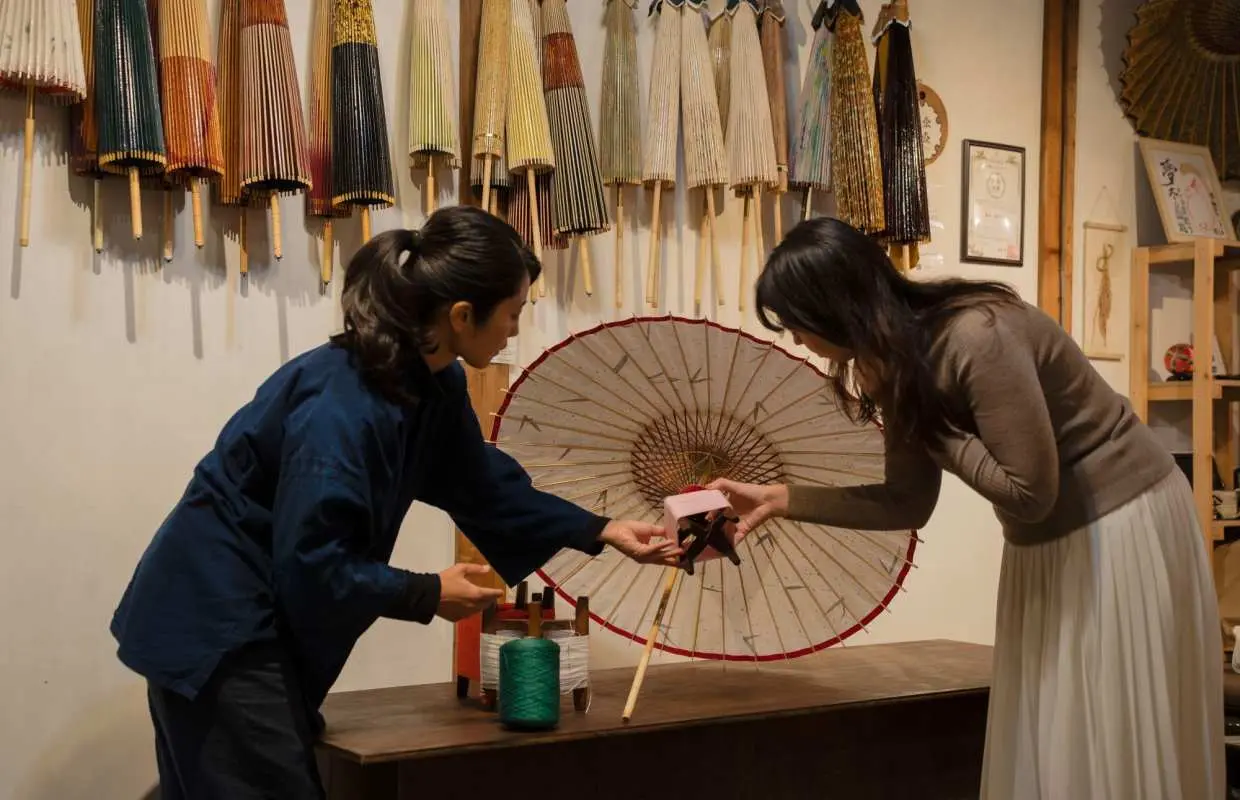
- Experience authentic Japanese umbrella making
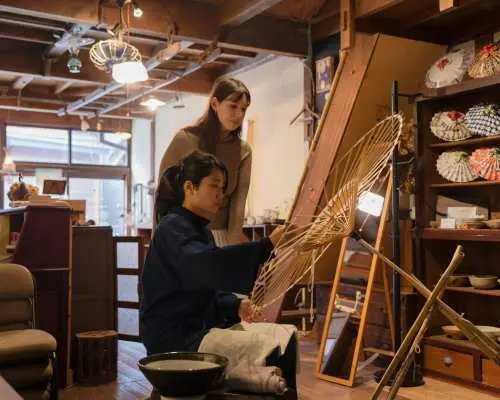
- Guided by a Skilled Artisan
- An English-speaking guide will assist you with the experience.
- Shop is conveniently located right next to Higashi Chaya District, making it easy to combine with your sightseeing plans
- it's a mini Japanese Wagasa, you can take it home with you after the workshop.
Package Options


Sightseeing Tours
| Tour Type | Small Group |
| Transportation method | Hotel transfer |
| Departure Time | Late Departure (After 9 am) |
| Luggage limit | None |
| Minimum participant requirement | 1 traveler |
| Tour types | Guided tour |
| Transport | Walking |
Product Info
Purchase Notice
Each group is limited to 4 people.
No special items are required—aprons and protective garments are provided, ensuring that even guests in kimono may enjoy the experience with ease.
Participation is limited to those aged 6 and older.
This is a private tour. Only your group will participate.
You will meet your guide at your hotel in Kanazawa. Please be sure to enter your hotel name when making your reservation.
※If you would like to meet at JR Kanazawa Station or directly at Higashi Chaya District, please let us know when you make a reservation.
(No refunds will be issued for changes.)
Reminders
This tour utilizes public transportation. Please be aware that seats are not reserved.
Please be aware that weekends, holidays, and event days may experience high levels of congestion.
Refunds will not be provided if you fail to arrive at the meeting location on time (no show).
In the event of a natural disaster, such as a typhoon, the tour will be canceled, and a full refund will be issued.
Please personally take responsibility for your valuables.
Note: These guidelines are provided to ensure a safe and enjoyable experience. Thank you for your cooperation.
Cancellation Policy
- Cancellations 6 day(s) (inclusive) before the selected date are allowed. Unused orders can be canceled for free
- For cancellations made 2 to 5 days prior to selected date, a cancellation fee of 20% will apply
- For cancellations made 1 to 1 days prior to selected date, a cancellation fee of 50% will apply
- Cancellation is not allowed between 0–0 days from the selected date. Orders cannot be canceled or modified, and refunds will not be granted.
- Due to time zone differences, the confirmed cancellation date is based on the supplier’s local time. Please allow 2–5 business days to process your cancellation request, after which the cancellation fee will be charged according to the product’s cancellation policy. Once your refund request is confirmed, KKday will initiate the refund to your original payment method within 15 days. The actual refund timing depends on your card-issuing bank’s policy.
FAQ
1. What is involved in the Mini Wagasa making process during the workshop in Kanazawa?
The workshop guides participants through the essential steps of creating a mini Wagasa. Under the tutelage of a professional artisan, you will learn techniques such as attaching the paper to the frame, applying the oil, and shaping the umbrella. This hands-on experience provides insight into the intricate traditional craftsmanship of Japanese umbrella making, ensuring you understand each crucial step.
2. How can visitors easily reach the Mini Wagasa making workshop located near Higashi Chaya District?
The Wagasa making workshop is conveniently situated right next to Kanazawa's historic Higashi Chaya District. Visitors can easily reach it by public transportation, such as local buses, from Kanazawa Station. Walking from the main tourist areas within Higashi Chaya District is also a direct and pleasant option, making it simple to combine with your sightseeing plans in the area.
3. What are the key characteristics of a traditional Japanese Wagasa?
Traditional Japanese Wagasa are renowned for their delicate craftsmanship, typically featuring bamboo frames and durable washi paper. They often showcase beautiful hand-painted designs or patterns that reflect seasonal beauty or cultural motifs. Unlike Western umbrellas, Wagasa are generally lighter, more artistic, and historically served both practical and ceremonial purposes, embodying intricate folding mechanisms and water-resistant finishes.
4. What is the cultural history and significance of Wagasa in Japan?
Wagasa have a rich history in Japan, evolving from essential rain protection to profound cultural symbols. They were once indispensable everyday items and played significant roles in traditional arts like kabuki and tea ceremonies. Each region often developed unique styles and techniques. The art of Wagasa making is deeply rooted in Japanese aesthetics, embodying meticulous craftsmanship and a deep appreciation for natural materials, reflecting centuries of tradition.
5. Will participants be able to take home the Mini Wagasa they create in the Kanazawa workshop?
Yes, participants will absolutely be able to take home the Mini Wagasa they create during the workshop. This mini Japanese umbrella serves as a unique, handcrafted souvenir and a tangible memory of your authentic experience learning traditional craftsmanship directly from a professional artisan in Kanazawa, allowing you to cherish your creation.
6. Is an English-speaking guide provided during the Mini Wagasa making experience in Kanazawa?
Yes, an English-speaking guide is explicitly provided to assist you throughout the Mini Wagasa making experience. This ensures that international participants can fully understand the artisan's instructions, learn about the techniques, and comfortably engage in the authentic Japanese umbrella-making process without any language barriers, maximizing your learning and enjoyment.
7. What makes the Wagasa making experience with a professional artisan in Kanazawa unique?
The uniqueness of this Wagasa making experience lies in the direct tutelage by a professional artisan, offering an authentic and in-depth insight into traditional Japanese craftsmanship. Participants engage in a hands-on creation of a mini Wagasa, a rare and immersive opportunity further enhanced by the presence of an English-speaking guide, ensuring a truly educational and culturally rich activity in Kanazawa.
8. What is the significance of the Higashi Chaya District location for a traditional Wagasa workshop in Kanazawa?
The location of the Wagasa workshop right next to the Higashi Chaya District is highly significant. This historic geisha district is one of Kanazawa's most famous and well-preserved traditional areas, known for its wooden teahouses and cultural atmosphere. Placing the workshop here deeply embeds the experience within Kanazawa's rich cultural heritage, allowing visitors to easily combine this authentic craft with exploring a beautiful, historic Japanese neighborhood.


