



One-day tour to Kamikochi, Japan|Kamikochi, the Furusato of God and Zenkoji Temple, a national treasure of Japan|Depart from Nagano Station
- Depart from Nagano Station and reach inconvenient destinations without having to take a long train ride
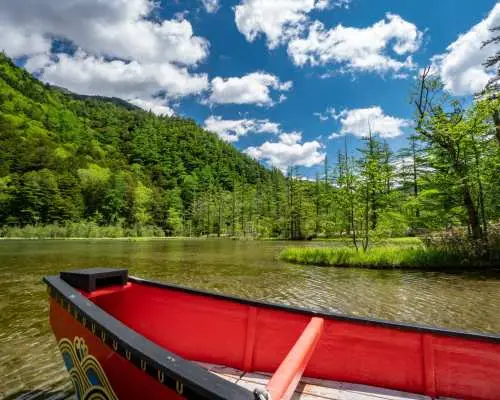
- Experience Kamikochi, the Furusato of God, surrounded by majestic mountains and crystal clear lakes (Plan B)
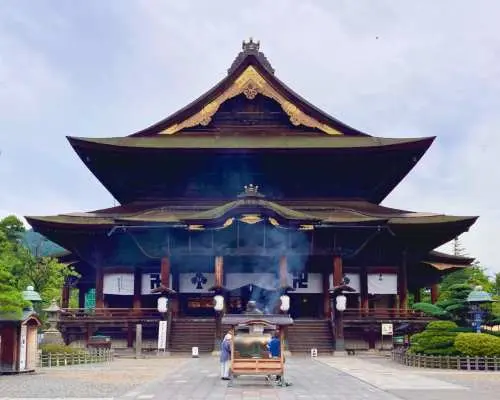
- Admire the Zenko-ji Temple, a national treasure of Japan, which houses the largest wooden temple in Japan and the oldest Buddha statue in Japan
- Watch wild monkeys bathing in hot springs at Jigokudani Monkey Park (Plan A)
- Stroll through Obuse, famous for Ukiyo-e master Hokusai Katsushika and chestnuts (Plan A)
Sightseeing Tours
| Tour Type | Shared tour |
| Transportation method | Transfer from meeting point |
| Minimum participant requirement | 20 travelers |
| Tour types | Guided tour |
| Meal arrangement | Arrange yourself |
| Family-friendly | Free for children under 2 (no seat) |
| Seasonal | Winter Snow Exclusive |
| Sightseeing type | Natural sights, Temples & shrines, Eco-tourism, Power spots |
| Transport | Walking, Bus tour |
Product Info
The content of this product is provided by machine translation and may not reflect the actual information, please take this into consideration before booking.
- Itinerary Information -
Plan A: Jigokudani Monkey Park - Enjoy the Snow Monkeys Bathing in Hot Springs, Zenko-ji Temple, a National Treasure of Japan, and a Stroll through Obuse
Meeting time: 09:50 / Departure time: 10:00
Meeting point: Meet in front of the Shinkansen gate at JR Nagano Station
Duration: Approximately 8 hours
Return information: Scheduled to arrive at the original meeting point (JR Nagano Station) at 18:00 (arrival around 17:30 - 18:30)
Plan B: One-day tour to Kamikochi, the Furusato of God and Zenko-ji Temple, a national treasure of Japan
Meeting time: 08:50 / Departure time: 09:00
Meeting point: Meet in front of the Shinkansen gate at JR Nagano Station
Duration: Approximately 9 hours
Return information: Scheduled to arrive at the original meeting point (JR Nagano Station) at 18:00 (arrival around 17:30 - 18:30)
Plan B: Kamikochi (Taisho Pond ~ Kappa Bridge) - Known as the Furusato of God, Kamikochi is a basin in the valley of the Northern Alps of Japan. It is surrounded by majestic mountains 3,000 meters high, with shady trees, cool climate, and clear lakes. The picturesque scenery changes with each season and provides a variety of hiking routes, which are deeply loved by tourists from home and abroad.

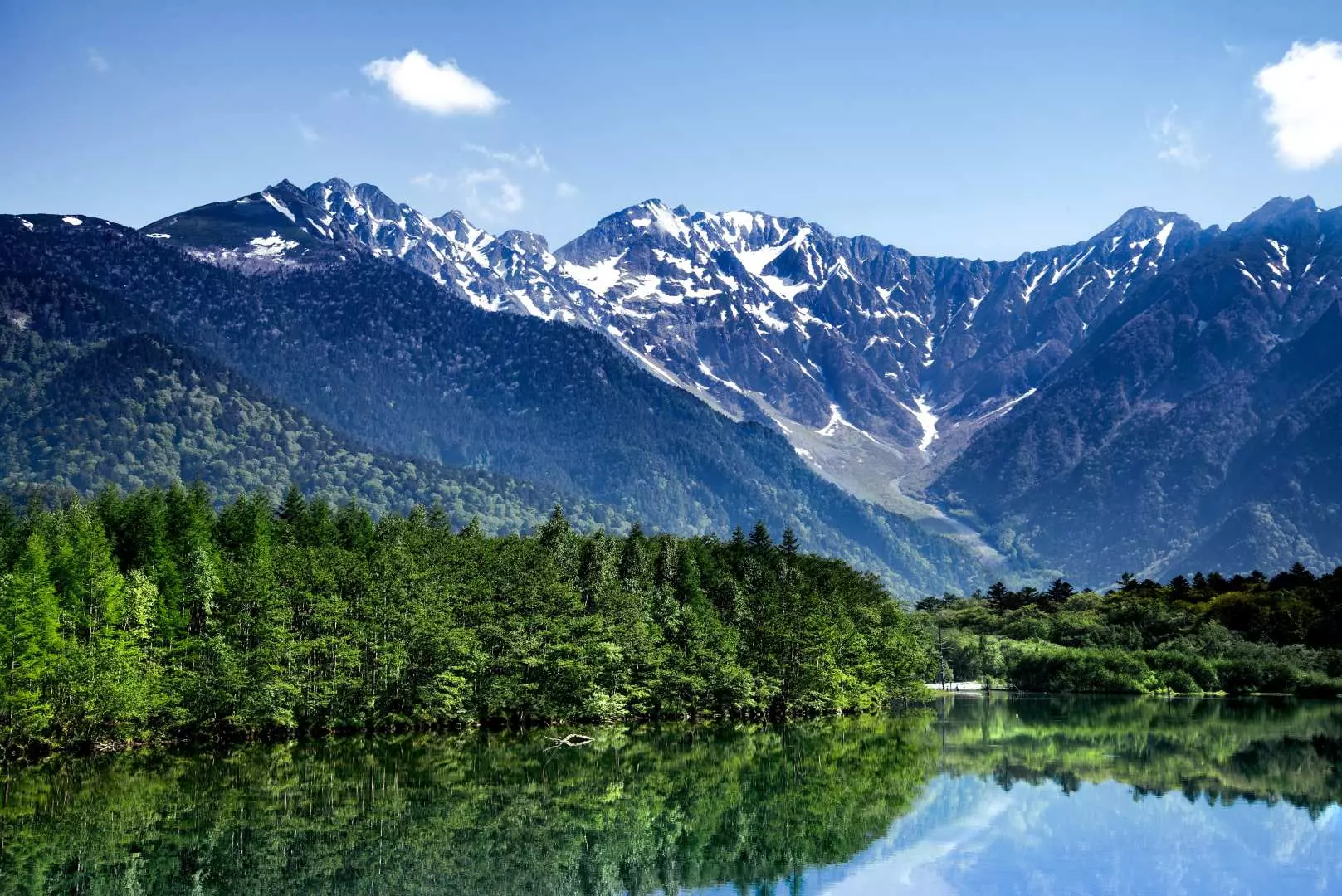
Taisho Pond - a dammed lake formed when lava from the eruption of Yakedake volcano blocked the Azusa River. The mountains of Kamikochi are reflected on the turquoise surface of the lake. The water is clear and you can enjoy the mysterious atmosphere of the submerged forest transformed into strangely shaped dead branches.


Taisho Pond in early summer
Kappa Bridge - a suspension bridge built of larch wood, 3.1 meters wide and 36.6 meters long, is a symbolic attraction of Kamikochi. From the bridge, you can overlook the magnificent scenery of the Hotaka Mountain Range and the Takezawa Valley between the Hotaka Mountain Range.


Kamikochi with red maple leaves and larch trees ※Expected red maple season: mid-October to early November
Zenko-ji Temple - Founded in 644 AD, it is Japan's largest wooden temple and home to Japan's oldest Buddhist statue, the "Three Statue of Amida Nyorai". It has been designated a national treasure of Japan and has been considered a must-visit temple since ancient times. It is the most famous symbol of Nagano and attracts approximately 6 million visitors each year.


The Omotesando in front of Zenko-ji Temple has buildings on both sides that retain a nostalgic look and are lined with many specialty shops where you can find unique local souvenirs.


Plan A: Jigokudani Monkey Park


Located in the Joshinetsu Plateau National Park in northern Nagano, the foothills of the Shiga Plateau, which is 850 meters high, are covered with snow for about one-third of the year. Due to geothermal activity, steam and hot spring water emerge from the ground. Surrounded by high mountains and steaming hot air, it is called Hell Valley. Since ancient times, monkeys have grown freely in this natural environment. The climate in Hell Valley is very cold in winter, and hot springs have become a way for monkeys to resist the cold winter. Since the opening of the Wild Monkey Park in 1964, it has been a place where wild monkeys can be observed up close. The cute monkeys in the hot springs are soothing, and have become a hot topic with major media reports, attracting tourists and photographers from all over the world.


Plan A: Stroll around Obuse - Obuse is the smallest town in Nagano Prefecture, famous for the Ukiyo-e master Hokusai Katsushika and its chestnut specialty. Take a leisurely stroll along the chestnut path paved with chestnut trees, which is full of greenery and ancient Japanese buildings on both sides; various chestnut specialty stores, groceries, cafes and other specialty shops are scattered on the quiet streets of Obuse, waiting for tourists to come and explore.


Purchase Notice
【Notes】
Group or individual package tours are subject to the Domestic Travel Standardized Contract issued by the Tourism Bureau of the Ministry of Transportation and Communications of the Republic of China. When you complete your reservation, it means that you agree and accept the provisions of the Foreign Travel Standardized Contract .
Reminders
A minimum of 20 traveler(s) are required for the tour to depart. If the number of participants does not reach the minimum requirement, the tour will be canceled. An email regarding tour cancellation will be sent 7 day(s) before the departure date
In the event of inclement weather such as typhoons or snowstorms, a decision on whether to cancel the tour will be made 1 day(s) before departure (local time 18:00). Notifications will then be sent via email
Please arrive at the designated location 10 minute(s) before the scheduled departure time, as the tour will depart on time
Please confirm your tour number on site and meet in front of the Shinkansen gate at JR Nagano Station.
Please be at the meeting point 10 minutes before departure time. The bus will depart on time. Latecomers will not be allowed to wait. Latecomers will be deemed as no-shows and no refund will be given. Please note.
In winter, depending on the weather conditions, you may not be able to enjoy the snow scenery at each tourist attraction.
The scheduled tour route may be changed or cancelled due to traffic conditions or congestion on the day.
If the weather or traffic conditions make it impossible to visit the attractions, the tour leader has the right to change or cancel part of the itinerary at any time for the sake of overall safety. Participants cannot request a refund or fee reduction for this reason.
Due to road conditions and other factors, the tour may adjust the duration of your visit or cancel some attractions. The return arrival time may also be significantly delayed. Please avoid arranging activities in the evening on that day. Please be aware of this.
If you leave the group midway, it will be deemed as giving up the trip automatically and you will not be able to ask for any refund. If this causes personal or property damage, you will be responsible for the consequences.
Infants under 2 years old who do not occupy a seat can join for free. One adult can only bring one infant who does not occupy a seat. If you are traveling with an infant, please inform us in the "Remarks" column when making a reservation.
Plan A: The one-way walk to Jigokudani Monkey Park is about 2 kilometers. The road is prone to ice and snow in winter, so please wear warm clothes and non-slip shoes.
Plan A: The monkeys in Jigokudani Monkey Park are wild animals that live naturally in the mountains and forests. Their movements cannot be controlled, so there may be situations where you cannot see the monkeys. Please be aware of this. To protect the monkeys and your own safety, please abide by the rules of the park and do not look at, touch, pat or feed the monkeys.
Plan B: Expected fall foliage season in Kamikochi: mid-October to early November.
Plan B: If you are unable to go to Kamikochi due to weather or traffic restrictions, you can visit Ishii Miso Warehouse instead.
Zenko-ji Temple does not include tickets for the main hall, the mountain gate, and the treasury. If you need to enter the temple for a visit, you must purchase your own ticket.
Due to limited space in the luggage storage box, if you need to bring a large suitcase on board, please inform us in the remarks column. Thank you for your cooperation.
Vehicle type: Cars are assigned based on the number of people. When traveling with a small number of people, a driver and accompanying personnel will be arranged to provide full-time travel services. No additional tour guide will be assigned. After arriving at the scenic spot, you can visit freely. Please note.
The above itineraries are all estimated arrival times. Traffic conditions cannot be controlled. Please avoid arranging activities on the evening of the return day. We apologize for any delays.
After the trip has started, if the trip is terminated due to force majeure such as weather conditions or natural disasters, the unfulfilled itinerary will be refunded according to the actual expenses incurred. However, additional expenses such as return transportation costs or local accommodation costs must be borne by the passenger.
Passengers under the age of 18 cannot participate alone and must be accompanied by a passenger over the age of 18.
Please pay attention to your personal and financial safety at all times during free activities. If you fail to heed the advice and an accident or loss occurs, you will be responsible for it yourself.
The bus seats and restaurant seats used during the experience may be shared with other passengers in the same group, depending on the tour leader and facility arrangements on the day.
Please note that the bus seats are subject to on-site allocation and cannot be specified. Please understand.
The maple leaf season may vary slightly depending on factors such as weather each year. If the leaves wither or fail to bloom due to weather factors, we will continue to visit the purely sightseeing attractions as planned. Thank you for your understanding.
Cancellation Policy
- For cancellations made at least 41 day(s) prior to selected date, a cancellation fee of 5% will apply
- For cancellations made 31 to 40 days prior to selected date, a cancellation fee of 10% will apply
- For cancellations made 21 to 30 days prior to selected date, a cancellation fee of 20% will apply
- For cancellations made 2 to 20 days prior to selected date, a cancellation fee of 30% will apply
- For cancellations made 1 to 1 days prior to selected date, a cancellation fee of 50% will apply
- Cancellation is not allowed between 0–0 days from the selected date. Orders cannot be canceled or modified, and refunds will not be granted.
- Due to time zone differences, the confirmed cancellation date is based on the supplier’s local time. Please allow 2–5 business days to process your cancellation request, after which the cancellation fee will be charged according to the product’s cancellation policy. Once the cancellation is confirmed, you will receive your refund within 14 working days.
FAQ
Kamikochi is renowned for its pristine natural beauty, often called the 'Furusato of God.' It offers stunning alpine scenery, including majestic mountains, the crystal-clear Azusa River, and serene ponds like Myojin Pond and Taisho Pond. As a preserved highland valley within Chubu Sangaku National Park, it provides a tranquil escape and opportunities to observe diverse wildlife in an untouched environment. The well-maintained walking trails make its breathtaking landscapes accessible for visitors.
The best season to visit Kamikochi is generally from late April to mid-November. During this period, the valley is fully accessible, offering vibrant greenery in summer and spectacular autumn foliage in October. Kamikochi is closed to general traffic and visitors during winter, typically from mid-November to late April, due to heavy snowfall and harsh conditions. It is always advisable to check the official opening and closing dates before planning your trip.
A one-day trip to Kamikochi is feasible and allows visitors to experience its main highlights. Key areas like Kappa Bridge, Taisho Pond, and Myojin Pond can be explored through well-maintained walking paths. While a single day offers a good introduction to Kamikochi's beauty, visitors seeking to undertake longer hikes or fully immerse themselves in the tranquil atmosphere might consider an overnight stay. However, a well-planned day trip effectively covers the most iconic spots.
Kamikochi is best explored on foot. The most popular activity is walking along the Azusa River, starting from Taisho Pond, passing Kappa Bridge, and extending to Myojin Pond. Key scenic spots include: Taisho Pond, known for its ethereal reflections and unique dead trees; Kappa Bridge, an iconic suspension bridge offering panoramic views of the surrounding peaks; and Myojin Pond, a mystical pond nestled within a forest, part of the Hotaka Shrine complex. Well-marked trails cater to various fitness levels.
Reaching Kamikochi from Nagano Station typically involves a combination of train and bus. From Nagano, you would take a train, such as the JR Shinonoi Line or Shinano Railway, to Matsumoto Station. From Matsumoto, the Alpico Kotsu Kamikochi Line train goes to Shin-Shimashima Station, where you transfer to a bus directly to Kamikochi. Dedicated tour buses departing directly from Nagano Station often offer a more direct and convenient way to access this somewhat remote destination, bypassing multiple transfers.
Zenko-ji Temple, a designated National Treasure of Japan, holds immense historical and cultural significance as one of the country's oldest and most important Buddhist temples. It houses the first Buddha statue ever brought to Japan. Visitors can explore its magnificent main hall, which is Japan's largest wooden temple, and participate in rituals like the 'Okaidan-meguri' (a walk through a dark underground passage beneath the main altar). The temple grounds also feature several smaller halls, pagodas, and a beautiful garden.
Navigating Kamikochi without a private car is very common and straightforward, as private vehicles are restricted within the core valley area. Visitors typically arrive by bus and then explore on foot. The main walking trails are relatively flat, well-maintained, and clearly signposted, connecting major attractions like Taisho Pond, Kappa Bridge, and Myojin Pond. Public buses also operate within the limited access area to transport visitors to different starting points or exits, making independent exploration easy.
When visiting Kamikochi, be sure to look for several iconic natural landmarks. These include the picturesque Kappa Bridge, a suspension bridge spanning the Azusa River that offers stunning views of the surrounding Hotaka mountain range. The serene Taisho Pond is famous for its ethereal reflections and unique dead trees submerged in the water. Further upstream, the mystical Myojin Pond and the Hotaka Shrine Oku-miya offer tranquil beauty. The crystal-clear Azusa River itself is a central feature, along with lush forests and diverse alpine flora.
Get Help


