




Ho Chi Minh City | Cu Chi Tunnels Half-Day Tour | Explore Vietnam's Underground War History
- Crawl through the legendary Cu Chi Tunnel network — hidden underground passages used by Viet Cong fighters during the Vietnam War, preserved exactly as they were.
- Watch a short documentary film and gain a vivid understanding of the history, resilience, and daily life of Cu Chi's wartime community.
- Taste manioc — the humble wartime staple that sustained thousands of guerrilla fighters underground for years.
- Optional on-site shooting range: experience firing an AK-47 or MK16 under professional supervision (additional fee applies).
- Comfortable pickup at Cầu Ông Lãnh Ward, Bến Thành Ward, Sài Gòn Ward Ho Chi Minh City — group max 25 pax for a personal, immersive experience.
Package Options


Product Info
- Venture beneath the surface of history on this half-day guided tour to the legendary Cu Chi Tunnels, just 40 km from Ho Chi Minh City. Once a secret underground city stretching over 250 km, the Cu Chi Tunnel network served as a vital lifeline for Viet Cong fighters during the Vietnam War — a place where thousands lived, worked, and fought in the face of overwhelming odds.
- This is not just a sightseeing trip. It's a journey into one of history's most extraordinary feats of human ingenuity and survival.
- Your expert guide will lead you through the preserved tunnels, bringing history to life with vivid storytelling and firsthand insight.

Watch a short documentary film that sets the stage — understand the context of the war and the remarkable Cu Chi community who called these tunnels home.

Crawl through authentic tunnel sections and discover hidden trapdoors, underground kitchens, field hospitals, and weapon factories — preserved exactly as they were decades ago.

Taste manioc (cassava), the primary food that sustained guerrilla fighters through years of conflict. Simple, historic, and surprisingly memorable.

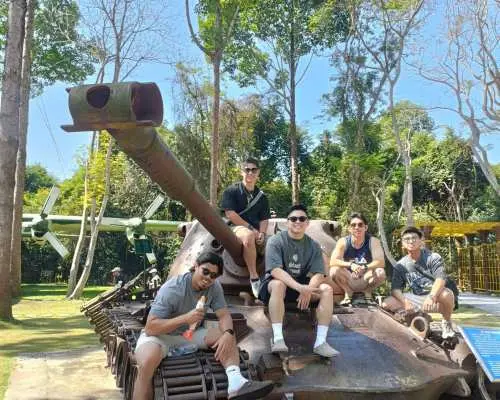
Explore war-era exhibits featuring preserved weapons, booby traps, and military equipment — a sobering and educational look at the realities of guerrilla warfare.

Optional: Head to the on-site shooting range and fire an AK-47, MK16, or other historical firearms under professional supervision (additional fee applies)
Important Info
Reminders
In the event of inclement weather such as typhoons or snowstorms, a decision on whether to cancel the tour will be made 1 day(s) before departure (local time 20:00). Notifications will then be sent via email
Travelers with the following conditions or other health issues that could be worsened by excessive stimulation should not participate in this activity: Pregnant women
Please arrive at the designated location 10 minute(s) before the scheduled departure time, as the tour will depart on time
FAQ
1. What unique experiences can visitors expect at the Cu Chi Tunnels?
Visitors to the Cu Chi Tunnels can expect a deeply immersive journey into Vietnam's wartime history. This includes the unique opportunity to crawl through original underground tunnel sections, providing a firsthand sense of the conditions soldiers endured. You can also watch a documentary film for historical context and taste manioc, a staple food that sustained guerrilla fighters.
2. What is the historical significance of the Cu Chi Tunnels during the Vietnam War?
The Cu Chi Tunnels held immense historical significance during the Vietnam War as a vital underground network used by Viet Cong fighters. They served as a strategic base, providing shelter, communication routes, supply lines, hospitals, and living quarters. This intricate system played a crucial role in enabling guerrilla warfare and demonstrating remarkable resilience against superior forces, becoming a symbol of Vietnamese determination.
3. What safety measures are in place for visitors exploring the Cu Chi Tunnels?
For visitors exploring the Cu Chi Tunnels, safety is prioritized through preserved and adapted tunnel sections. The tunnels are maintained to ensure structural integrity, and some sections have been widened and lit for easier passage. All visits are typically conducted with experienced guides who provide instructions and supervision. For the optional shooting range, professional supervision is mandatory to ensure a safe experience with firearms.
4. What are the recommended transportation options to reach the Cu Chi Tunnels from Ho Chi Minh City?
The most convenient way to reach the Cu Chi Tunnels from Ho Chi Minh City is by joining an organized tour. Booking through platforms like KKday provides comfortable round-trip transportation, typically with pickup from District 1, which saves you the hassle of planning logistics. Alternatively, visitors can arrange a private car or taxi, offering flexibility but at a higher cost. Public buses are available but require multiple transfers and longer travel times.
5. What activities are included for visitors exploring the Cu Chi Tunnels?
Activities for visitors at the Cu Chi Tunnels typically include exploring the preserved underground tunnel network, where you can crawl through various sections. You will also watch a short documentary film illustrating the tunnels' history and the community's wartime resilience. Additionally, visitors have the chance to taste manioc, a food central to wartime survival. An optional on-site shooting range is also available for an additional fee, offering an experience with firearms like the AK-47 or MK16 under professional supervision.
6. How do the Cu Chi Tunnels educate visitors about daily life during the Vietnam War?
The Cu Chi Tunnels educate visitors about daily life during the Vietnam War through several immersive experiences. A short documentary film vividly explains the history and challenges faced by the wartime community. Visitors can also crawl through the actual tunnels, gaining a physical understanding of the cramped conditions. Furthermore, tasting manioc, a wartime staple, offers a direct sensory connection to the diet that sustained thousands of guerrilla fighters underground for years.
7. What is the typical group size for tours exploring the Cu Chi Tunnels?
Tours exploring the Cu Chi Tunnels often aim for a more personal and immersive experience by keeping group sizes manageable. Many guided tours, such as those that include comfortable pickup from Ho Chi Minh City, typically limit groups to a maximum of 25 participants. This ensures that each visitor can engage more fully with the guide and the historical sites without feeling overcrowded.
8. Are the tunnels at Cu Chi Tunnels accessible for all visitors, including those with mobility concerns?
While the Cu Chi Tunnels offer a unique experience, they can be challenging for visitors with significant mobility concerns or claustrophobia. The original tunnels are very narrow, though some sections have been widened and modified to accommodate tourists. Visitors will need to bend or crawl in parts. There are also above-ground exhibits and documentary viewing areas that are more accessible, allowing everyone to learn about the tunnels' history even if they do not enter the underground passages.


