


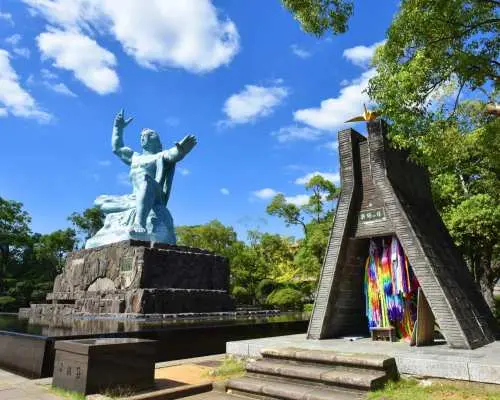
Nagasaki Matsugae Port Departure: Atomic Bomb Museum, Peace Park & Mt. Inasa Panorama View
Take in breathtaking panoramic vistas of Nagasaki from the Mt. Inasa Slope Car, one of the city’s most iconic viewpoints.
【Peaceful Reflection & Local Life】
Reflect on world history at the Peace Park and Atomic Bomb Museum, then enjoy local flavors and shopping in Chinatown and around Megane Bridge.
【Learn from an Expert Guide】
Be accompanied by an English-speaking guide who will share fascinating stories, cultural insights, and historical details about Nagasaki.
【Private Charter Vehicle】
Enjoy the comfort and flexibility of a private chartered vehicle that cover the city's major highlights in 5 hours.
Package Options


Product Info
Purchase Notice
Lunch is not included in this tour. Please arrange your own lunch.
Pick-up and drop-off will be at Nagasaki Matsugae Port.
Please let us know your preferred pick-up time and cruise name.
The tour duration is 5 hours. An additional charge will apply if you wish to extend the tour.
Reminders
Please be at pick up point 10 minutes before pick up time. Times are subject to change with or without notice.
Cancellation Policy
- Cancellations 11 day(s) (inclusive) before the selected date are allowed. Unused orders can be canceled for free
- For cancellations made 8 to 10 days prior to selected date, a cancellation fee of 20% will apply
- For cancellations made 2 to 7 days prior to selected date, a cancellation fee of 30% will apply
- For cancellations made 1 to 1 days prior to selected date, a cancellation fee of 40% will apply
- Cancellation is not allowed between 0–0 days from the selected date. Orders cannot be canceled or modified, and refunds will not be granted.
- Due to time zone differences, the confirmed cancellation date is based on the supplier’s local time. Please allow 2–5 business days to process your cancellation request, after which the cancellation fee will be charged according to the product’s cancellation policy. Once your refund request is confirmed, KKday will initiate the refund to your original payment method within 15 days. The actual refund timing depends on your card-issuing bank’s policy.
FAQ
1. What is the significance of visiting the Nagasaki Atomic Bomb Museum?
Visiting the Nagasaki Atomic Bomb Museum is deeply significant for reflecting on a pivotal moment in world history. It offers a poignant look at the devastation caused by the atomic bomb and the profound impact on human lives. The museum serves as a powerful reminder of the importance of peace and disarmament, honoring the victims while educating visitors about the tragic events of August 9, 1945, and promoting a future free from nuclear weapons. It provides a unique opportunity for contemplation and learning.
2. How does the Nagasaki Atomic Bomb Museum offer a unique visitor experience compared to other historical sites?
The Nagasaki Atomic Bomb Museum offers a unique and deeply personal experience by focusing specifically on the human impact and local narrative of the atomic bombing of Nagasaki. It presents a comprehensive overview through artifacts, photographs, and survivor testimonies, creating an intimate understanding of the event. Unlike broader historical sites, it zeroes in on the specific experiences of Nagasaki residents, their resilience, and the city's journey towards peace, providing a distinct perspective on global history.
3. What can visitors expect to see and reflect upon at the Nagasaki Peace Park?
At Nagasaki Peace Park, visitors can expect to encounter powerful symbols of peace and remembrance. The park's central feature is the towering Peace Statue, symbolizing humanity's desire for peace and a world free of nuclear weapons. Surrounding it are various monuments and plaques donated by countries worldwide, each conveying messages of hope and reconciliation. It's a place for quiet reflection, understanding the city's tragic past, and contemplating the universal wish for lasting peace.
4. What are the transportation options and general access information for reaching Mt. Inasa Panorama View?
To reach Mt. Inasa Panorama View, the most popular access method is via the Nagasaki Ropeway or the Mt. Inasa Slope Car, offering scenic rides up the mountain. Visitors typically take a bus or tram to the lower station, Fuchi-Jinja Station for the ropeway, or a dedicated shuttle to the slope car boarding point. On a private tour, you'll enjoy comfortable transportation directly to the access point, ensuring a convenient and hassle-free journey to one of Nagasaki's most iconic viewpoints for breathtaking vistas.
5. What kind of panoramic views can be enjoyed from Mt. Inasa, and what makes it a key viewpoint?
From Mt. Inasa, you can enjoy breathtaking panoramic views of Nagasaki city, recognized as one of the world's top three night views. The observatory offers a 360-degree vista, encompassing the city lights, Nagasaki Port, the surrounding mountains, and distant islands. Its elevated position and unobstructed sightlines make it a prime location for stunning daytime scenery and an unforgettable spectacle after sunset, showcasing Nagasaki's unique geographical beauty and urban landscape.
6. What cultural experiences and local attractions are available in Nagasaki Chinatown and around Megane Bridge?
Nagasaki Chinatown, one of Japan's oldest, offers a vibrant cultural experience with its colorful gates, bustling streets, and authentic Chinese restaurants. Visitors can savor various local flavors, including champon noodles and sara udon, and browse shops selling traditional goods. Nearby, the historic Megane Bridge (Spectacles Bridge) is famous for its elegant arches reflecting in the Nakashima River, creating a 'spectacles' illusion. It's a delightful area for leisurely strolls, photography, and enjoying Nagasaki's diverse heritage.
7. How does the private chartered vehicle enhance the exploration of Nagasaki's major highlights on this tour?
A private chartered vehicle significantly enhances the exploration of Nagasaki's highlights by providing unparalleled comfort, flexibility, and efficiency. It eliminates the need to navigate public transportation, allowing you to move seamlessly between sites like the Atomic Bomb Museum, Peace Park, and Mt. Inasa. The air-conditioned car ensures a relaxed journey, and the customized route maximizes your time, enabling you to experience more of Nagasaki's top sights within the 5-hour tour duration without any hassle.
8. What role does an English-speaking guide play in understanding the historical and cultural sites of Nagasaki?
An English-speaking guide plays a crucial role in enriching your understanding of Nagasaki's historical and cultural sites. The guide shares fascinating stories, cultural insights, and detailed historical context for each attraction, such as the Atomic Bomb Museum and Peace Park. This expert narration helps visitors grasp the deeper significance of what they are seeing, answers questions, and provides a more profound and memorable experience than exploring independently, making the history of Nagasaki truly come alive.


