


Kamikochi Independent Day Tour in Japan | Round-trip from Nagoya - Bookable for 1 person
- The classic secret spot of the Japanese Alps, 'Kamikochi', is beautiful in all seasons and perfect for escaping the summer heat or viewing autumn leaves.
- Direct shuttle bus from Nagoya, no transfers required, super convenient for an easy day trip.
- Walk along the Azusa River, visit Kappa Bridge, Taisho Pond, and other popular spots with scenery so beautiful you will not want to leave.
- A hiker's paradise, a national geographical park where private cars are restricted in Japan.
- Stroll through Kamikochi, the home of the Japanese gods, experience Japan's most spectacular mountain scenery, unlock Kappa Bridge and Myojin Bridge, and enjoy the pristine waters of Japan.
- Kamikochi is rare in Japan for having two titles: it is designated as both a 'Special Place of Scenic Beauty' and a 'Special Natural Monument'.
Package Options


Sightseeing Tours
| Tour Type | Shared tour |
| Transportation method | Transfer from meeting point |
| Departure Time | Standard Departure (8-9 am) |
| Luggage limit | 1 piece |
| Minimum participant requirement | 1 traveler |
| Tour types | None |
| Meal arrangement | Arrange yourself |
| Additional service & facility | Transfer included |
| Family-friendly | Free for children under 2 (no seat) |
| Seasonal | Autumn Maple |
| Sightseeing type | Natural sights, Hiking |
| Transport | Charter car, Bus tour |
Product Info
Kamikochi Hiking Tour: Classic Nature Hiking Route Recommendations
Walk into Kamikochi, known as the 'Hidden Gem of the Japanese Alps,' and enjoy a relaxing hike along the clear Azusa River and the magnificent Hotaka mountain range. The flat and easy-to-walk trails are suitable for beginners and families.
Recommended Route ①: Kamikochi Bus Terminal → Taisho Pond → Tashiro Pond → Kappa Bridge → Kamikochi Bus Terminal
Taisho Pond → Azusa River Left Bank / approx. 25 min walk (approx. 1.2km) → Tashiro Pond/Tashiro Marsh → approx. 20 min walk (approx. 1.0km) → Tashiro Bridge/Hotaka Bridge → Azusa River Right Bank Route / approx. 10 min walk (approx. 0.5km) → Weston Monument → approx. 20 min walk (approx. 1.1km) → Kappa Bridge → approx. 6 min walk (approx. 0.3km) → Bus Terminal
Recommended Route ②: Kamikochi Bus Terminal > Kappa Bridge > Dakesawa Marsh > Myojin Bridge > Hotaka Shrine Okumiya & Myojin Pond > Kamikochi Bus Terminal
Kamikochi Bus Terminal ⇄ 5 min (approx. 0.4km) Kappa Bridge ⇄ Azusa River Right Bank Route / approx. 10 min walk (approx. 0.5km) ⇄ Dakesawa Marsh approx. 40 min walk (approx. 2.0km) ⇄ Myojin Bridge ⇄ Hotaka Shrine Okumiya & Myojin Pond

Taisho Pond is located in Kamikochi, Nagano Prefecture. It was naturally formed in 1915 when the eruption of the nearby active volcano, Mount Yakedake, caused a mudslide that blocked the Azusa River. The lake surface is as calm as a mirror, reflecting the Hotaka mountain range and the blue sky, creating a serene and magnificent view. The 'withered trees' in the lake are the most iconic scenery of Taisho Pond, presenting a dreamy and mysterious atmosphere that changes with the morning mist, sunlight, and the seasons. It is particularly enchanting when shrouded in morning mist and is one of the most popular photo spots in Kamikochi.

Tashiro Pond is located in Kamikochi, Nagano Prefecture, between Taisho Pond and Kappa Bridge. It is a marsh-type pond formed by underground springs. The water is clear and transparent, and the calm surface reflects the Hotaka mountain range and the blue sky. Compared to Taisho Pond, Tashiro Pond is shallower and surrounded by wetland plants and grassland landscapes, each with its own charm in the lush green of spring and summer or the golden hues of autumn. It is often shrouded in mist in the early morning, creating a quiet and gentle atmosphere, making it an unmissable natural spot on the Kamikochi walking route.

Kappa Bridge is located in Kamikochi, Nagano Prefecture. It is a wooden suspension bridge spanning the Azusa River and is the most iconic landmark of Kamikochi. Standing on the bridge, you can overlook the Hotaka mountain range and Mount Yakedake, with the crystal-clear river below and magnificent, expansive scenery. The scenery is unique in every season—lush green in spring and summer, vibrant colors in autumn, and a quiet, silver-white landscape in winter. The area around the bridge is equipped with restaurants, cafes, and souvenir shops, making it a popular spot for tourists to rest and take photos, as well as the core hub for Kamikochi hiking trails.

On the trail to Kappa Bridge, you can occasionally see a family of wild Japanese macaques active in the forest. They often appear in groups, with adult monkeys keeping watch while the young ones play, cuddling and grooming each other—a heartwarming and cute scene. These monkeys are Japanese macaques, a species endemic to Japan, often inhabiting mountain forests and river valleys. *Reminder: Please keep a safe distance and do not feed or disturb them to ensure the safety of both yourself and the animals.
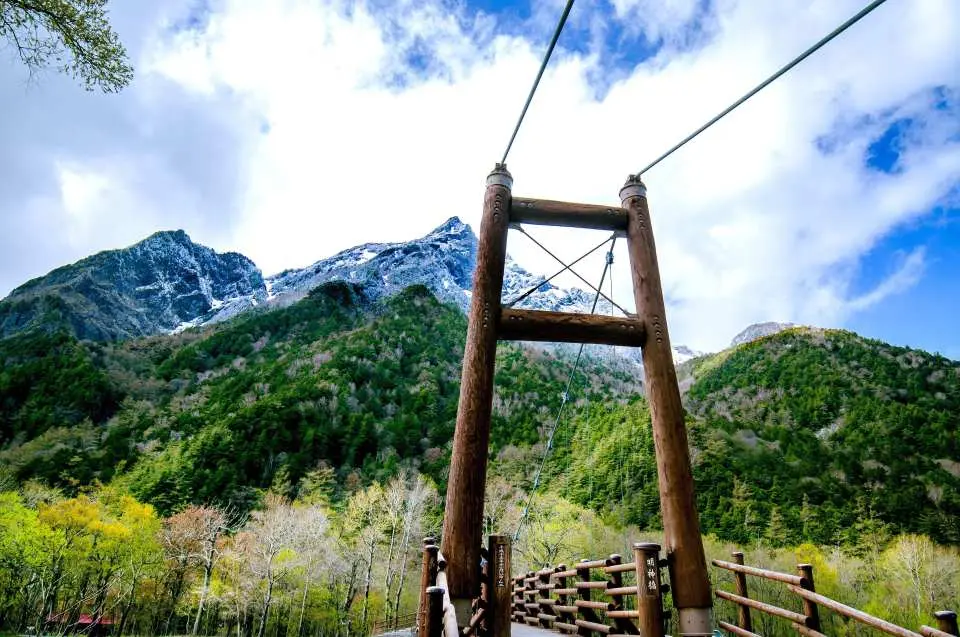
Myojin Bridge is located on the upper reaches of the Azusa River in Kamikochi, near Hotaka Shrine Okumiya. It is a wooden bridge with red railings, and the atmosphere is even more quiet and serene than Kappa Bridge. The stream under the bridge is crystal clear and turquoise, and the surroundings are surrounded by primeval forests, rich in natural atmosphere. The red bridge against the autumn maple leaves is particularly moving, and it is even more mysterious when shrouded in morning mist. It takes about 1 hour to walk from Kappa Bridge and is a recommended spot for travelers who love deep hiking and quiet mountain scenery.

Myojin Pond (First Pond) is located within the grounds of Hotaka Shrine Okumiya and is the most open and iconic pond in the Myojin Pond area. The water is as clear as a mirror, often reflecting the mountains and forests, creating a solemn and tranquil atmosphere. The small islands and ancient trees in the lake complement each other, and it becomes even more mysterious when shrouded in morning mist. As it is within the shrine's sacred grounds, an entrance fee is required. It is a place to slow down and quietly experience the beauty where nature and faith intertwine.

Myojin Pond is located deep within Kamikochi, within the sacred grounds of the Okumiya of Hotaka Shrine, offering a tranquil and solemn environment. The lake is formed by natural underground springs, resulting in crystal-clear water surrounded by primeval forests, creating a serene and sacred atmosphere. There are walking paths and a small pier by the pond, and the reflection of autumn leaves on the water is particularly moving. Compared to the bustling Kappa Bridge, Myojin Pond is a better place to slow down and experience the peace of nature and the soul.

Hotaka Shrine: Okumiya. Hotaka Shrine Okumiya is located in the Myojin area of Kamikochi, surrounded by mountains, water, and forests, with a solemn and tranquil atmosphere. The main deity is Hotaka-no-mikoto, the god of maritime protection and traffic safety, and is also considered the guardian god of the Northern Alps. The worship process is simple: 1️⃣ Purify your hands and mouth at the chozuya (water pavilion) 2️⃣ Drop a coin into the offering box 3️⃣ Bow twice, clap twice, and bow once more (two bows, two claps, one bow). Myojin Pond is right next to the shrine, so you can take a walk around the lake after praying to feel the peaceful atmosphere where nature and the sacred realm merge. It is fresh and green in spring and summer, and colorful with autumn leaves in the fall, making it a great place to pray and calm your mind all year round.
Purchase Notice
【Travel Conditions】
Departure/Destination: Aichi/Nagano
Duration: Same-day round trip
Transportation: Chartered Bus
Bus Company: AMA Transportation, etc.
Meals: Breakfast 0, Lunch 0, Dinner 0
Accommodation: None
Minimum Group Size: 1
Driver-Guide: 1
Tour Guide: 0
【Travel Planning/Implementation】
Operating Company: KKT Co., Ltd.
Address: 1770-23 Kashiwai-cho 1-chome, Ichikawa-shi, Chiba
License Number: Chiba Prefecture Governor Registered Travel Agency No. 2-1131
Reminders
In the event of inclement weather such as typhoons or snowstorms, a decision on whether to cancel the tour will be made 1 day(s) before departure (local time 18:00). Notifications will then be sent via email
Travelers with the following conditions or other health issues that could be worsened by excessive stimulation should not participate in this activity: High blood pressure, Heart disease, Acrophobia, Asthma, Epilepsy, Pregnant women
Please arrive at the designated location 15 minute(s) before the scheduled departure time, as the tour will depart on time
This product is a [shuttle service only]. It does not include a tour leader throughout the trip; we only provide language services regarding meeting points and times at the tourist destination.
Arrival times for each part of the itinerary may change due to traffic conditions, weather, festivals, or crowds on the day. We ask for your understanding if delays or cancellations occur due to the aforementioned or other force majeure factors, and you may not request a refund on these grounds.
Children aged 0-2 can travel for free if they do not occupy a seat; children aged 3 and above are charged at the adult rate.
Each passenger may bring one small carry-on bag. If you need to bring a suitcase or large luggage, you must purchase a luggage package for 2,000 JPY per item. Please contact customer service in advance to confirm or add a note to your order.
Once the order is confirmed, the date cannot be changed arbitrarily. You will be responsible for any losses incurred. If you have any questions, please contact customer service for assistance.
Please note that no refunds will be given if you do not participate in or discontinue the tour due to personal reasons, lateness, etc.
If you leave the group midway through the trip, it will be considered as a cancellation of the transaction, and no fees will be refunded. Furthermore, you will be responsible for any consequences regarding your personal safety or property resulting from this action.
Since Kamikochi is located in a mountainous highland area at an altitude of about 1,500 meters, the temperature is unstable and the weather is changeable. It is recommended to choose comfortable and light sports shoes, raincoats, umbrellas, hats, sunglasses, and bring a jacket to put on or take off according to the temperature changes on the day.
Reference vehicle types: 1-6 passengers: Toyota Alphard or equivalent; 9-13 passengers: Toyota Hiace or equivalent; 14-22 passengers: minibus; 22+ passengers: large bus. The above vehicles are for reference only; the actual vehicle will be adjusted based on the number of participants on the day.
FAQ
1. When is the best time to visit Kamikochi, and when does it typically close for the season?
Kamikochi is renowned for its beauty across all seasons, but it is especially recommended during summer and autumn. These periods are ideal for escaping the heat and enjoying the vibrant autumn foliage. The area generally closes to visitors during the colder months, typically from mid-November until late April, due to heavy snow and safety concerns. It officially reopens around late April, welcoming visitors back to its stunning landscapes.
2. Where exactly is Kamikochi located in Japan, and what makes it a significant natural area?
Kamikochi is a stunning highland valley situated in the Northern Japan Alps, within Nagano Prefecture. It's often referred to as "Japan's Alps" and is recognized as a "Special Place of Scenic Beauty" and a "Special Natural Monument." Its significance lies in its pristine natural environment, featuring majestic mountains, crystal-clear rivers, and serene wetlands at an elevation of 1,500 meters. Private cars are restricted, preserving its untouched landscape and unique ecological balance.
3. What are the most convenient transportation options to reach Kamikochi from major cities like Nagoya?
For convenience from Nagoya, a direct shuttle bus service is highly recommended. This service offers a hassle-free round trip without the need for transfers or personal driving, making it easy to enjoy a full day exploring Kamikochi's natural beauty. These direct buses eliminate the complexities of navigating public transport connections to the restricted entry points, allowing you to relax and enjoy the scenic journey directly to the valley.
4. What are the main attractions and experiences visitors can expect at Kamikochi?
Visitors to Kamikochi can expect to immerse themselves in breathtaking natural landscapes. Key attractions include walking along the Azusa River, crossing the iconic Kappa Bridge, and marveling at the reflective waters of Taisho Pond. It's a hiker's paradise, offering spectacular mountain views, pure waterways, and opportunities to explore spots like Myojin Bridge. The elevation of 1,500 meters provides a unique perspective of the surrounding peaks and clear lakes, making it ideal for nature lovers.
5. Are there any entry ticket requirements or special permits needed to visit Kamikochi?
Kamikochi itself does not require a specific entry ticket for general access to the valley. However, as private cars are restricted within this national park, visitors will need to use designated public transportation, such as shuttle buses or authorized taxis, to enter the main area. These transportation services will incur a fare. Some specific facilities or privately managed areas within Kamikochi might have separate fees, but there is no overarching entry fee for the natural park itself.
6. What unique natural features and scenery can be found along the hiking trails in Kamikochi?
Along Kamikochi's hiking trails, visitors will discover pristine natural features, often at an elevation of 1,500 meters. The Azusa River flows with exceptionally clear, pure waters, reflecting the surrounding majestic mountains. Trails lead through serene wetlands and ancient forests, offering close-up views of diverse alpine flora and fauna. The landscape includes dynamic scenery with towering peaks, crystal-clear streams, and tranquil ponds like Taisho Pond, creating a perfect environment for nature appreciation and photography.
7. What can visitors see or do around Kappa Bridge and Myojin Bridge in Kamikochi?
Kappa Bridge is a symbolic wooden suspension bridge over the Azusa River, offering iconic panoramic views of the Hotaka Mountains and Yakedake Volcano. It's a popular starting point for walks and a central spot for admiring the pure waters below. Myojin Bridge, located further upstream, provides access to the serene Myojin Pond and the tranquil Hotaka Shrine. This area offers a more peaceful and spiritual experience amidst ancient forests and stunning mountain backdrops, perfect for reflective walks.
8. How long does a typical visit to Kamikochi last, and what is the general itinerary for a day trip?
A typical visit to Kamikochi for a day trip allows for several hours of exploration, usually between 4 to 6 hours, depending on hiking preferences. Visitors commonly walk along the Azusa River, visit Kappa Bridge, and explore paths leading to Taisho Pond or Myojin Pond. The general itinerary for a day trip from Nagoya involves arriving by shuttle bus in the morning, enjoying self-guided walks and scenic views, having lunch at one of the valley's establishments, and then departing in the late afternoon to return to Nagoya.


