




Hanoi | Iconic of Hanoi Culture in 1 day | Departure from Hanoi
- Visit Ho Chi Minh Mausoleum and the nearby Presidential Palace and One Pillar Pagoda, an iconic Buddhist temple with unique architecture.
- Explore one of Vietnam's oldest Buddhist temples - Tran Quoc Pagoda.
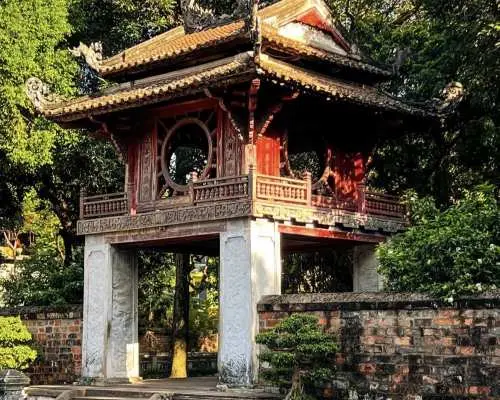
- Immerse in the historical site is Vietnam's first national university and is dedicated to Confucius.
- Experience a poignant and historically significant visit at Hoa Lo museum, which highlights the struggles faced by Vietnamese revolutionaries.
- Visit Ngoc Son Temple situated on a small island in the Hoan Kiem lake and enjoy your freetime after the tour
- Discover Vietnam Museum of Ethnology which showcases artifacts, exhibits, and reconstructions that highlight the traditions, customs, and lifestyles of the country's 54 ethnic minority groups.
Product Info
Important Info
Reminders
A minimum of 2 traveler(s) are required for the tour to depart. If the number of participants does not reach the minimum requirement, the tour will be canceled. An email regarding tour cancellation will be sent 1 day(s) before the departure date
In the event of inclement weather such as typhoons or snowstorms, a decision on whether to cancel the tour will be made 1 day(s) before departure (local time 18:00). Notifications will then be sent via email
FAQ
Hoan Kiem Lake is famed for its captivating legend of Emperor Le Loi and the magical sword, symbolizing Vietnam's struggle for independence. It's a spiritual and cultural heart of Hanoi, featuring the iconic Turtle Tower and Ngoc Son Temple, accessible via a picturesque red bridge. The lake serves as a tranquil oasis and a popular spot for locals and visitors alike, embodying the city's rich history and serene beauty.
To fully appreciate Hoan Kiem Lake, including a leisurely walk around its perimeter and a visit to Ngoc Son Temple, you should allocate approximately 1.5 to 2 hours. This allows ample time to enjoy the scenic views, cross the Huc Bridge, explore the temple's interior, and soak in the vibrant atmosphere. During weekends, when surrounding streets are pedestrianized, you might wish to linger longer.
Visitors can immerse themselves in history and local culture. At Ngoc Son Temple, reached via the iconic Huc Bridge, you can admire traditional Vietnamese architecture, see the preserved giant turtle specimen, and learn about the temple's legends. Around the lake, observe daily life, from morning exercises to evening strolls, and capture scenic views of the Turtle Tower. It's a blend of spiritual tranquility and vibrant city life.
The optimal times to visit Hoan Kiem Lake are early mornings, typically before 8 AM, or late afternoons and evenings. In the mornings, you can witness locals engaging in tai chi and exercises, offering a glimpse into daily Hanoi life. Evenings, especially on weekends when the surrounding roads become pedestrian-only, provide a lively atmosphere with street performances, cooler weather, and beautifully illuminated views.
Tran Quoc Pagoda is Vietnam's oldest Buddhist temple, dating back to the 6th century, significant for its historical resilience and beautiful setting on West Lake. The Temple of Literature, established in 1070, holds immense historical importance as Vietnam's first national university. It is dedicated to Confucius and educated generations of mandarins and scholars, symbolizing the country's profound respect for education and intellectual pursuits.
At the Ho Chi Minh Mausoleum complex, visitors can pay respects at the mausoleum itself, the final resting place of Ho Chi Minh. The area also includes the Presidential Palace, Ho Chi Minh's humble stilt house where he lived and worked, and the unique One Pillar Pagoda, an iconic Buddhist temple known for its distinctive architecture. The complex offers deep insights into Vietnam's revolutionary leader and modern history.
The Hoa Lo Prison Museum highlights Vietnam's tumultuous past, particularly the struggles faced by Vietnamese revolutionaries during the French colonial period. Exhibits detail the harsh conditions and the spirit of resistance of Vietnamese prisoners. Later, it became known as the "Hanoi Hilton" where American prisoners of war were held, providing a poignant perspective on different chapters of Vietnam's history.
The Vietnam Museum of Ethnology offers comprehensive insights into the country's diverse ethnic landscape. It showcases the traditions, customs, and lifestyles of Vietnam's 54 ethnic minority groups through an extensive collection of artifacts, traditional costumes, musical instruments, and life-size reconstructions of traditional houses. Visitors can learn about their unique cultures, rituals, and daily practices, providing a deep understanding of the country's social fabric.
Get Help


