



【Guaranteed Departure for Solo Traveler】Mt. Koya World Heritage Day Trip | Danjo Garan, Kongobuji Temple, Okunoin Temple | Includes Fire Offering and Origin Shrine (departing from Osaka)
【Group Formation Guarantee】A group is formed with just 1 person registered, and departure is guaranteed! No need to struggle to find enough people, and there will be no last-minute cancellations due to insufficient participants, ensuring your independent travel plans are 100% worry-free.
【Premium Small Group Tour】High-quality small group tours strictly limited to 18 people or less! Avoid the crowds and waiting of large buses and enjoy the most comfortable and flexible minibus/nanny van tour in the secret realm.
[Two pick-up points in the city] Pick-up and drop-off service at two points in Osaka: Shinsaibashi and Nipponbashi!
【Top-notch Driver/Guide】Fluent in both Chinese and Japanese! Zero communication barriers, providing in-depth yet easy-to-understand explanations of the founding legend of Kobo Daishi and the history of the Warring States period (English is continuously being improved, bringing you a warm and thoughtful service).
Package Options


Product Info
【Itinerary Design Concept: Koyasan History and Spiritual Perfection】This is not a rushed, check-off-the-board trip, but a meticulously planned journey of tracing the origins of faith from the holy site.
We strictly limit our group tours to a small, exclusive group of 18 people or less. A group is formed as long as one person signs up, guaranteeing you a trip!
Morning: From the starting point of the barrier to the highest head temple (a grand gathering of classic ancient temples in the morning), we will start from the [Gate], which symbolizes the barrier between the sacred and the mortal; we will enter the [Danjang Garan], the core of the Shingon Esoteric Buddhism, and pay homage to the vermilion [Konmoto Daita] under the most beautiful morning light; afterwards, we will visit the highest headquarters [Kongobuji Temple], and quietly appreciate the [Banryu-tei], the largest dry landscape garden in Japan.
Lunchtime (Shojin Ryori at your own expense, with complimentary discount coupons for renowned restaurants): We've thoughtfully reserved lunch time, avoiding the rigidity of typical group meals! A bilingual (Japanese and Chinese) driver-guide will introduce you to the most representative local "Shojin Ryori (traditional temple vegetarian cuisine)," and exclusively include discount coupons for renowned restaurants. This allows you to freely choose and easily enjoy authentic local delicacies such as Koyasan-exclusive sesame tofu, combining a high degree of freedom with a sense of occasion.
Afternoon: From the awe-inspiring fire offering to the historical origins of Warring States heroes (smooth route, no backtracking)
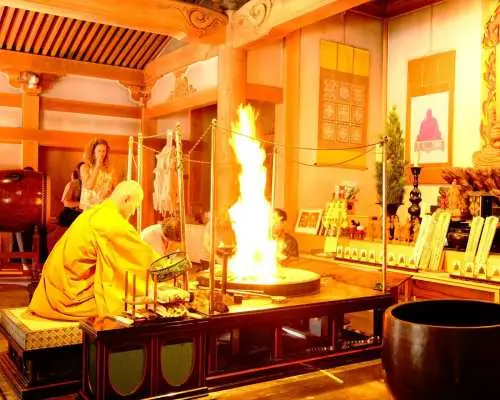
Pure Heart Temple - Fire Offering Prayer: The afternoon brings the climax of the practice. Step into the famous temple "Pure Heart Temple" and experience the sacred fire offering ceremony up close. Burn away troubles and welcome blessings amidst the roaring fire and the chanting of monks.
Okunoin Shrine & Imperial Temple: With a purified soul, step into the sacred realm shaded by 200,000 ancient cedar trees. Wander through the tombs of Sengoku daimyo such as Oda Nobunaga and Toyotomi Hideyoshi, and arrive at the Kobo Daishi Imperial Temple, where thousands of eternally burning lanterns flicker. Listen to the guide's in-depth explanation of the heroic legends behind the Taiga drama.
Tokugawa Ieyasu Mausoleum (World Heritage Site): Next, visit the Tokugawa family's mausoleum, which took 20 years to build, and admire the exquisite gold lacquerware and gorgeous wood carvings of the Edo Shogunate, as if you were in the "Kansai version of Nikko Toshogu Shrine".
Final Stop: The Perfect Ending to the Journey of Origins On the return journey at sunset, a private car takes you to the hidden World Heritage Site guarding this sacred land – [Nibutsuhime Shrine]. 1200 years ago, it was the divine guidance of the goddess here that enabled the master Kūkai to successfully establish Mount Kōya. The pilgrimage to the ethereal "Vermilion Wooden Arch Bridge" is truly complete when its reflection is shrouded in the tranquil pond, marking the perfect end to this grand pilgrimage from the "Gate (starting point)" to the "Shrine (origin)".
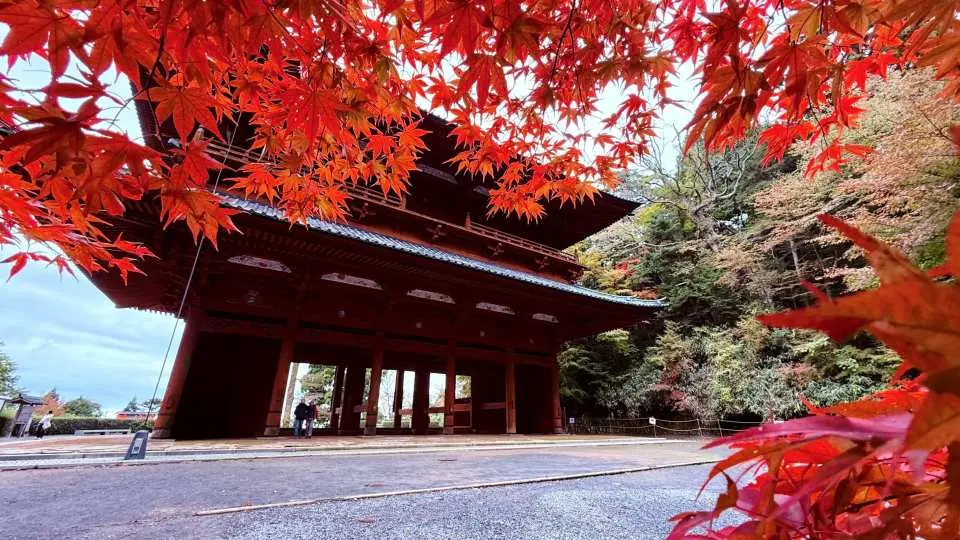
The gate to Mount Koya is a magnificent entrance to a spiritual sanctuary.

Kongobu-ji Temple, the head temple of the Shingon sect of Buddhism in Japan, is a sacred site of Japanese Buddhism. Founded in 816 AD by Kobo Daishi (Kukai), it has a history of over 1200 years.

Tan Shang Jia Lan

Participate in the Homa ceremony experience at Qingjing Xinyuan every day at 13:00, and experience a solemn and peaceful moment of blessing by burning Homa wood to make wishes.

The pilgrimage to Okunoin usually follows a path about 2 kilometers long, starting from Ichi no Bridge and ending at the Omiya Shrine. It is the most sacred and spiritual area of Mount Koya, and the culmination of the entire Mount Koya faith.

Geumgangbu Temple in the snow on January 3, 2026

The West Tower is a beautiful ancient tower, a spatial embodiment of the entire Shingon esoteric Buddhist doctrine. Together with the Great Pagoda to its east, it forms the cornerstone of the Koyasan faith and is a spiritual landmark that no visitor or believer should miss.

Nibu Tsuhisa Shrine, nestled in the Amano Basin at a height of 450 meters at the foot of Mount Koya, boasts over 1700 years of history and is a World Heritage Site. It enshrines a goddess dedicated to warding off misfortune. Every April, the "Hanamori Festival" (Flower Festival) is held to celebrate the deity. As the cherry blossoms of Mount Koya bloom, the ancient Buddhist sanctuary is gently awakened by the spring breeze; every step reveals a new vista, a serene and beautiful scene.

In the quiet depths of the dense forests of Mount Koya, explore the twin mausoleums built by Tokugawa Iemitsu, immerse yourself in the grandeur of the Edo Shogunate and the tranquility of Buddhist art, and feel the solemn atmosphere where history and faith intertwine.
Purchase Notice
●【Important Notice for Entering the Sacred Site】Mount Koya is a sacred site of the Shingon Buddhism sect. To show your piety and respect, please do not wear flip-flops, shorts, miniskirts, tank tops, or sleeveless tops, otherwise you may be denied entry. Thank you for your cooperation.
●We will send you the meeting time and location for the next day's itinerary, as well as the guide's and vehicle's license plate information, via email before 18:00 Japan time the day before your trip. If you haven't received the email, please check your spam/junk mail folder first; if you still haven't received it, please contact us promptly. If you receive multiple emails, the latest one will be the most accurate.
● This is a small group tour with a driver-guide (the driver also acts as the tour guide; no separate guide is provided) throughout the trip. The driver will be on the bus to assist you and ensure a smooth experience. On the day of the tour, passengers who have chosen different guided languages may be placed in the same vehicle. Please feel free to communicate with the driver-guide if needed. To address any potential communication difficulties with the driver's English, we will use translation software for real-time translation.
● If some attractions are temporarily closed, the driver/guide will flexibly adjust the itinerary according to the actual situation on the day, but will still arrange exciting content for you, so please travel with peace of mind. In the event of force majeure such as traffic, weather, holidays, or large crowds, the arrival time and content of the itinerary may be adjusted (the driver/guide has the right to adjust/cut the itinerary on-site). Your understanding and cooperation are appreciated; refunds cannot be requested on this basis. Thank you for your understanding.
● Your journey is about to begin. Have a wonderful time! Please feel free to contact us if you have any questions.
Reminders
A minimum of 1 traveler(s) are required for the tour to depart. If the number of participants does not reach the minimum requirement, the tour will be canceled. An email regarding tour cancellation will be sent 1 day(s) before the departure date
In case of delays caused by traffic, weather, or other force majeure factors resulting in the cancellation of some itinerary attractions, please contact customer service. We will arrange a partial refund for you
In the event of inclement weather such as typhoons or snowstorms, a decision on whether to cancel the tour will be made 1 day(s) before departure (local time 18:00). Notifications will then be sent via email
Please arrive at the designated location 10 minute(s) before the scheduled departure time, as the tour will depart on time
FAQ
1. What is the historical significance of Koyasan as a World Heritage site?
Koyasan holds approximately 1,200 years of religious history, established by Kobo Daishi (Kukai) as the center of Shingon Buddhism. It is renowned for its spiritual landscape, home to numerous temples and monasteries. As a UNESCO World Heritage site, it represents a profound intertwining of history, nature, and faith, offering insights into deep Japanese culture and spirituality.
2. How much time is recommended to explore key attractions like Okuno-in Temple and Danjo Garan at Koyasan?
To fully appreciate the spiritual atmosphere of Okuno-in Temple and the architectural grandeur of Danjo Garan, allocating several hours for each is ideal. Okuno-in, with its vast cemetery and Kobo Daishi's mausoleum, can take 2-3 hours to walk through respectfully. Danjo Garan, featuring the Konpon Daito Pagoda and Kondo Hall, typically requires 1-2 hours. A full day allows for a comprehensive experience of these and other significant sites.
3. What can travelers expect from a Koyasan day trip experience focusing on its spiritual and cultural aspects?
A Koyasan day trip offers a deep dive into Japanese spirituality and culture. Travelers can expect to visit ancient temples like Kongobuji and Kongo Samadhi-in, witness traditional Buddhist architecture, and explore the serene forests of Okuno-in. The experience often includes opportunities to learn about Shingon Buddhism and enjoy vegetarian Shojin Ryori, immersing visitors in a tranquil and historically rich environment.
4. What are the convenient transportation options for reaching Koyasan from central Osaka?
For a hassle-free journey to Koyasan from central Osaka, organized day tours often provide convenient round-trip transportation. These typically depart from accessible meeting points such as Shinsaibashi or Nihonbashi. Alternatively, public transport involves taking the Nankai Koya Line from Namba Station to Gokurakubashi, then transferring to the Koyasan Cable Car.
5. How can visitors navigate between Koyasan's attractions like Kongobuji Temple and Reihokan efficiently?
Koyasan offers local bus services that connect major attractions, making navigation efficient. Buses run frequently, linking sites such as Kongobuji Temple, Reihokan, and the Okuno-in entrance. Walking is also an option for closer sites, allowing visitors to absorb the tranquil atmosphere. Clear signage and maps are usually available to guide visitors between points of interest.
6. What unique cultural experiences, such as Shojin Ryori, are available during a Koyasan day tour?
A Koyasan day tour provides unique cultural immersion. Beyond exploring World Heritage sites, travelers can experience Shojin Ryori, traditional Buddhist vegetarian cuisine, which offers insight into monastic life and culinary traditions. Some tours may also include opportunities to engage with local customs or learn about Kobo Daishi's teachings from knowledgeable guides, enhancing the spiritual journey.
7. Which significant sites, like Nibutsuhime Shrine and Kongo Samadhi-in Temple, are included in a Koyasan World Heritage tour?
A comprehensive Koyasan World Heritage tour typically includes several historically significant sites. You can expect to visit Danjo Garan, the central monastic complex, Kongobuji Temple, the head temple of Shingon Buddhism, and the serene Okuno-in Temple. Other important sites often covered are Reihokan Museum, Kongo Samadhi-in Temple, and the ancient Nibutsuhime Shrine, offering a rich cultural and spiritual itinerary.
8. What advantages does a small group tour offer for exploring Koyasan from Osaka?
A small group tour for exploring Koyasan from Osaka offers several advantages. With a group size of 20 people or less, it ensures a more personalized experience and easier navigation through the sites. Such tours often include a professional guide who can provide in-depth insights in multiple languages, enhancing understanding of Koyasan's rich history and culture, while also guaranteeing departure even for solo travelers.


