

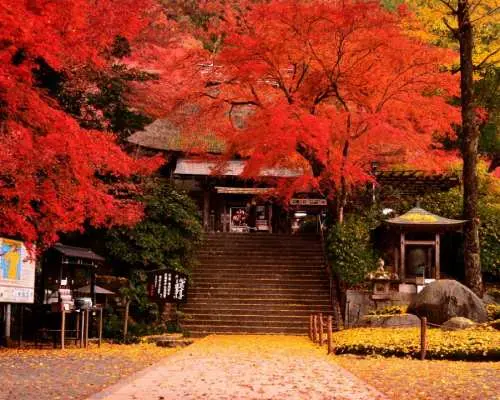

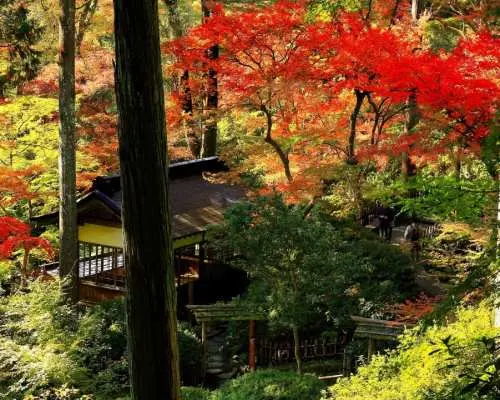

One-Day Autumn Saga Foliage Viewing Tour: Daikozenji Temple, Kunen-an, Yoshinosato Station, Yutoku Inari Shrine, and Mifuneyama Rakuen
Kunenan is located in Kanzaki City, Saga Prefecture, Kyushu, Japan. It is a private villa and garden built in the Meiji period. It was named after its owner, Yataro Itami, who spent nine years carefully building it.
Yoshinogari Station is located in Yoshinogari Town, Kanzaki District, Saga Prefecture, Kyushu, Japan. As a multifunctional station that combines rest, shopping and regional cultural experience, it is an ideal transit station for tourists visiting the Yoshinogari ruins or sightseeing in Saga.
Product Info
Purchase Notice
*The above itinerary is for reference only. The attractions, order of tours and time may be changed according to the specific situation on the day.
Reminders
The minimum number of participants is 2. If the number of participants does not reach the minimum number of participants specified above, the tour will be cancelled and an email notification of the cancellation will be sent one day before the departure date.
Notes:
(1) Once the order is confirmed, the date cannot be changed at will. If any loss is caused, the customer will be responsible for it.
(2) When making a reservation, please be sure to provide complete information (name + number of people + phone number + WeChat ID + boarding location) to avoid errors that may affect your trip.
(3) Please carry your passport and valuables with you during your trip and keep them in a safe place. You will be solely responsible for any loss, theft, or damage.
(4) Elderly persons, patients with cardiovascular diseases such as hypertension and heart disease, and pregnant women are advised to be accompanied by their relatives.
(5) This tour does not accept individual registrations from customers under the age of 18. If you wish to register, your guardian must also register for this tour.
(6) This is a fixed carpooling itinerary. Please ensure that you adhere to the time limits for each attraction and follow the driver's instructions.
If you would like to flexibly adjust your itinerary, please refer to our private charter car tour service.
(6) Please note that no refund will be given if you fail to participate or cancel the trip due to personal reasons, lateness, etc.
(VII) If you leave the group during the trip, the transaction will be deemed invalid and no refund will be given. If any personal or property safety is affected by this, the consequences will be borne by the individual.
(8) The arrival time of each itinerary may vary depending on traffic conditions, weather, festivals, and crowds. If the itinerary is delayed or cancelled due to the aforementioned or other force majeure factors, please understand that this is not a valid reason for requesting a refund.
(IX) Please wear comfortable clothing and shoes for this tour.
(10) Please be sure to comply with local laws and regulations in Japan and do not bring items prohibited by Japanese law to avoid violating the law and affecting your own rights and interests.
(11) During free time, you should pay attention to your personal safety and property. If you fail to heed the advice and any accidents or losses occur, you will be solely responsible.
Cancellation Policy
- Cancellations 7 day(s) (inclusive) before the selected date are allowed. Unused orders can be canceled for free
- For cancellations made 5 to 6 days prior to selected date, a cancellation fee of 50% will apply
- Cancellation is not allowed between 0–4 days from the selected date. Orders cannot be canceled or modified, and refunds will not be granted.
- Due to time zone differences, the confirmed cancellation date is based on the supplier’s local time. Please allow 2–5 business days to process your cancellation request, after which the cancellation fee will be charged according to the product’s cancellation policy. Once the cancellation is confirmed, you will receive your refund within 14 working days.
FAQ
Daikozenji Temple, known as a 'sacred spot for autumn leaves in Kyushu,' typically enters its peak viewing season in late November to early December, when the mountains are ablaze with red foliage. The autumn colors at Mifuneyama Rakuen Garden are most spectacular from mid-November to early December, with its illuminated night viewing events being a major highlight. Visitors can enjoy a rich tapestry of autumn colors during this period.
Yutoku Inari Shrine is vast, encompassing the main shrine, the Okunoin (inner sanctuary), a Japanese garden, and various other halls. To explore thoroughly and take photos, we recommend allocating at least 1.5 to 2 hours. If you wish to climb to the Okunoin for a magnificent view, add approximately 30-40 minutes for the walk.
Yoshinogari Historical Village is a multifunctional hub offering local agricultural products, local delicacies, and insights into Saga's culture. Kyunengan is an exquisite Japanese garden and private villa, open to the public for only a short period each year. Visitors can admire its unique garden artistry that blends with natural landscapes, experience the elegant atmosphere of the Meiji era, and enjoy a tranquility and beauty distinct from the autumn foliage.
At Yutoku Inari Shrine, foxes are considered messengers of the Inari deities, guarding rice, business, and harvest. These fox statues often hold ears of rice, jewels, or scrolls in their mouths, symbolizing wealth, abundance, and wisdom. Worshippers show them reverence, praying for prosperity in business and bountiful harvests.
Daikozenji Temple is an ancient Tendai Buddhist temple with over 1300 years of history, built into the mountainside. It is renowned not only for its autumn foliage but also for its rich historical depth. The temple enshrines Yakushi Nyorai (Medicine Buddha) and was once an important Buddhist center in Kyushu. Visitors can explore its ancient architecture and serene gardens, experiencing the profound culture and Buddhist atmosphere of this millennium-old temple.
Mifuneyama Rakuen Garden offers a variety of rich scenery in autumn beyond the classic maple leaves. For instance, the colossal 'Mifune Mountain' itself serves as a magnificent natural backdrop, with its cliffs and steep slopes intertwined with autumn colors. Additionally, the garden's ponds, rock formations, and meticulously arranged Japanese garden landscapes present multi-layered beauty when set against the backdrop of autumn hues. The night illumination events further add a dreamy ambiance to the grounds.
Kyunengan is a private villa and garden from the Meiji era, and its most unique feature is that it is only open to the public for a brief period during the autumn foliage season (typically nine days in mid-November). Due to large crowds and the need to protect the historical site, visitor numbers are often controlled, or advance reservations may be required. Visitors are strongly advised to confirm the opening dates and visiting methods for the year in advance and to allow ample time for queuing to ensure a smooth entry to admire the garden.
When visiting Daikozenji Temple to see the autumn leaves, it is generally recommended to use public transportation or join a tour. If using public transport, you can first take the JR Kagoshima Main Line to Kiyama Station, then transfer to a local bus or taxi. As it gets very crowded during the autumn foliage season, parking spaces may be limited. Opting for shuttle buses or chartered services will be more convenient, allowing you to focus on enjoying the beautiful autumn scenery without transportation and parking worries.
Get Help


