




A classic day trip to Ise-Toba, Japan | Ise Grand Shrine & Toba Aquarium / Mikimoto Pearl Island & Meoto-Iwa (Wedded Rocks) | Round trip from Nagoya
- Cultural Experience: Gain a deeper understanding of Shinto rituals and Japanese history and culture at Ise Grand Shrine
- Ocean Wonders: Experience the pearl-diving life of the Ama women, visit the Pearl Museum, and learn about the origin and production process of pearls
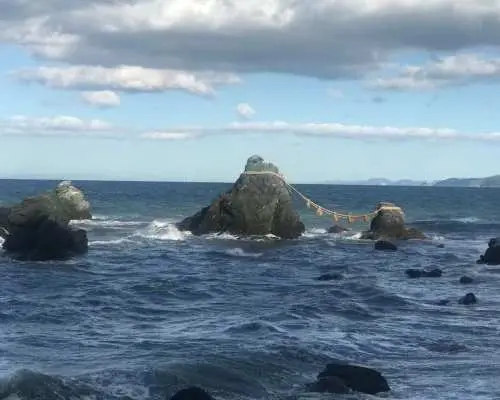
- Natural beauty: Enjoy the stunning views of Meotoiwa Rocks and experience the tranquility of nature at Futami Seaside Park
- Spiritual Prayer: Pray for safe travel and happiness at Futami Okitama Shrine
Package Options


Sightseeing Tours
| Tour Type | Shared tour |
| Transportation method | Transfer from meeting point |
| Luggage limit | 1 piece |
| Minimum participant requirement | 6 travelers |
| Meal arrangement | Arrange yourself |
| Sightseeing type | Natural sights, Temples & shrines |
| Transport | Bus tour |
Product Info
The content of this product is provided by machine translation and may not reflect the actual information, please take this into consideration before booking.
Starting from Nagoya city, embark on a one-day cultural and natural experience tour of Mie Prefecture.
First, visit Ise Grand Shrine, known as a place every Japanese person should visit at least once in their lifetime. It enshrines Amaterasu, the ancestral deity of the Japanese Imperial Family, and is steeped in history and exudes a sacred and solemn atmosphere. After visiting the Outer Shrine and Inner Shrine, you can stroll through the bustling Oharai and Okage Yokocho streets, experiencing the charm of the Edo period and enjoying local delicacies such as Ise udon noodles and Akafuku mochi.
Next, we will visit Mikimoto Pearl Island in Toba Bay, the birthplace of the world's first cultured pearl. Here, you can not only visit the Pearl Museum and admire various pearl jewelry, but also watch a live demonstration of traditional pearl diving by "Ama" (female divers) dressed in white, gaining a deeper understanding of the origin and heritage of Japanese pearl culture.
If you choose not to visit Pearl Island, you can also visit the nearby Toba Aquarium—Asia's only aquarium showcasing the rare "mermaid," the dugong (manatee). The aquarium displays over 1,200 marine creatures and is a paradise for families and nature lovers.
Finally, we will visit Futami Kogyoku Shrine, located on the Futamiura coast, where we can pray for good fortune and peace at this shrine whose sacred symbol is the "Meoto Iwa" (couple rocks). This place has been a place of purification for those going to Ise Grand Shrine since ancient times, and its atmosphere is tranquil and peaceful.
After a fulfilling day, we took a bus back to Nagoya city, concluding this enriching trip that blended Japanese religious culture, marine experiences, and spiritual prayers.
- Trip suggestion reminder: Mikimoto Shinjujima Island vs. Toba Aquarium (choose one)
Mikimoto Pearl Island: Suitable for travelers interested in Japanese pearl culture and history, or adults who prefer static visits and cultural experiences.
Toba Aquarium: Suitable for family trips, couples, or guests who love marine life. The venue is diverse, lively, interesting, and highly interactive.
Sunny day: Pearl Island is recommended, as the outdoor haenyeo (female divers) performance is the best to watch.
Rainy days: We recommend the aquarium, as it's entirely indoors and the trip won't be affected by the weather.
- Things to know beforehand -
- The group size is 6-45 people.
- Small group tours are for 1-13 people; large bus tours are for 22-45 people. The actual number of people will be adjusted according to the number of people on the day.
- For groups of 14 or fewer, the driver will also serve as the tour leader (who speaks Chinese and basic English); for groups of 14-45, an additional tour leader (who speaks Chinese and basic English) will be added.
- Reference vehicle types: 5-8 seater: Toyota Alphard or equivalent; 9-14 seater: Toyota Hatch or equivalent; 18-22 seater: minivan; 22 or more seater: bus. The above vehicles are for reference only; the actual vehicle model will be adjusted according to the number of passengers on the day of the trip.
- Children aged 0-2 years old travel free for large groups (if they do not occupy a seat); children 3 years and older pay the same price as adults. Groups of 13 or fewer cannot exceed this limit; children pay the same price as adults. (Please note if you are booking with children.)
- Each passenger may bring one light handbag. For suitcases or larger luggage, an additional 2000 yen will be charged per item on-site. Please contact us in advance or indicate this in the order notes.
【Ise Grand Shrine】: One of Japan's most important shrines, divided into the "Inner Shrine" and the "Outer Shrine". The Inner Shrine is located on the banks of the Isuzu River in Ise City, surrounded by dense forests, creating a solemn and serene environment. The main pilgrimage route passes by: Uji Bridge: symbolizing the entrance to the sacred grounds.


Isuzukawa Mitaraiba: A purification area before worship, where you can wash your hands and rinse your mouth. Main Shrine (Goshoden): The main shrine for Amaterasu Omikami. While most visitors can only access the outer perimeter, a strong sense of sacredness is still palpable. The architectural style is called "Kamimei-zukuri," the oldest form of shrine architecture in Japan, featuring thatched roofs and horizontal beam decorations, pure and solemn. Special Tradition: Shikinensengu (式年迁宫): Every 20 years, a "sengu" is performed, moving the deity's body and ritual implements from the old shrine to a new one, and rebuilding all shrine buildings. This tradition has continued for over 1300 years, symbolizing "rebirth and perpetuity." The most recent relocation was in 2013, and the next is expected in 2033.


Suggested order of worship: Outer Shrine → Inner Shrine (if time permits), but most tour itineraries only include a visit to the Inner Shrine. Photography of the Main Hall and Shinto priests is prohibited inside the Inner Shrine; please respect the shrine's rules. You can obtain a goshuin (traditional shrine stamp) at the Kagura Hall as a souvenir of your visit.


For lunch, you can freely choose local snacks (such as Ise udon noodles, nigiri sushi, and Akafuku). Recommended lunches around Ise Grand Shrine: 1. Fukusuke Ise Udon (福助伊势乌龙面) Recommendation: A century-old shop, using handmade udon noodles with Ise-style sauce, resulting in a chewy and rich flavor. Popular dishes: Ise udon noodles, yam udon noodles, fried tofu udon noodles Price range: ¥800~1,200 2. Akafuku Main Store (desserts + light meals) Recommendation: Founded in 1707, it's a classic dessert shop popular after visiting Ise Grand Shrine. Popular dishes: Akafuku mochi with matcha, with an dine-in rest area. Suitable for: Travelers looking for desserts or a light lunch. Price range: ¥400~1,000


Mikimoto Pearl Island is the birthplace of pearl farming, and visitors can enjoy amphibious diving performances, visit a pearl museum, and purchase jewelry.


Mikimoto Shinjujima Business Hours


If the opening hours for the day are known to be 16:30, then the last performance of the Haenyeo (female divers) will be at 15:30, and the 16:30 performance will not be held.


Toba Aquarium, located in Toba City, Mie Prefecture, Japan, is the only aquarium in Asia where you can see dugongs. Dugongs, often called the "prototype of mermaids," are endangered marine mammals. The dugong here, affectionately known as "Selena," has been kept at the aquarium for over 30 years. She consumes about 30 kilograms of seaweed daily, has a rounded body, and a gentle temperament, making her a favorite among visitors. Opening Hours and Ticket Prices (Tickets not included in the tour): Opening Hours: Open year-round, 9:30 AM to 5:00 PM (8:30 AM to 5:30 PM from July 20th to August 31st) Ticket Prices: Adults (High school students and above): 2,800 yen Elementary and junior high school students: 1,600 yen Children (3 years and older): 800 yen Address: 3-3-6 Toba, Toba City, Mie Prefecture Phone: 0599-25-2555.


Futami Kogyoku Shrine: A frog shrine that blesses happy marriages, harmonious relationships, good fortune, and safe travels at home. "Memoiraku" (Couple Rocks) is the name of a type of unusual rock formation found throughout Japan. It refers to two adjacent rocks that resemble a couple. The most famous example is the Memoiraku at Futami Kogyoku Shrine in Futami-cho, Ise City, Mie Prefecture.


Purchase Notice
【Travel Conditions】
Travel origin and destination: Aichi and Mie
Travel days: Round trip
Transportation: Chartered bus
Bus company name: AMA Transportation
Meals: Breakfast 0 times, Lunch 0 times, Dinner 0 times
Accommodation facilities: None
Minimum group size: 6
Team leader: 1
Tour guide: 0
【Travel Planning/Implementation】
Operating company name: KKT Co., Ltd.
Address: No. 1770-23, Kashiwai-cho 1-chome, Kawa City, Chiba Prefecture
License Number: Chiba Prefecture Governor's Travel Business Registration No. 2-1131
Reminders
A minimum of 6 traveler(s) are required for the tour to depart. If the number of participants does not reach the minimum requirement, the tour will be canceled. An email regarding tour cancellation will be sent 4 day(s) before the departure date
In case of delays caused by traffic, weather, or other force majeure factors resulting in the cancellation of some itinerary attractions, please contact customer service. We will arrange a partial refund for you
In the event of inclement weather such as typhoons or snowstorms, a decision on whether to cancel the tour will be made 1 day(s) before departure (local time 18:00). Notifications will then be sent via email
Travelers with the following conditions or other health issues that could be worsened by excessive stimulation should not participate in this activity: High blood pressure, Heart disease, Acrophobia, Asthma, Epilepsy, Pregnant women
Please arrive at the designated location 15 minute(s) before the scheduled departure time, as the tour will depart on time
The tour times and arrival times for each attraction may vary depending on the weather and traffic conditions on the day (may be changed, shortened, or compressed). We apologize for any inconvenience this may cause.
Please adhere to the meeting time and the schedule of each tour.
Meals are not included in the itinerary; guests are responsible for their own lunch. There may be dining options at some attractions, or guests may bring their own.
This tour does not accept bookings from travelers under the age of 18 traveling alone. If you wish to book, please have your guardian book the tour with you.
This is a fixed-route carpooling trip. Customers participating in this trip must adhere to the stop times at each attraction and follow the driver's instructions.
If you leave the group during the trip, the transaction will be considered invalid and no refund will be given. You will be solely responsible for any personal injury or property damage resulting from this.
Please be aware that traffic jams and other unforeseen circumstances may occur during weekends and public holidays. The driver/guide may adjust the itinerary based on the specific situation. Refunds cannot be requested due to these factors.
Please be aware that small group tours will be conducted using a vehicle where the driver also acts as the tour leader. This is a shared ride service, meaning other guests will be traveling with you, and parking is not allowed outside of tourist attractions.
FAQ
Ise Grand Shrine, or Ise Jingu, is Japan's most revered Shinto shrine, dedicated to Amaterasu Omikami, the sun goddess and ancestral deity of the Imperial Family. Its spiritual importance stems from being the spiritual home of the Japanese people. Historically, it holds immense cultural weight, symbolizing ancient Shinto traditions and the deep connection between the Imperial Household and the nation's spiritual well-being, making it a pivotal site for understanding Japanese heritage.
The tradition of rebuilding Ise Grand Shrine every 20 years is known as Shikinen Sengu. This practice, dating back over 1,300 years, involves meticulously reconstructing the main shrine buildings, bridges, and torii gates on an adjacent site using traditional techniques. It symbolizes the eternal renewal and transmission of ancient architectural skills, ensuring the purity and vitality of the shrine while passing down craftsmanship to new generations.
Yes, Ise Grand Shrine is widely regarded as the spiritual heart and most sacred site in Japan. It consists of two main shrines, Naiku (Inner Shrine) dedicated to Amaterasu Omikami, and Geku (Outer Shrine) dedicated to Toyouke Omikami, the goddess of food. Its unparalleled spiritual importance and ancient traditions distinguish it as the paramount sanctuary for Shinto worship and national reverence.
Visiting Ise Grand Shrine offers a profound cultural experience due to its deep historical roots and sacred atmosphere. Guests can gain a deeper understanding of Shinto rituals, observe traditional Japanese architecture, and explore the serene natural surroundings. The approach through Oharai-machi and Okage-yokocho provides a glimpse into traditional Edo period life, enriching the cultural immersion beyond the shrine itself.
At Mikimoto Pearl Island, visitors can witness the captivating tradition of Ama pearl divers, who perform demonstrations of their free-diving techniques. The Pearl Museum offers insights into the history of pearls, their cultivation process, and displays of exquisite pearl jewelry. It’s an engaging way to learn about the origin and production of pearls, and a unique cultural highlight.
The Meotoiwa Rocks, or "Wedded Rocks," are two large rocks tied together by a sacred shimenawa rope, symbolizing marital harmony and a good match. Located offshore, they offer stunning views, especially at sunrise when the sun appears between them. Futami Okitama Shrine, nearby, is dedicated to the gods of marriage and purification, and is notable for its numerous frog statues, believed to bring good luck and safe travel.
Toba Aquarium is one of Japan's largest aquariums, renowned for its diverse collection of marine life. It features various zones showcasing creatures from local Ise-Shima waters and around the world. Highlights often include adorable dugongs, sea otters, various species of dolphins and seals, and a wide array of colorful fish and invertebrates in extensive, beautifully designed tanks.
Within Ise Grand Shrine's vast complex, key highlights include Naiku (the Inner Shrine) dedicated to Amaterasu Omikami, and Geku (the Outer Shrine) for Toyouke Omikami. Visitors should also walk through the serene forest paths leading to the main sanctuaries, cross the Uji Bridge which marks the entrance to Naiku, and observe the purity of the Isuzu River. The distinct architectural style of the shrines is also a must-see.
Get Help


