


Kenting, Taiwan | PADI Open Water Diver Course - Taiwan Dive
- Professional instructor team with small class sizes (1:3 instructor-to-student ratio) for a stress-free learning experience.
- Course includes lunch, classroom theory, and open water training sessions, with dive computers provided throughout the course.
- Professional underwater photography by instructors; take home photos along with your Open Water Diver certification.
Water Activities
| Water activity type | Diving certification class |
| Special water activity | Trial dive (beginner) |
| Instruction language | Mandarin |
Product Info
What You Can Expect
1 Day
- 08:30On the first day of the course, assign and choose the equipment that suits you
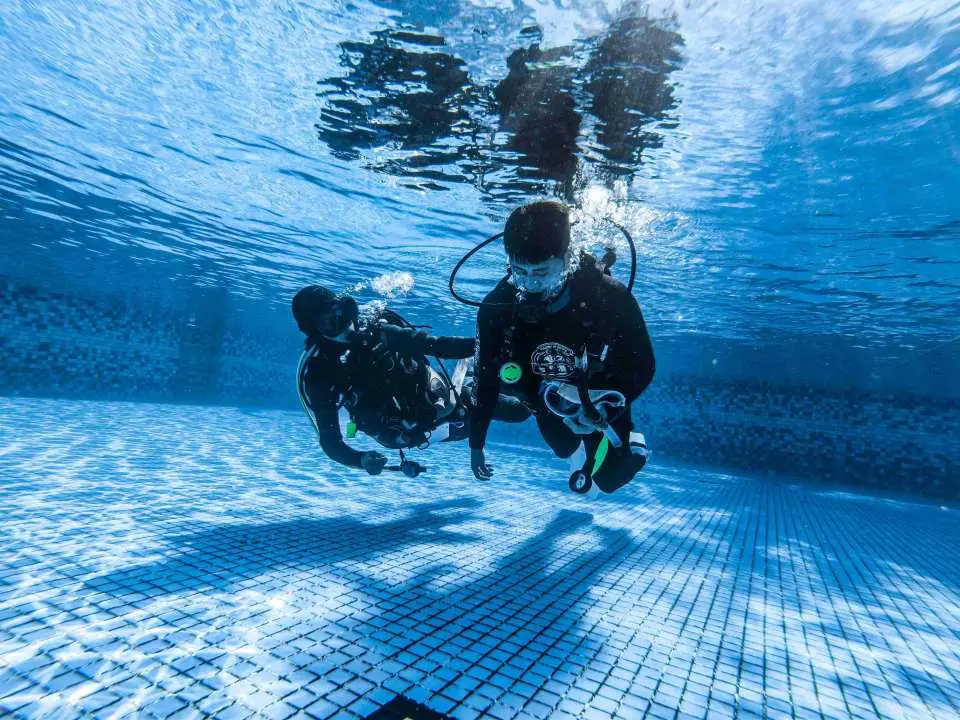
- 10:00Confined Water Teaching
- 12:00lunch time
- 13:00Confined Water Teaching
- Practice Neutral Buoyancy Control


2 Day
- 08:00The first and second marine internship
- 12:00lunch time
- 13:30Diving Theory Course
- 15:00knowledge review assignments

3 Day
- 08:00The third and fourth marine internships
- 12:00lunch time
- 13:30Subject Written Examination and Review Papers
- 14:30Action review and dive log filling
- Graduation! Congratulations on qualifying as a PADI Open Water Diver!


Purchase Notice
- Please make sure you have no serious health problems when participating in this event. Please refer to this declaration .
Includes/Excludes
- Dining expenses
- The fee includes visa fee and insurance protection
- full equipment use
- Accommodation
- personal expenses
Reminders
A minimum of 1 traveler(s) are required for the tour to depart. If the number of participants does not reach the minimum requirement, the tour will be canceled. An email regarding tour cancellation will be sent 2 day(s) before the departure date
In case of delays caused by traffic, weather, or other force majeure factors resulting in the cancellation of some itinerary attractions, please contact customer service. We will arrange a partial refund for you
In the event of inclement weather such as typhoons or snowstorms, a decision on whether to cancel the tour will be made 1 day(s) before departure (local time 08:00). Notifications will then be sent via email
Travelers with the following conditions or other health issues that could be worsened by excessive stimulation should not participate in this activity: High blood pressure, Heart disease, Asthma, Epilepsy, Pregnant women
You must bring your own swimsuit and a passport photo (no size limit, electronic file is also acceptable).
During the course, professional teaching, lunch, and marine internship are included.
How to Redeem Your Voucher
How to Use Your Voucher
- Please present the e-voucher on-site
Meeting Point
Location Name: Taiwan Dive Center, Kenting Branch
Address: No. 55-60, Daguang Rd., Hengchun Township, Pingtung CountyCancellation Policy
- Cancellations 4 day(s) (inclusive) before the selected date are allowed. Unused orders can be canceled for free
- For cancellations made 1 to 3 days prior to selected date, a cancellation fee of 50% will apply
- Cancellation is not allowed between 0–0 days from the selected date. Orders cannot be canceled or modified, and refunds will not be granted.
- Due to time zone differences, the confirmed cancellation date is based on the supplier’s local time. Please allow 2–5 business days to process your cancellation request, after which the cancellation fee will be charged according to the product’s cancellation policy. Once your refund request is confirmed, KKday will initiate the refund to your original payment method within 15 days. The actual refund timing depends on your card-issuing bank’s policy.
FAQ
1. How many practical dives are required to obtain the PADI Open Water Diver certification?
To earn your PADI Open Water Diver certification, you typically complete a minimum of four open water dives over at least two days. These dives are conducted under the direct supervision of a PADI Instructor, allowing you to practice and demonstrate the skills learned during your confined water sessions and theoretical studies in a real-world diving environment. The course often takes three days in total, combining confined water training, knowledge development, and these four essential open water dives.
2. What are the prerequisites for enrolling in a PADI Open Water Diver course?
To enroll in a PADI Open Water Diver course, you must be at least 10 years old. You should also be able to swim 200 meters continuously without aid or complete a 300-meter snorkel swim, and comfortably float or tread water for 10 minutes. While no prior diving experience is required, good physical health is important, and you will need to complete a medical questionnaire. Minors typically require parental or guardian consent.
3. Is the PADI Open Water Diver course considered difficult for beginners?
The PADI Open Water Diver course is designed specifically for beginners, making it accessible to individuals with little to no prior diving experience. The structured curriculum breaks down complex skills into manageable steps, starting in shallow, confined water before progressing to open water. With professional instructors teaching in small classes, often with a 1:3 coach-to-student ratio, learning is supported and stress-free. Most students find the course challenging yet highly rewarding and achievable.
4. What makes Kenting a suitable location for the PADI Open Water Diver course?
Kenting is an excellent location for the PADI Open Water Diver course due to its clear, warm waters, diverse marine life, and relatively calm diving conditions. The area offers various dive sites suitable for different skill levels, including those ideal for initial training. Its accessibility and established diving infrastructure, including professional coaching teams, contribute to a convenient and enriching learning environment for aspiring divers.
5. What is typically included in the cost of a PADI Open Water Diver certification course?
A PADI Open Water Diver certification course generally includes comprehensive teaching by certified instructors, all necessary diving equipment for the duration of the course (such as BCD, regulators, mask, fins, wetsuit), study materials, and the PADI certification fee upon successful completion. Many courses also provide additional benefits like lunch during training days, subject and marine internships, and professional underwater photos to capture your learning experience.
6. What is the "120 rule" in diving, and how does it relate to dive safety?
The "120 rule" is not a standard PADI safety guideline recognized in official PADI training. PADI emphasizes rigorous training protocols and established safe diving practices, such as planning dives within no-decompression limits, performing safety stops, and adhering to depth and time limits based on your certification level. Divers are taught to manage their air supply conservatively, always ascend slowly, and always dive within their personal comfort and training limits to ensure safety.
7. Can you explain the "one-third rule" for air management in PADI diving?
The "one-third rule" is a common air management guideline, especially in recreational diving, though PADI generally promotes a more conservative approach through dive planning and computer usage. The rule suggests that you use one-third of your air supply to travel away from your exit point, one-third to return, and keep the final third as a reserve. This ensures you have adequate air for contingencies, safety stops, and navigating back to the surface or exit. Proper air management is a critical component of safe diving practices taught in the PADI course.
8. Is there an age limit or recommended age range to start the PADI Open Water Diver course?
To begin the PADI Open Water Diver course, the minimum age requirement is 10 years old. There is no upper age limit, provided that you are in good physical health and can meet the basic swimming requirements. Many people of all ages successfully complete the course and enjoy diving. What's most important is your physical condition, comfort in the water, and enthusiasm for learning.


