
![[Seasonal Limited Time Offer] One-Day Cherry Blossom Viewing Tour in Kansai, Japan | Miho Museum Cherry Blossom Tunnel or Omihachi, Hachimanbori, Mii-dera (Enjo-ji) Night Cherry Blossom Illumination, Lake Biwa Canal | Departing from Osaka/Kyoto](https://image.kkday.com/v2/image/get/c_fill%2Ch_800%2Cq_55%2Ct_webp%2Cw_1240/s1.kkday.com/product_267075/20250110090341_uS6mR/jpg)
![[Seasonal Limited Time Offer] One-Day Cherry Blossom Viewing Tour in Kansai, Japan | Miho Museum Cherry Blossom Tunnel or Omihachi, Hachimanbori, Mii-dera (Enjo-ji) Night Cherry Blossom Illumination, Lake Biwa Canal | Departing from Osaka/Kyoto](https://image.kkday.com/v2/image/get/c_fill%2Ch_400%2Cq_55%2Ct_webp%2Cw_500/s1.kkday.com/product_267075/20250110052247_zHjGs/jpg)
![[Seasonal Limited Time Offer] One-Day Cherry Blossom Viewing Tour in Kansai, Japan | Miho Museum Cherry Blossom Tunnel or Omihachi, Hachimanbori, Mii-dera (Enjo-ji) Night Cherry Blossom Illumination, Lake Biwa Canal | Departing from Osaka/Kyoto](https://image.kkday.com/v2/image/get/c_fill%2Ch_400%2Cq_55%2Ct_webp%2Cw_500/s1.kkday.com/product_267075/20250110054918_oAeJi/jpg)
![[Seasonal Limited Time Offer] One-Day Cherry Blossom Viewing Tour in Kansai, Japan | Miho Museum Cherry Blossom Tunnel or Omihachi, Hachimanbori, Mii-dera (Enjo-ji) Night Cherry Blossom Illumination, Lake Biwa Canal | Departing from Osaka/Kyoto](https://image.kkday.com/v2/image/get/c_fill%2Ch_400%2Cq_55%2Ct_webp%2Cw_500/s1.kkday.com/product_267075/20250110052539_OUZYM/jpg)
![[Seasonal Limited Time Offer] One-Day Cherry Blossom Viewing Tour in Kansai, Japan | Miho Museum Cherry Blossom Tunnel or Omihachi, Hachimanbori, Mii-dera (Enjo-ji) Night Cherry Blossom Illumination, Lake Biwa Canal | Departing from Osaka/Kyoto](https://image.kkday.com/v2/image/get/c_fill%2Ch_400%2Cq_55%2Ct_webp%2Cw_500/s1.kkday.com/product_267075/20250110052540_5yQlJ/jpg)
[Seasonal Limited Time Offer] One-Day Cherry Blossom Viewing Tour in Kansai, Japan | Miho Museum Cherry Blossom Tunnel or Omihachi, Hachimanbori, Mii-dera (Enjo-ji) Night Cherry Blossom Illumination, Lake Biwa Canal | Departing from Osaka/Kyoto
- Escape the crowds for a perfect blend of nature and culture.
- At the MIHO Museum, stroll through a pink cherry blossom tunnel, encounter spring romance, and immerse yourself in the artistic atmosphere.
- The fusion of a mountain art palace and a cherry blossom tunnel creates a springtime feast that transcends art and nature.
- Enjoy the annual cherry blossom illumination extravaganza at Mii-dera (Enjo-ji) Temple, where the ancient temple and cherry blossoms blend perfectly.
- Explore the Biwa Lake canal, and experience the blooming flowers along the waterfront as spring unfolds.
Sightseeing Tours
| Tour Type | Shared tour |
| Transportation method | Transfer from meeting point |
| Minimum participant requirement | 4 travelers |
| Meal arrangement | Arrange yourself |
| Seasonal | Spring Cherry Blossom |
| Sightseeing type | Natural sights |
| Transport | Bus tour |
Product Info
The content of this product is provided by machine translation and may not reflect the actual information, please take this into consideration before booking.
Let us take you to the hidden cherry blossom viewing spots of the Miho Museum and Mii-dera Temple, where you can experience the overwhelming pink romance and the weight of history. Stroll through the ancient temple grounds, where mystical lights illuminate over 1,000 blooming Somei Yoshino, mountain cherry, and weeping cherry trees. Under the glow of the lights, the cherry trees emit a mysterious glow in the night, like a dreamlike fairyland. You can find a stone platform to sit on and quietly enjoy the beautiful and romantic moments of the cherry blossoms.
The schedule during the Miho Museum's opening period is as follows:
Meet at Exit 2 of Nihonbashi at 11:30 and depart.
12:50 Meet at the Hachijo Exit of Kyoto Station—Sightseeing bus parking lot in front of the station and depart.
14:00 Visit the cherry blossom tunnel at the Miho Museum.
17:00 Mitsui Temple
19:10 Biwa Lake drainage
20:20 Arrive at Kyoto Station Hachijo Exit
Disband at 21:30 upon arrival in the Shinsaibashi and Dotonbori area.
[March 30, April 6, April 13] The schedule during the Miho Museum's closure is as follows:
Meet at Exit 2 of Nihonbashi at 11:30 and depart.
12:50 Meet at the Hachijo Exit of Kyoto Station—Sightseeing bus parking lot in front of the station and depart.
14:00 Omi Hachiman—Hachimanbori
17:00 Mitsui Temple
19:10 Biwa Lake drainage
20:20 Arrive at Kyoto Station Hachijo Exit
Disband at 21:30 upon arrival in the Shinsaibashi and Dotonbori area.
—Important Notice—
Each person can bring one piece of luggage for free. Any additional luggage will be charged at 2,000 yen per piece, regardless of size (please inform us in advance when registering, otherwise a fee will be charged on-site).
- If there are not enough seats on the bus because you did not inform us that you will be traveling with a child aged 0-2 years who does not occupy a seat, we will refuse to let you on the bus and the fare will not be refunded.
- The tour guide will not contact the tourists in advance. On the day of the tour, tourists need to go to the meeting point on their own and report to the tour guide or staff wearing yellow vests or holding GOGODAY flags. Please understand and cooperate with each other and follow the tour guide's arrangements.
- Driver-guide service: Small group of 4-13 people: driver-guide service; group of 13 or more: driver + tour guide service.
- Reference vehicle types: 5-8 seater: Toyota Alphard; 9-14 seater: Toyota Hice or equivalent; 18-22 seater: minibus; 22 seater and above: large bus. The above vehicles are for reference only, and the actual vehicle type will be adjusted according to the number of participants on the day of the tour.
Miho Museum: Designed by renowned architect I.M. Pei, 80% of this museum is nestled deep in the mountains, resembling a tranquil hidden paradise. A visit to the Miho Museum is like a journey of discovery, a series of unexpected turns revealing breathtakingly beautiful scenery at every turn. The description of the Miho Museum is striking: "Following the stream, forgetting how far one had traveled, suddenly one comes upon a peach grove, stretching for hundreds of paces along both banks, with no other trees, fragrant grasses, and fallen petals in abundance. The fisherman is greatly surprised." "At first, it was extremely narrow, barely wide enough for one person to pass through, but after walking several dozen paces, it suddenly opened up into a bright and spacious place," creating a space where art, nature, and architecture resonate with each other.


Cherry Blossom Tunnel: Passing through the semi-circular cherry blossom tunnel, you'll discover the museum's most iconic view—cherry blossoms framed by the tunnel's semi-circular shape. The long tunnel and its entrance are intertwined with the cherry blossoms, creating a beautiful and dreamlike scene. At the other end of the tunnel lies the Miho Museum.


During the Miho Museum's closure on March 31, April 7, and April 14, we will be visiting Omihachiman, located on the shores of Lake Biwa in central Shiga Prefecture, Japan. It is known as Japan's most beautiful water town and a famous cherry blossom viewing spot.


Hachimanbori: It is an artificial river connecting Hachiman City and Lake Biwa, where you can enjoy traditional Japanese architecture and blooming cherry blossoms along the way.


In Hachimanbori, you can take a small boat tour at your own expense to experience the unique charm of this water town.


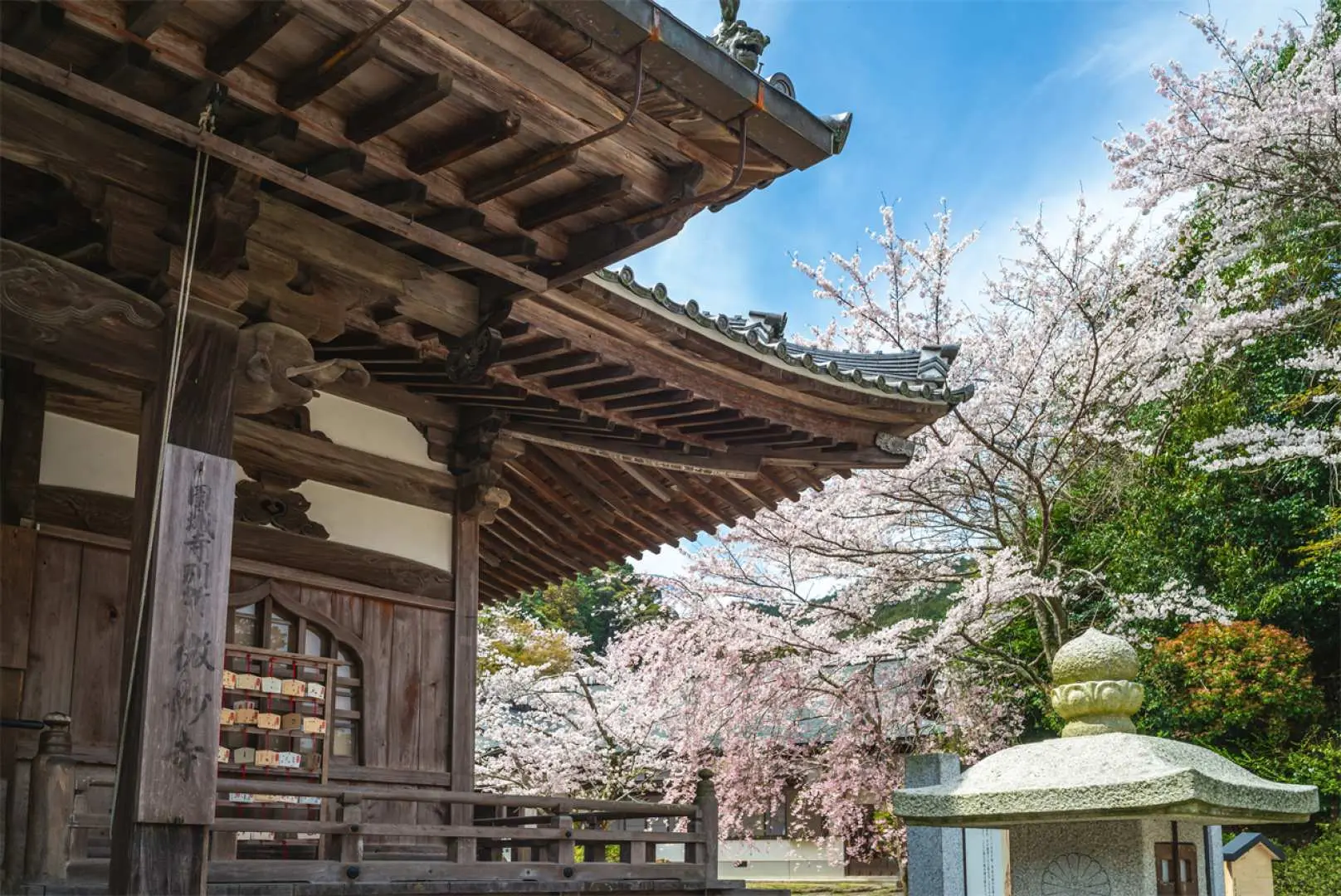
Mii-dera Temple, also known as Chotoyama Enjo-ji Temple, was founded in 686 AD and has a history of over 1200 years. It is the head temple of the Tendai-ji Mon sect. This ancient temple is renowned for its profound history, rich cultural heritage, and Buddhist atmosphere. However, what truly makes Mii-dera a treasure in the hearts of visitors is its magnificent cherry blossom season. It is an ancient temple with a long history, boasting nearly 1500 cherry trees, making it an excellent place for cherry blossom viewing.
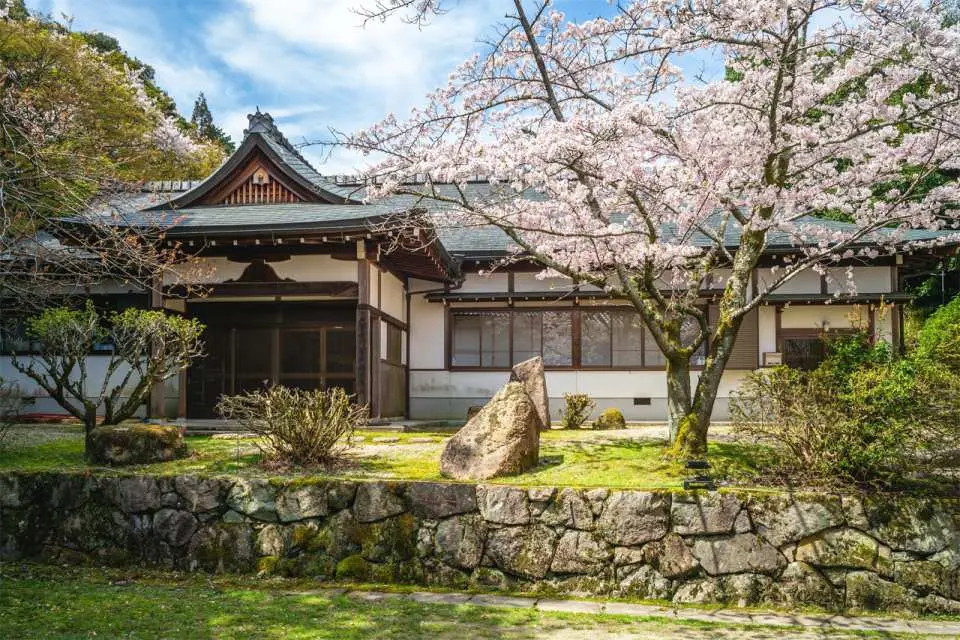

A hidden paradise of flowers illuminated by lights during cherry blossom season: Mii-dera Temple has been famous for cherry blossom viewing since ancient times, and an illumination event is held during the spring cherry blossom season. Mysterious and magical lights illuminate more than 1,000 blooming Somei Yoshino cherry, mountain cherry, and weeping cherry trees within the temple grounds. Under the light, the cherry trees emit a mysterious glow in the night, like a dreamlike fairyland.


Cherry blossoms are mainly distributed along the main road between the Golden Hall and the Three-Story Pagoda, as well as on the hillside near the Guanyin Hall.

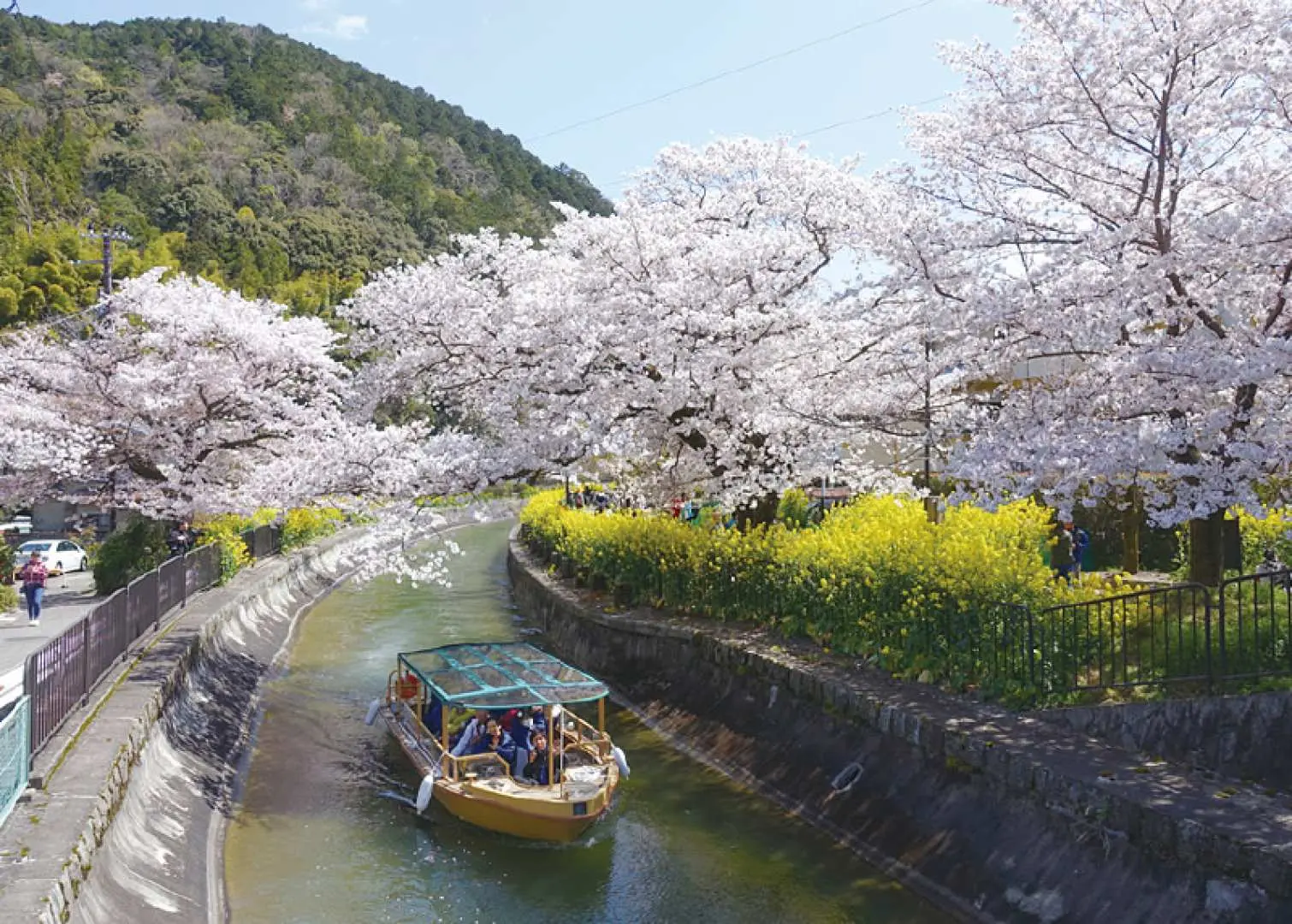
Biwako Canal: One of the oldest canals in Japan, when cherry blossoms bloom along the Biwako First Canal in spring, forming a spectacular flower path.


The Biwa Lake Canal, built during the Taisho era, is approximately 2.7 kilometers long. Known as the "King of Canals," it was designed to bring water from Lake Biwa into Kyoto for drinking water and irrigation. Completed in 1912, the project played a vital role in regulating Lake Biwa's water level, preventing floods, and providing water to surrounding farmland.

Purchase Notice
【Travel conditions】
Travel origin and destination: Osaka and Kyoto
Travel days: Round trip
Transportation: Chartered bus
Bus company name: Reisei Tourism Industry Co., Ltd.
Meals: Breakfast 0 times Lunch 0 times Dinner 0 times
Accommodation facilities: None
Minimum number of people in a group: 4
Team leader: 1
【Travel planning/implementation】
Operating company name: TuYi Group Japan Co., Ltd.
Address: 722 Shuzenji, Izu City, Shizuoka Prefecture
License Number: Shizuoka Prefectural Governor Registered Travel Agency, No. 2-633
Travel Agency Association: Regular Member of the Japan Association of Travel Agents (JATA)
Reminders
A minimum of 4 traveler(s) are required for the tour to depart. If the number of participants does not reach the minimum requirement, the tour will be canceled. An email regarding tour cancellation will be sent 4 day(s) before the departure date
In the event of inclement weather such as typhoons or snowstorms, a decision on whether to cancel the tour will be made 1 day(s) before departure (local time 18:00). Notifications will then be sent via email
Travelers with the following conditions or other health issues that could be worsened by excessive stimulation should not participate in this activity: High blood pressure, Heart disease, Acrophobia, Asthma, Epilepsy, Pregnant women
Please arrive at the designated location 10 minute(s) before the scheduled departure time, as the tour will depart on time
This is a shared ride with fixed itinerary. Customers participating in this tour are requested to adhere to the time allotted at each attraction and follow the instructions of the driver/guide.
No refunds will be given for any absences or cancellations due to personal issues, lateness, or other reasons. Please take note.
If you leave the group midway through the trip, the transaction will be considered invalid, and no refund will be given. Furthermore, you will be solely responsible for any personal injury or property damage resulting from this.
Arrival times for each itinerary may vary depending on traffic conditions, weather, holidays, and crowds. We apologize for any delays or cancellations caused by the aforementioned factors or other unforeseen circumstances, and no refunds will be provided on such grounds.
For smaller groups, a small vehicle with a driver/guide will be used. Please be aware that this is a shared ride service; other guests will be traveling with you, and parking is not allowed outside of tourist attractions.
Traffic jams and other unforeseen circumstances may occur during weekends and public holidays. The driver/guide may adjust the itinerary according to the specific situation. Please be prepared before placing your order.
In small group tours where the driver also acts as the guide, the driver's main role is driving, with explanations as a secondary function. A brief introduction will be given on the bus, but no explanations will be given after getting off the bus.
Please note: During the Miho Museum's closure on March 30, April 6, and April 13, visitors will be visiting Yawatabori.
Get Help


