




Kyoto Arashiyama Day Tour | Sanzen-in, Arashiyama, Kifune Shrine | Chinese & Japanese Service | Depart from Osaka/Kyoto
- Daily departures, minimum 4 people to book. Carefully selected professional drivers, no mandatory shopping stops throughout the trip.
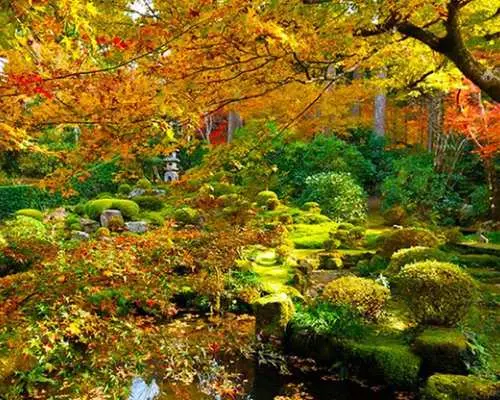
- Seasonal Kyoto Arashiyama autumn foliage, one of Japan's top three spots for fall colors.
- Optional Sagano Romantic Train ride to enjoy the Hozugawa Ravine, streams, rolling mountains, and breathtaking natural scenery!
- Drivers provide Chinese and Japanese language support, so there is no need to worry about communication.
Package Options


Sightseeing Tours
| Tour Type | Private tour |
| Transportation method | Hotel transfer |
| Luggage limit | 1 piece |
| Minimum participant requirement | 4 travelers |
| Tour types | None |
| Meal arrangement | Arrange yourself |
| Sightseeing type | Natural sights, Temples & shrines |
| Transport | Charter car |
Product Info
Purchase Notice
[Tourism Conditions]
Travel Departure and Destination: Osaka & Kyoto; Travel Duration: Day Trip; Transportation: Private Charter Car
Bus Company: Osaka Kokusai Kankan Co., Ltd. Meals: 0 breakfasts, 0 lunches, 0 dinners. Accommodation: None. Minimum group size: 4 people. Tour leader: 0.
Tour guide: 1 person (driver also serves as tour guide)
【Travel Planning & Execution】
Operating Company Name: Yamatotravel Co., Ltd. Address: 2F, 3-9-24 Maejima, Naha City, Okinawa Prefecture
License Number: Okinawa Prefecture Governor's Registered Travel Agent No. 2-344
Reminders
A minimum of 4 traveler(s) are required for the tour to depart. If the number of participants does not reach the minimum requirement, the tour will be canceled. An email regarding tour cancellation will be sent 4 day(s) before the departure date
Please arrive at the designated location 10 minute(s) before the scheduled departure time, as the tour will depart on time
When making a reservation, please be sure to provide your contact information (mobile phone number with international roaming enabled / Line / WhatsApp / WeChat). Customer service will confirm your itinerary with you no later than 21:00 (local time) one day before your departure. Please keep an eye out for this message. If you have not been contacted by then, please contact customer service.
This tour does not include tickets for the Sagano Scenic Railway. If you require ticket purchasing service, please indicate this in the booking notes. Payment will be made in cash to the driver on the day of your trip. Due to limited seating and high demand, we cannot guarantee that we can purchase enough tickets. Tickets will be provided sequentially according to each passenger's order number. We apologize for any inconvenience caused to passengers who are not allocated tickets through our service. Please note that the train service is suspended from January to the end of February due to winter.
This is a shared ride with fixed itinerary. Customers participating in this tour are requested to adhere to the time allotted at each attraction and follow the instructions of the driver/guide.
Due to limited space inside the vehicle, each passenger is only allowed one piece of checked baggage of 28 inches (inclusive) or smaller free of charge. Please indicate this in the remarks when booking. If you need to bring more than one piece of checked baggage, an additional fee of JPY2,000 per piece will be charged, payable to the driver on-site.
Natural scenery is subject to the influence of the weather on the day of the visit, which is an unavoidable factor. If the expected scenery is not enjoyed as expected, no refund will be given. Please be aware of this.
If you leave the group midway through the trip, the transaction will be considered invalid, and no refund will be given. Furthermore, you will be solely responsible for any personal injury or property damage resulting from this.
If the tour cannot proceed due to weather conditions, unforeseen events, or other force majeure or unforeseen circumstances, a full refund will be issued without any penalty for breach of contract.
In case of traffic control or other factors at tourist attractions, alternative attractions or the duration of stay at attractions may be adjusted, subject to the tour guide's arrangements on the day. Thank you for your understanding.
大小同價,幼兒也需計入人數。
FAQ
1. What is the significance of the pillar hole inside Todaiji Temple's Great Buddha Hall?
The pillar hole inside Todaiji Temple's Great Buddha Hall is a famous feature. It is located at the base of one of the support pillars and is said to be the same size as the Great Buddha's nostril. According to local tradition, successfully crawling through this hole is believed to bring good luck, ensure enlightenment, or help you pass exams. It is a popular and unique experience for many visitors, especially children.
2. How much time should I allocate to visit Todaiji Temple and Nara Park?
To thoroughly experience Todaiji Temple, including the Great Buddha Hall and its museum, plan for about 1 to 1.5 hours. For Nara Park, which surrounds the temple and is home to friendly deer, you might want an additional 1 to 2 hours to interact with the deer and explore the expansive grounds. A comfortable visit combining both typically requires around 2.5 to 3.5 hours, allowing for leisurely exploration and photo opportunities.
3. Has Todaiji Temple's Great Buddha Hall been rebuilt over its history?
Yes, Todaiji Temple's Great Buddha Hall, known as Daibutsuden, has been rebuilt several times throughout its long history, primarily due to fires caused by warfare or natural disasters. The current structure, dating back to 1709, is impressive but is actually about one-third smaller than its original reconstruction in the 8th century. Despite the rebuilds, efforts have been made to maintain its historical significance and architectural style.
4. What are the dimensions and unique features of the Great Buddha statue at Todaiji Temple?
The Great Buddha (Daibutsu) at Todaiji Temple is a monumental bronze statue of Vairocana Buddha. It stands approximately 14.98 meters (49.1 feet) tall and weighs around 500 tons. Unique features include its intricate craftsmanship, the serene expression on its face, and its sheer size, which commands awe. It is one of Japan's most famous and impressive Buddha statues, housed within the largest wooden building in the world, the Daibutsuden.
5. What does the name 'Uji' signify, and what is its historical identity in Japan?
The name 'Uji' (宇治) historically signifies its location at a crucial crossroads and river passage. Uji's identity is deeply rooted in its ancient past as an important cultural and political center, particularly during the Heian period. It is notably famous as the setting for the final ten chapters of "The Tale of Genji," the world's first novel, solidifying its place in Japanese literary history and aristocratic culture.
6. What unique local products and cultural aspects is Uji City famous for?
Uji City is renowned worldwide for its high-quality green tea, especially matcha. Visitors can explore various tea houses, participate in traditional tea ceremonies, and sample a wide array of matcha-flavored sweets and dishes. Beyond tea, Uji offers a tranquil atmosphere, beautiful historical temples like Byodo-in Temple, and connections to classic Japanese literature, making it a hub of traditional Japanese culture and culinary delights.
7. Is Uji considered a town or a city, and where is it located in Japan?
Uji is considered a city, not just a town, and it is located in Kyoto Prefecture, Japan. Geographically, it is situated between the cities of Kyoto and Nara, making it a convenient and popular stop for travelers exploring the Kansai region. Its strategic location along the Uji River has historically contributed to its prominence and cultural significance.
8. What attractions and experiences make Uji City a worthwhile destination for travelers?
Uji City offers several compelling attractions that make it a worthwhile destination. Highlights include the UNESCO World Heritage Site Byodo-in Temple, famous for its Phoenix Hall, and the historic Uji Bridge. Visitors can indulge in authentic Japanese tea culture through tea ceremonies and tasting high-grade matcha. The city's scenic beauty along the Uji River and its deep connection to "The Tale of Genji" further enhance its appeal for a rich cultural and historical experience.


