
Get Exclusive App Deals
Product #185979
4
A traditional Japanese wooden building on Kyoto's Kiyamachi Street, with an electric bicycle parked outside, capturing the city's cultural heritage on this guided bike tour.
A participant sits on historical train tracks surrounded by lush greenery in Kyoto, exploring unique paths and hidden natural history on an electric bike tour.
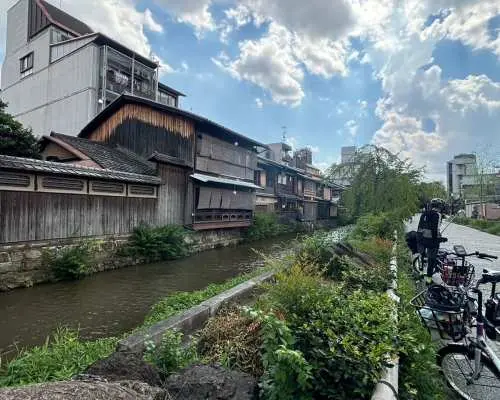
Scenic riverside view in Kyoto, with traditional wooden houses lining the water and electric bicycles parked on the path, showcasing the ancient capital's unique urban charm.
KKday Marketplace

<Kyoto City Course> Guided Cycling Tour


Guided language: English / 日本語
Free cancellation 2 day(s) prior to experience date
Please present the e-voucher on-site

  • We provide electric bicycles, which can be easily ridden up hills and over long distances.
  • Our experienced guides will show you the backstreets and hidden history that can only be experienced by bicycle.
[5% App discount] Code: APP5OFF , HK: APP15HK
Instant confirmation

Sightseeing Tours

Tour TypeShared tour
Transportation methodGet there on your own
Tour typesGuided tour
Meal arrangementArrange yourself
Sightseeing typeNatural sights, Temples & shrines, Historic site tour, Bycicle rental

Product Info

The content of this product is provided by machine translation and may not reflect the actual information, please take this into consideration before booking.

*In addition to Japanese and English, we also have guides who speak German, Dutch, Bangladeshi, Hindi and Urdu. If you have a preferred language, please contact us before booking.
− Meeting time −
13:00

− Target age −
Ages 10-99 *Able to ride a bicycle *Those under 10 years old can participate as long as they are over 140cm tall and can ride a bicycle (fees apply)

<Schedule>
◎Shogyo-in Temple Ring-shaped Jizo 570 Higashishiokoji-cho, Shimogyo-ku, Kyoto City, Kyoto Prefecture 600-8216
Your guide will be waiting for you at the "Clew" bicycle sharing port in front of Wagata Jizo. You will receive a simple explanation of how to operate an electric bicycle and hand signals so that even first-time riders can enjoy riding safely.
◎Honganji Temple, located in Horikawa-dori Hanaya-cho Sagaru, Shimogyo-ku, Kyoto City, Kyoto Prefecture, is the head temple of the Jodo Shinshu Honganji sect and is also known as Onishi-san (Nishi Honganji). It is famous for its historical buildings, including its grounds, which are registered as a World Heritage Site, and the national treasures Goeido and Amida-do, Shoin, and Hiunkaku. Various patterns are carved into the wood used for the floors, and there is plenty to see beyond the buildings.
◎ 342 Kagiyacho, Shomen-dori Kamogawa Nishiiru, Shimogyo-ku, Kyoto City, Kyoto Prefecture
The former Nintendo headquarters captivates visitors with its spectacular beauty and historical importance. This building tells the story of the beginnings of the world-famous gaming company. Your guide will tell you how Nintendo grew in this special place.
◎Shirakawa-suji, Motoyoshi-cho, Higashiyama-ku, Kyoto City, Kyoto Prefecture This is an area that once flourished as a teahouse town, with buildings and paths along the river and typical Kyoto scenery. Enjoy the traditional traditions, willow trees, cherry blossoms, and other atmospheres of each season as you ride your bike through the area.
◎17 Nanzenji Kusakawacho, Sakyo Ward, Kyoto City, Kyoto Prefecture
As you drive through the city of Kyoto, the view of a long flowing river comes into view, and a large reservoir catches your eye. This is the Lake Biwa Canal. This beautiful waterway uses water transported from Lake Biwa, and is a river that has contributed greatly to the development of Kyoto. Learning about the history of the Lake Biwa Canal will give you a deeper understanding of the origins of the local culture and industry.
◎13 Nanzenji Fukuchicho, Sakyo Ward, Kyoto City, Kyoto Prefecture
The Lake Biwa Canal, which connects Kyoto and Lake Biwa, is loved by many people as part of the beautiful waterway. This system was designed to cleverly compensate for the difference in elevation between Lake Biwa and Kyoto. This waterway, which brings together ancient technology and wisdom, speaks of the ingenuity of the people at that time. By visiting, you can enjoy the beauty of nature while learning about the historical background and technological progress.
◎97 Nishitenno-cho Okazaki, Sakyo-ku, Kyoto City, Kyoto Prefecture
Heian Shrine was built to commemorate the 1100th anniversary of the capital's relocation to Heian, and enshrines the 50th Emperor Kanmu as its deity. The large red torii gate is also a highlight.
◎86 Nanzenji Fukuchicho, Sakyo Ward, Kyoto City, Kyoto Prefecture
Nanzenji Temple is considered to be in a special league among the Five Mountains of Kyoto. Its magnificent main hall and gates have an overwhelming presence and attract all who visit. A beautiful Japanese garden spreads out within the temple grounds, making it a soothing space where you can enjoy the scenery of the four seasons. Come here to enjoy a relaxing time while experiencing the traditional beauty of Japan and the tranquil world.
◎Hokotacho, Nakagyo Ward, Kyoto City, Kyoto Prefecture Let's visit the famous Kamo River in Kyoto. On the riverbed that spreads out beside the river, you can spend some relaxing time to heal your tired body, or you can enjoy cycling on the riverbed path. Finally, cool down in the clear river, refresh your mind and body, and feel the beauty of nature and the pleasant breeze for a wonderful end to your tour.
◎570 Higashishiokojicho, Shimogyo Ward, Kyoto City, Kyoto Prefecture 600-8216
Return the bike and your tour will end.
Afterwards, enjoy the city of Kyoto on your own.

Purchase Notice

・Please wear comfortable clothing and shoes. (Riding a bicycle in sandals or heels is extremely dangerous.)
Please bring appropriate clothing for the season, including a jacket.
・Please bring your own drinks.
・Children under 10 years old will be charged if they use a bicycle. Please inform the staff.
・If we determine that the tour cannot be conducted due to weather or other reasons, we will notify you the day before the tour.

Reminders

  • The store will send you a message before the tour date.

  • If you have any questions, please feel free to contact our store.

Cancellation Policy

  • Cancellations 2 day(s) (inclusive) before the selected date are allowed. Unused orders can be canceled for free
  • Cancellation is not allowed between 0–1 days from the selected date. Orders cannot be canceled or modified, and refunds will not be granted.
NOTE
  • Due to time zone differences, the confirmed cancellation date is based on the supplier’s local time. Please allow 2–5 business days to process your cancellation request, after which the cancellation fee will be charged according to the product’s cancellation policy. Once the cancellation is confirmed, you will receive your refund within 14 working days.

FAQ

1. What are the key differences between Nishi Honganji and Higashi Honganji, both prominent Kyoto temples?

Nishi Honganji and Higashi Honganji are both significant Jodo Shinshu Buddhist temples in Kyoto. Nishi Honganji is celebrated for its exquisite Momoyama-period architecture, including the national treasure Karamon Gate and its grand founder's hall. Higashi Honganji, while sharing the same faith, typically features a more imposing scale and simpler architectural design, known for its vast grounds. Both offer a profound historical and spiritual experience.

2. Is there an admission fee to enter Nishi Honganji Temple during a visit?

Generally, there is no admission fee to enter the main grounds and principal halls of Nishi Honganji Temple, allowing visitors to freely explore its impressive architecture and serene atmosphere. This welcoming policy enables everyone to experience its historical and cultural significance. However, please note that special exhibitions or specific private areas might occasionally require a separate charge.

3. What is the appropriate dress code and etiquette for visiting Buddhist temples like Nishi Honganji in Kyoto?

When visiting Buddhist temples such as Nishi Honganji, it is important to dress modestly and respectfully. This generally means covering your shoulders, knees, and avoiding overly revealing clothing. Hats should be removed indoors, and it is customary to take off your shoes before entering temple halls. Maintaining a quiet demeanor and refraining from loud conversations also demonstrate respect for the sacred space.

4. What can visitors expect to see along Gion Shirakawa, a key area within Kyoto's Gion district?

Gion Shirakawa is a picturesque street in Kyoto's Gion district, renowned for its beautifully preserved traditional wooden machiya houses, elegant willow trees, and the scenic Shirakawa Canal. Visitors can enjoy a leisurely stroll along the canal, admire the historic architecture, and soak in the tranquil atmosphere that evokes old Kyoto. It's particularly charming during the cherry blossom season.

5. Why is Kyoto's Gion district considered a significant cultural area for visitors on a cycling tour?

Kyoto's Gion district is considered a significant cultural area as it serves as the city's traditional geisha quarter, preserving centuries-old arts and entertainment. Visitors on a cycling tour can immerse themselves in its unique ambiance, explore historic tea houses, and admire traditional architecture. It offers a unique glimpse into authentic Japanese culture and heritage, making it a compelling destination.

6. How rare is it to spot geisha or maiko when exploring Kyoto's Gion district?

Spotting geisha or maiko (apprentice geisha) in Gion can be quite rare and often depends on luck, as they are frequently hurrying to private appointments. The best chances are typically around dusk, as they travel between their okiya (geisha houses) and teahouses. While not guaranteed, respectfully exploring areas like Hanamikoji Street or Shirakawa might offer a fleeting glimpse.

7. How do electric bicycles facilitate exploring hilly areas and distant sites like Nishi Honganji or Nanzenji Temple on a Kyoto tour?

Electric bicycles significantly enhance a Kyoto cycling tour by providing motorized assistance, making it effortless to navigate hilly terrains and cover longer distances between sites like Nishi Honganji or Nanzenji Temple. This support allows participants to conserve energy, fully enjoy the scenic routes, and focus on the historical beauty without strenuous effort, creating a more relaxed and immersive exploration experience.

8. What kind of hidden history and backstreets can an experienced guide reveal when cycling through areas like Gion Shirakawa or Kiyamachi Street?

An experienced guide on a Kyoto cycling tour can unveil the city's hidden history and lead you through charming backstreets that are often overlooked, particularly in areas like Gion Shirakawa or Kiyamachi Street. They provide local insights, share fascinating stories about specific landmarks and cultural nuances, and point out intricate details, enriching your understanding of Kyoto's deeper heritage beyond standard tourist routes.

Get Help

KKday Help Center
Contact Merchant