


Private Tour | Learn about Agarwood in Vietnam with Vegetarian Meal | Hanoi - Vietnam
- Presentation on the history and significance of agarwood.
- Overview of the various uses of agarwood in different cultures.
- Explanation of the different grades and qualities of agarwood.
- Explanation of how agarwood trees are cultivated and harvested.
- Discussion on sustainable practices in agarwood cultivation.
- Detailed demonstration of the agarwood extraction process.
- Discussion on the tools and techniques used in the traditional and modern agarwood industry.
- Vegetarian lunch with local people to get to know about the Buddhist religion.
Package Options


Product Info
Agarwood, also known as "oud," "gaharu," or "agar," is a highly valued aromatic resin found in Aquilaria trees. This precious substance has been revered for centuries across various cultures for its unique fragrance, medicinal properties, and cultural significance. Let's delve into the fascinating world of agarwood, exploring its history, cultural importance, cultivation, and sustainable practices, along with an in-depth look at the extraction process and the tools used in this industry.
- Pick-up/Return point: 9:00 AM
- Experience Location: 14:00 PM
- Duration: 5 hours
Explanation of the different grades and qualities of agarwood.


Product from Agarwood.

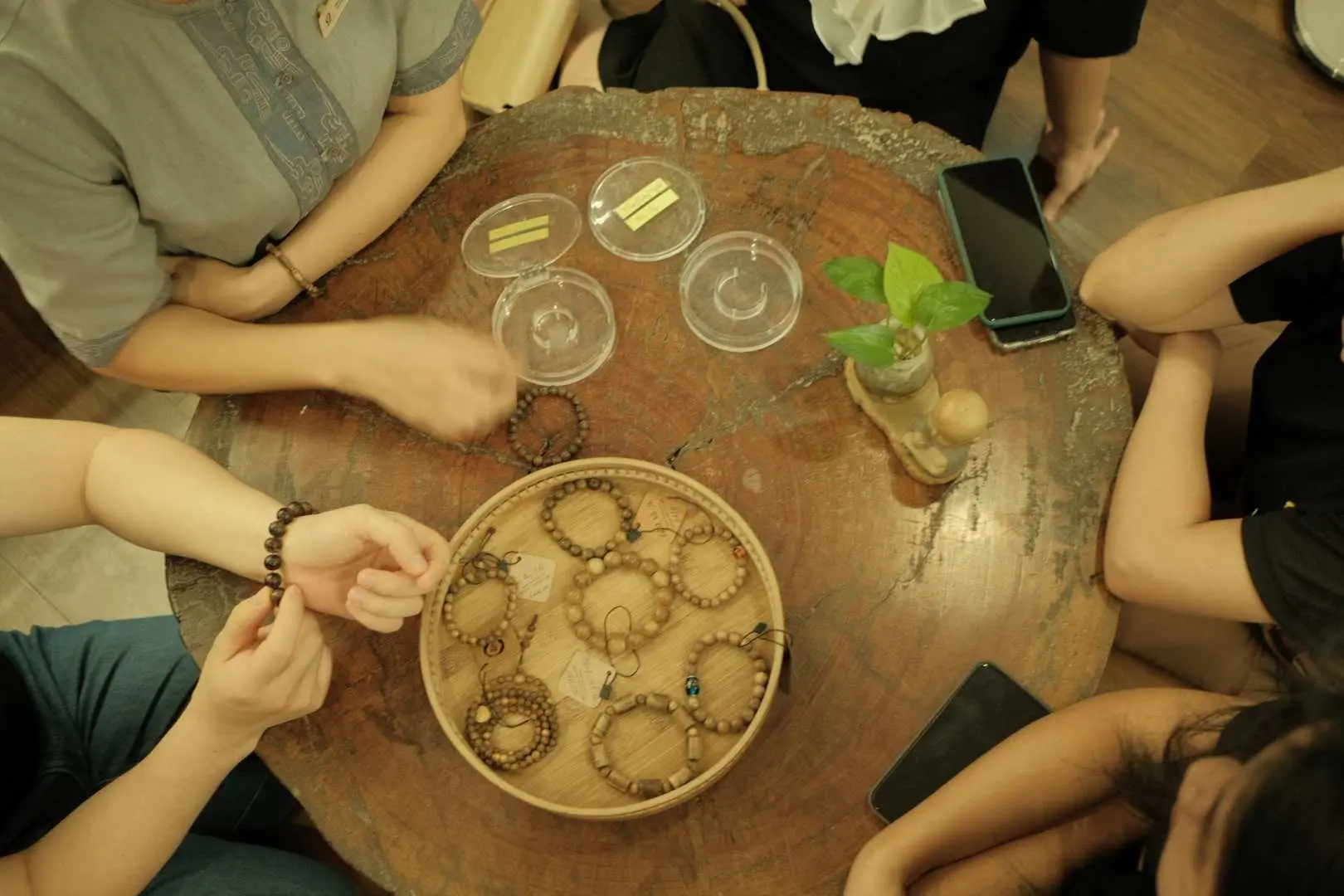
The employees are working in the factory to make products from agarwood.


Discussion on the tools and techniques used in the traditional and modern agarwood industry.


Enjoy the herbal agar tea.


Purchase Notice
[CHILD POLICY]
- 1 - 3 years old - Free of charge
- 4 - 7 years old - 50% charge
- From 8 years old - Full charge
FAQ
Vietnam has specific regulations for agarwood due to its value and conservation status. Internationally, Aquilaria species, the source of agarwood, are listed under CITES Appendix II, meaning trade requires proper permits to ensure sustainability. Domestically, laws govern cultivation, harvesting, and trade to prevent illegal logging and protect the natural resource. Understanding these regulations is vital for responsible engagement with agarwood.
Vietnamese agarwood is highly prized for its rich, complex fragrance. It typically presents sweet, woody, and often balsamic notes, with subtle hints of spice, vanilla, or fruity undertones. High-quality Vietnamese agarwood is known for its pure, deep, and long-lasting aroma that gracefully evolves when heated. It is often described as earthy and calming, making it ideal for spiritual practices, perfumes, and incense.
Agarwood cultivation in Vietnam often involves inoculating Aquilaria trees with specific fungi or utilizing other techniques to stimulate resin production. This process can take several years as the tree naturally forms the dark, fragrant agarwood resin. Harvesting is a delicate task, involving the careful extraction of the resinous sections from the infected tree, with an emphasis on sustainable methods that allow the trees to recover or be replanted, ensuring future supply.
The quality and value of Vietnamese agarwood are influenced by several factors: the specific Aquilaria species, the concentration and purity of the resin, its exact origin within Vietnam, the age of the tree, and the naturalness of the infection process. Agarwood with a higher resin content, darker coloration, and a complex, enduring aroma is generally considered to be of superior quality. Wild-harvested agarwood is often more valuable due to its rarity and unique characteristics compared to plantation-grown varieties.
In Vietnam, agarwood is widely referred to as "Trầm Hương." This term is used for both the raw, resin-infused wood and various finished products derived from it. The specific tree species that produces agarwood is locally known as "Dó Bầu." There are also additional descriptive terms used to distinguish different grades, origins, or forms of agarwood, reflecting its varied quality and applications within the Vietnamese cultural context.
Agarwood holds significant cultural importance beyond its aromatic qualities in many societies. It is frequently used in spiritual practices for meditation, purification, and to foster a sense of inner tranquility. In traditional medicine, it is valued for its calming and purported therapeutic benefits. Historically, agarwood has been utilized in religious ceremonies, as a symbol of status, and as a key ingredient in high-end perfumes. It is also crafted into beads for prayer or jewelry, demonstrating its diverse cultural integration.
Sustainable agarwood cultivation in Vietnam prioritizes the protection of Aquilaria trees and their natural habitats. Key practices include responsible reforestation, meticulous management of inoculation techniques to induce resin, and selective harvesting that allows trees to heal and regrow. Efforts to establish controlled harvesting quotas and combat illegal logging are also crucial. Promoting plantation-grown agarwood helps alleviate pressure on wild populations, safeguarding this valuable resource for future generations.
Traditionally, agarwood extraction was a labor-intensive process, involving the manual search for naturally infected Aquilaria trees and the careful removal of the resinous sections. This method was often unpredictable and yielded varying results. In contrast, modern techniques involve cultivating Aquilaria trees and then intentionally inducing infection using specialized fungi or physical wounding methods. This controlled approach aims to optimize resin production and ensure a more consistent supply, though quality can still vary based on specific practices.
Get Help


