

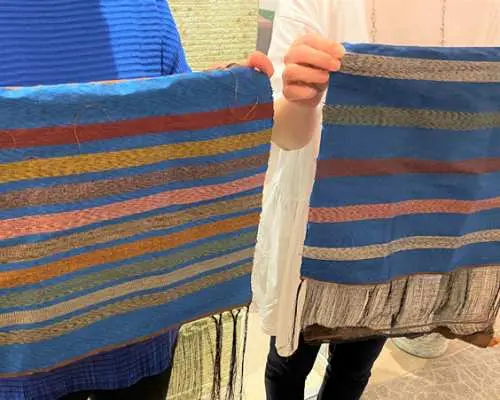


Japanese Traditional Hand Weaving Experience in Kagoshima
・ You can take the finished Oshima Tsumugi home with you on the same day and use it as a table centerpiece or as a vase mat
・ Duration : 40-90 min (depend on course)
・ Opening hours : 9:30~14:00
・ Maximum number of participants : 2 person
・ Suitable for those aged 5 and over
Package Options
Product Info
Purchase Notice
At the time of reservation, please inform us whether or not you can speak Japanese and the mobile phone number available in Japan.
Includes/Excludes
Reminders
Please let us know your requested time to join this workshop (business hours : 09.30 ~ 14.30)
Please come to the studio at least 10 minutes before your reservation time
How to Redeem Your Voucher
How to Use Your Voucher
- Please print the e-voucher sent to your email
Meeting Point
Location Name: Amaminosato
Address: 1-8-1 Nanei, Kagoshima City, KagoshimaCancellation Policy
- Cancellations 11 day(s) (inclusive) before the selected date are allowed. Unused orders can be canceled for free
- For cancellations made 8 to 10 days prior to selected date, a cancellation fee of 20% will apply
- For cancellations made 2 to 7 days prior to selected date, a cancellation fee of 30% will apply
- For cancellations made 1 to 1 days prior to selected date, a cancellation fee of 40% will apply
- Cancellation is not allowed between 0–0 days from the selected date. Orders cannot be canceled or modified, and refunds will not be granted.
- Due to time zone differences, the confirmed cancellation date is based on the supplier’s local time. Please allow 2–5 business days to process your cancellation request, after which the cancellation fee will be charged according to the product’s cancellation policy. Once the cancellation is confirmed, you will receive your refund within 14 working days.
FAQ
Oshima Tsumugi silk is renowned for its unique texture, combining the strength of silk with a soft, durable feel. Its distinctiveness comes from a meticulous mud-dyeing process, which uses local iron-rich mud to create deep, long-lasting colors. This traditional method, coupled with Kasuri (ikat) dyeing techniques, results in intricate, unique patterns that are characteristic of this exquisite fabric.
Oshima Tsumugi boasts a rich history spanning over 1,300 years, with its origins tracing back to the Ryukyu Kingdom era. Evolving from a textile for commoners, it gained recognition during the Edo period. The weaving tradition in Kagoshima, particularly on Amami Oshima, is deeply rooted in local culture and craftsmanship, preserving ancient techniques like mud dyeing and hand weaving passed down through generations.
During the Oshima Tsumugi experience, participants learn fundamental Japanese hand weaving techniques, including how to operate a traditional handloom machine. The focus is on understanding the interplay of warp and weft threads to create patterns. While not all intricate Kasuri (ikat) dyeing is taught in short sessions, the experience highlights the precise hand-eye coordination and rhythm essential to Oshima Tsumugi production.
Participants in the Oshima Tsumugi hand weaving experience can weave their own original small product. The finished item is typically a practical and decorative piece, such as a table centerpiece or a vase mat. This allows visitors to create a unique, personalized souvenir and take home a tangible representation of their traditional Japanese weaving endeavor on the same day.
The Oshima Tsumugi hand weaving experience typically lasts between 40 to 90 minutes, depending on the chosen course. This duration allows for a comprehensive introduction to the craft and sufficient time to create an original piece. The experience is suitable for individuals aged 5 and over, making it an accessible activity for families and diverse groups.
Yes, participants are guided by a professional instructor throughout the Oshima Tsumugi weaving experience. The instructor provides step-by-step guidance on how to use the traditional handloom machine and explains the basics of weaving. This ensures that even beginners can confidently engage with the craft and successfully create their own unique Oshima Tsumugi product.
Oshima Tsumugi is deeply significant as a traditional craft from Kagoshima, representing centuries of cultural heritage and artisanal skill. It is one of Japan's most revered traditional textiles, recognized for its intricate patterns, durability, and natural dyeing processes. The craft symbolizes the region's dedication to preserving traditional methods and its connection to the natural environment, particularly the mud-dyeing landscapes of Amami Oshima.
In the traditional Japanese method, Tsumugi silk material preparation involves a unique dyeing process, most notably mud dyeing (Dorozome). Silk threads are first bound and resist-dyed (Kasuri/ikat) with natural dyes, often derived from sharinbai wood. They are then submerged in iron-rich mud, which reacts with the dye to create deep, lustrous, and durable colors, a signature characteristic before the weaving process begins.
Get Help


