

Vietnam Daily 5GB Unlimited Data eSIM
Set the novel eSIM (Embedded-SIM) easily by scanning the QRcode after booking, and access the powerful internet with no hassle. Search for useful Vietnam attraction info and get your next adventure off to a good start.
- Use the cost-effective eSIM to surf the internet while traveling in Vietnam
- Alleviate SIM Card pin needle and installation trivialities with the help of eSIM
- Delight in the easy-to-use design and stay connected throughout your trip
Package Options
What You Can Expect
Check if you mobile phone has eSIM function
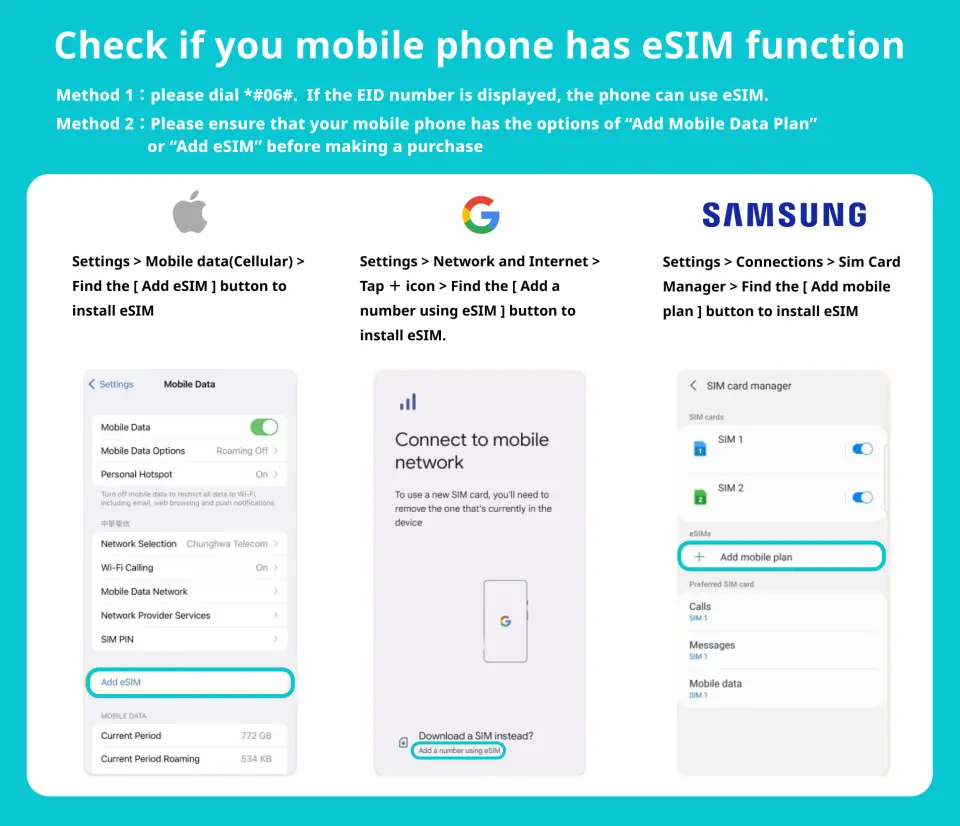
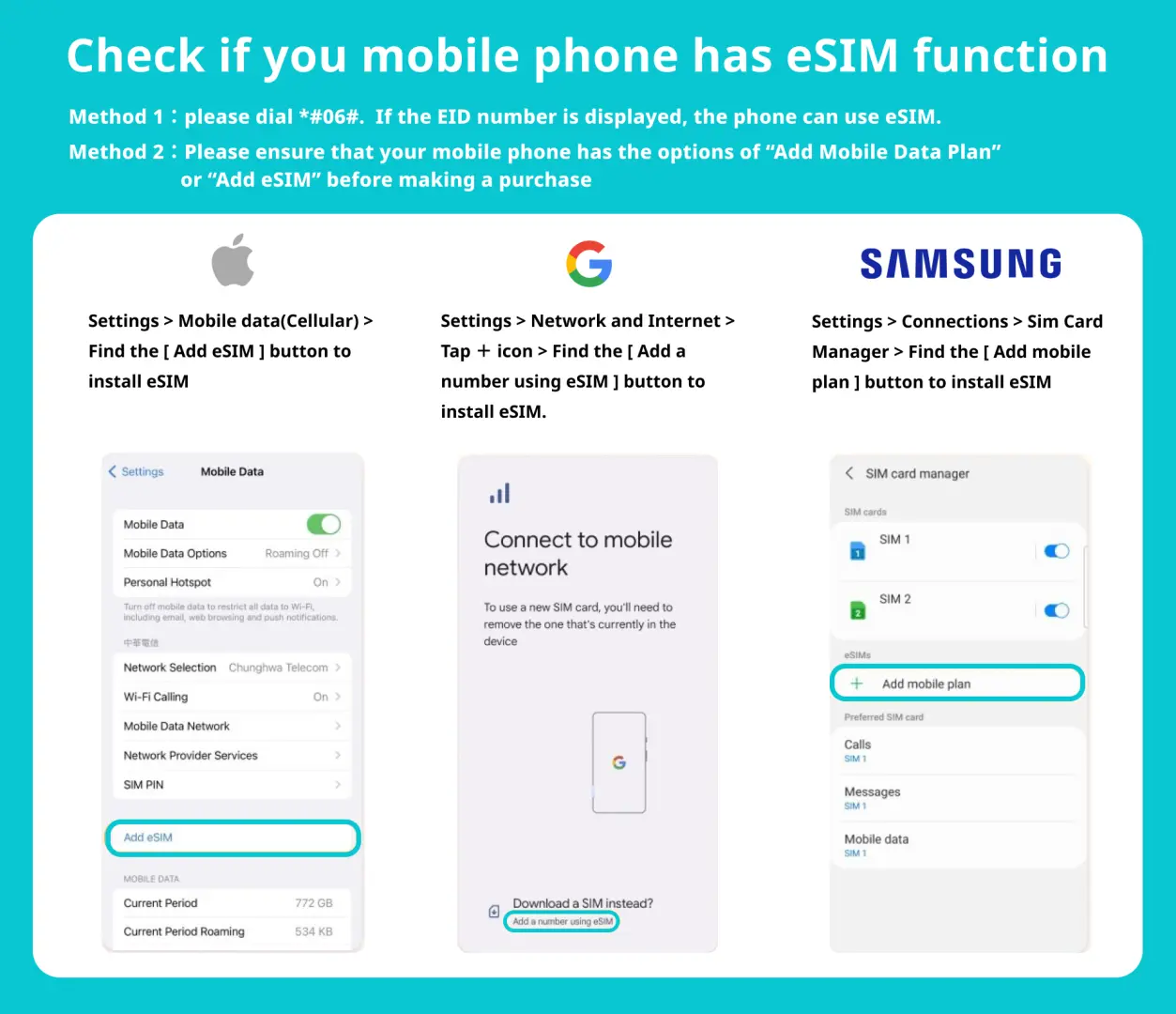
eSIM Compatible Devices


eSIM installation instruction


Important Info
Reminders
Stable internet connection is essential during eSIM QR code scanning.
When you scan the eSIM QRcode, that's the first day of use. It is advised to scan an install before take-off or when you arrive to avoid activating the eSIM prematurely.
The eSIM QR Code is a one-time scan, and once removed, reactivation is not possible.
The eSIM is exclusively functional within Vietnam.
Calculation method of days: 24-hour system. For example, you purchase a 3-day plan and install it at September 1 at 10:00 am. The plan will end at September 4 at 9:59 am
The day you scan the QR code counts as the first day of use. It is recommended to scan the QR code and install it before taking off or after arriving at your destination to avoid activating it in advance and affecting your usage rights.
To ensure proper functionality, Data Roaming must be enabled for the eSIM.
In order to ensure all users' accessibility to the internet, each telecom carrier implements their fair usage policy to monitor data consumption. If a user's data consumption negatively affects other users' internet connections, the telecom carrier may enforce speed restrictions temporarily. Please note that under such circumstances, KKday has no right to intervene
The quality of communication may be affected by outside conditions; surrounding landforms (e.g. mountains), weather, obstruction by buildings, the number of users, or locations may affect the speed and quality of the internet
Please turn off the data roaming function of the original SIM Card to avoid high roaming fees
How to Use
1 ) Once the purchase has been confirmed, we shall send you the eSIM QR Code
2 ) Access eSIM Settings: Open the settings menu on your mobile device.
3 ) Find Mobile or Cellular Options: Depending on your device, look for options like "Mobile Data," "Cellular," or "Network & Internet."
4 ) Select Add eSIM: Within the mobile or cellular settings, you should find an option to "Add eSIM" or "Add Cellular Plan." Tap on it.
5 ) Scan QR Code: Use your device's camera to scan the eSIM QR code. Ensure that the QR code is well-lit and clear for successful scanning.
6 ) The eSIM will successfully installed in your device once the QR Code has been scanned
- Set eSIM APN : Usually the APN will be automatically recognized. If it cannot be automatically recognized, you need to set it manually.
* iPhone ( Setting > Cellular > Cellular data options > set the APN ) APN : internet / Username : empty / Password: empty
* Android ( Settings > SIM 1 > APN > Add new APN ) APN : internet / Username : empty / Password: empty
Cancellation Policy
- Once the order has been completed, it cannot be canceled, modified, or refunded
- Due to time zone differences, the confirmed cancellation date is based on the supplier’s local time. Please allow 2–5 business days to process your cancellation request, after which the cancellation fee will be charged according to the product’s cancellation policy. Once the cancellation is confirmed, you will receive your refund within 14 working days.
FAQ
To use any eSIM from a local provider or a third-party global provider in Vietnam, your mobile phone must be unlocked by your home network carrier. Locked phones are typically restricted to only using SIM cards or eSIMs from their original carrier. Before traveling, it's advisable to confirm your phone's unlocked status directly with your service provider to ensure seamless eSIM activation and use.
Yes, eSIM technology is widely supported for mobile data usage across Vietnam, especially in major cities like Hanoi, Ho Chi Minh City, and Da Nang, as well as popular tourist destinations. Local network providers and international eSIM services offer robust coverage. Utilizing an eSIM provides a convenient way to stay connected without needing a physical SIM card, making it easier to navigate and access information throughout your trip.
Using an eSIM for mobile data in Vietnam offers several advantages. It eliminates the need to physically swap SIM cards, reducing the risk of losing your original SIM. Activation is typically via a QR code, making setup quick and hassle-free. eSIMs also allow you to keep your primary physical SIM active for calls and texts while using the eSIM for data, providing greater flexibility and convenience during your travels.
Tourists primarily obtain internet access in Vietnam through several methods. The most common include purchasing a local physical SIM card upon arrival, activating an international roaming plan from their home country (often expensive), or utilizing an eSIM for dedicated data. Many hotels, cafes, and restaurants also offer free Wi-Fi, which can supplement your mobile data plan, though security and speed may vary.
When evaluating mobile data costs for Vietnam, consider the amount of data needed daily, the duration of your trip, and the type of service (eSIM, physical SIM, roaming). Daily data caps, whether data is truly unlimited after a certain threshold, and the validity period of the plan are important factors. Opting for a plan that matches your usage habits can help manage expenses effectively.
Internet connectivity in Vietnam's major cities like Hanoi, Ho Chi Minh City, and Da Nang, along with popular tourist areas such as Ha Long Bay and Hoi An, is generally widespread and reliable. 4G LTE networks are prevalent, offering good speeds for browsing, streaming, and navigation. While remote regions might have less consistent coverage, the primary travel routes and destinations are well-served, ensuring travelers can stay connected.
Yes, one of the significant advantages of using an eSIM in Vietnam is the ability to operate it alongside your home country's physical SIM card. This dual-SIM functionality allows you to use your eSIM for all your data needs, while still receiving calls and texts on your primary physical SIM number. This setup is ideal for travelers who need to stay reachable on their original number without incurring high international data roaming charges.
For typical travel use in Vietnam, a daily data allowance of 1GB to 3GB is often sufficient for most users. This typically covers navigation, social media, light browsing, messaging apps, and occasional video calls. If you plan to stream a lot of video, upload large files, or use tethering frequently, considering a plan with 5GB or more daily data, or even truly unlimited data (often with a high-speed cap), would be more suitable.
Get Help


