


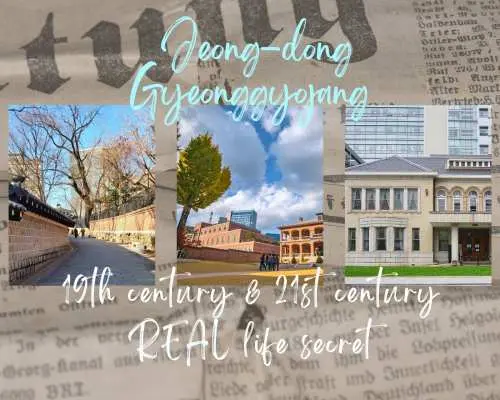
Korean Life Time Walking Tour (from Seoul)
Gain deeper insights into South Korean history, politics, culture, military service, education, and healthcare system with a professional Korean tour guide. Discover authentic Korean culture and the changing times Koreans have experienced, including social systems and issues. Explore Seoul's urban landscapes and gain an understanding of the challenges and perspectives of Koreans from ancient times to the present.
- Join an immersive experience to connect with the essence of Korean culture and society
- Compare the lives of Koreans living in the late 19th century, when Korea began modernizing, with those in the 21st century
- Learn about birth rates, educational passions, economic conditions, marriage rates, divorce rates, death rates, and average life expectancies at every stage of life
Package Options


Sightseeing Tours
| Tour types | Guided tour |
| Sightseeing type | City walking tour, Historic site tour |
| Transport | Walking |
Product Info
Let’s start to explore 19th century & 21st century Korean REAL life secret!
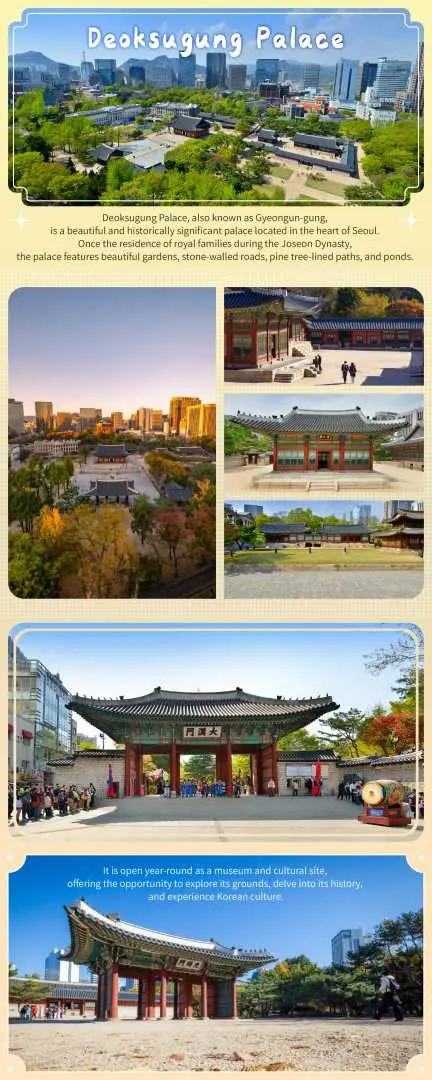
Deoksugung Palace, also known as Gyeongun-gung, is a beautiful and historically significant palace located in the heart of Seoul. South Korea. Once the residence of royal families during the Joseon Dynasty, the palace features beautiful gardens, stone-walled roads, pine tree-lined paths, and ponds. It is open year-round as a museum and cultural site, offering the opportunity to explore its grounds, delve into its history, and experience Korean culture.

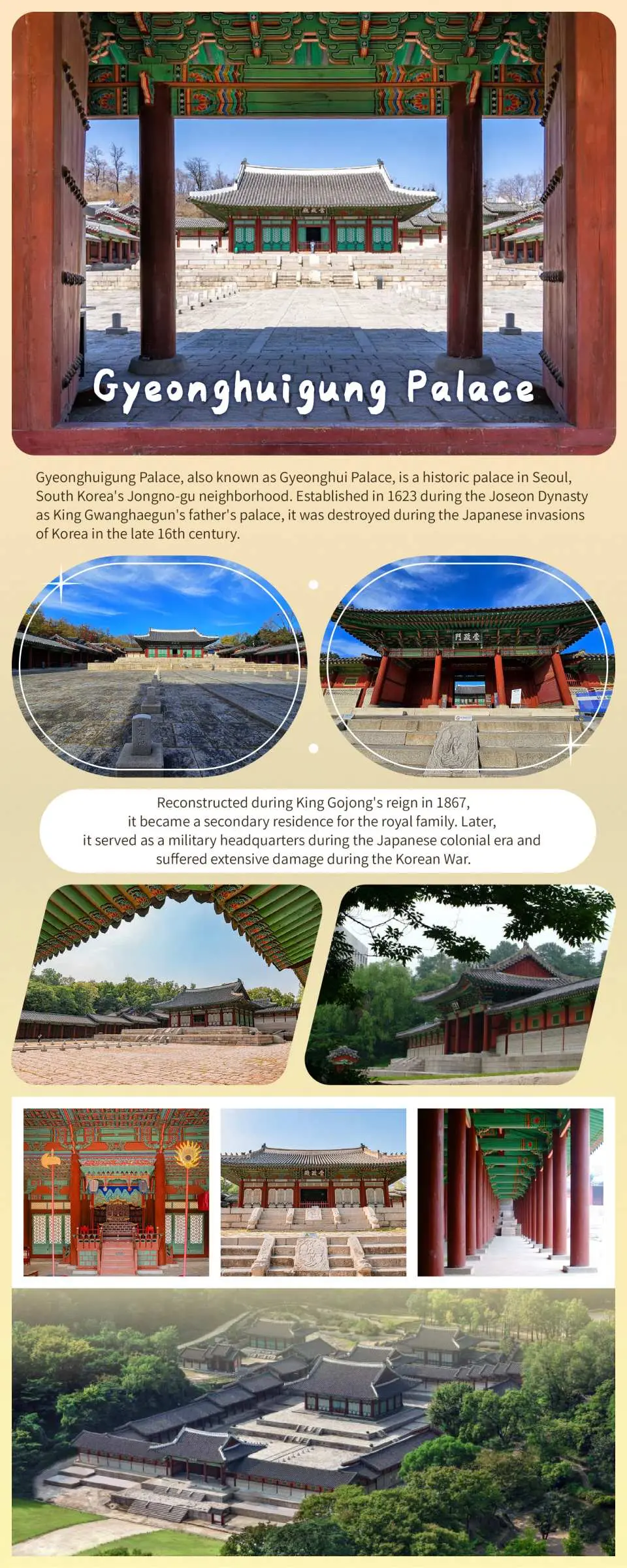
Gyeonghuigung Palace, also known as Gyeonghui Palace, is a historic palace in Seoul, South Korea's Jongno-gu neighborhood. Established in 1623 during the Joseon Dynasty as King Gwanghaegun's father's palace, it was destroyed during the Japanese invasions of Korea in the late 16th century. Reconstructed during King Gojong's reign in 1867, it became a secondary residence for the royal family. Later, it served as a military headquarters during the Japanese colonial era and suffered extensive damage during the Korean War.

Donuimun Museum Village is a cultural and historical village which consists of various traditional Korean houses, or hanok.It opened in 2017 to preserve and showcase the city's endangered historic architecture and culture due to urbanization and development. Spanning approximately 5,310 square meters in the western part of Seoul, the village features various restored hanok (traditional Korean houses) now serving as cultural spaces and museums. Explore these traditional houses, delve into Korean history and culture, and partake in cultural activities like traditional crafts, music, and dance. Enjoy year-round exhibitions and events, each highlighting different facets of Korean culture and history.


Gwanghwamun square constructed during the 17th century in the Joseon Dynasty, was once a secondary palace for the royal family and later used as a military headquarters during the Japanese colonial period. Today, it serves as a cultural site and museum open to the public. Nearby, the Gwanhwanmun area, established in 2009, is a bustling public space popular among residents and visitors. It features a large fountain, a statue of King Sejong the Great, and a variety of sculptures and art pieces.


Explore the Cheonggyecheon Stream in Seoul, South Korea. This 10.9-kilometer stream, originating from the Bukhansan mountain range in the north and flowing south to the Han River, has a rich history dating back to the Joseon Dynasty, where it was used for various purposes. Over time, urban development led to its pollution and concealment beneath highways and infrastructure. In 2003, Seoul initiated a major restoration project to uncover and rejuvenate the stream. The restoration involved removing highways, restoring its banks, and revitalizing the surrounding areas. Today, it's a popular public space and cultural attraction with pedestrian walkways, public art installations, and a traditional Korean lantern festival.


Pre-trip Notice


Purchase Notice
If the tour cannot depart due to insufficient participants, we will proactively notify you to reschedule or provide an alternative option. If you wish to cancel, you may apply for a refund directly through the platform. Please check your email for notifications before the departure date.
Reminders
A minimum of 4 traveler(s) are required for the tour to depart. If the number of participants does not reach the minimum requirement, the tour will be canceled. An email regarding tour cancellation will be sent 1 day(s) before the departure date
In the event of inclement weather such as typhoons or snowstorms, a decision on whether to cancel the tour will be made 1 day(s) before departure (local time 18:00). Notifications will then be sent via email
Travelers with the following conditions or other health issues that could be worsened by excessive stimulation should not participate in this activity: Heart disease, Pregnant women
Not recommended for travelers with back problems.
For a full refund, you must cancel at least 48 hours before the experience’s start time. If you cancel less than 48 hours before the experience’s start time, the amount you paid will not be refunded.
Any changes made less than 24 hours before the experience’s start time will not be accepted. Cut-off times are based on the experience’s local time.
This experience requires good weather. If it’s canceled due to poor weather, you’ll be offered a different date or a full refund.
This tour/activity will have a minimum number of 3, maximum of 9 travelers. If it’s canceled because the minimum isn’t met, you’ll be offered a different date/experience or a full refund.
If the tour cannot depart due to insufficient participants, we will proactively notify you to reschedule or provide an alternative option. If you wish to cancel, you may apply for a refund directly through the platform. Please check your email for notifications before the departure date.
Cancellation Policy
- Cancellations 2 day(s) (inclusive) before the selected date are allowed. Unused orders can be canceled for free
- Cancellation is not allowed between 0–1 days from the selected date. Orders cannot be canceled or modified, and refunds will not be granted.
- Due to time zone differences, the confirmed cancellation date is based on the supplier’s local time. Please allow 2–5 business days to process your cancellation request, after which the cancellation fee will be charged according to the product’s cancellation policy. Once the cancellation is confirmed, you will receive your refund within 14 working days.
FAQ
The best times to join the 'Seoul Life & Culture Walking Tour' are spring and autumn. Spring (approximately April to May) offers mild weather and blooming flowers, while autumn (approximately September to October) brings cool, pleasant temperatures, making it an ideal period for exploring Seoul on foot. Summer (June to August) can be hot and humid, and winter (November to March) is quite cold. However, with appropriate clothing, you can still comfortably experience Seoul's cityscape and culture during these times.
Seoul is generally a very safe city. Solo female travelers on the 'Seoul Life & Culture Walking Tour' can feel secure traveling with a professional guide and the group. It's advisable to remain aware of your surroundings, keep your personal belongings secure, and carry emergency contact information. If you encounter any issues during the tour, you can always seek assistance from the guide to ensure a smooth and safe journey.
In addition to the 'Seoul Life & Culture Walking Tour' fee, you may need to consider transportation to the meeting point, personal meals (such as snacks and drinks), souvenirs, or any other personal spending. While some tours may include partial transportation, this is primarily a walking tour, so public transport costs are usually minimal. It's recommended to budget flexibly for your personal needs during the trip.
Travel seasons primarily affect the number of visitors in Seoul. During peak seasons (like summer or the autumn foliage period), popular spots might be more crowded, but the atmosphere will be more lively. In the off-peak seasons (like early spring or late autumn), there are fewer tourists, allowing for a quieter and deeper immersion into the city's fabric and cultural details. The quality of interaction with the guide might also be higher. Overall, the depth of the walking tour experience is not significantly impacted by seasonality, as its core lies in the guide's expert commentary.
As the 'Seoul Life & Culture Walking Tour' involves extensive walking, comfortable and supportive athletic shoes are highly recommended. For clothing, layering (like the onion method) is advised, allowing you to easily adjust to weather changes. For spring and summer, consider bringing a hat, sunglasses, and rain gear. For autumn and winter, be sure to pack warm layers, such as jackets and scarves, to stay comfortable during outdoor activities.
The 'Seoul Life & Culture Walking Tour' delves into Seoul's transformations in history, politics, culture, and social systems. Your guide will lead you through Korea's evolution since modernization began in the late 19th century, covering aspects like military service, education, and healthcare. It will also explore statistical data closely related to daily life, such as birth rates, economic conditions, and views on marriage, offering insights into the core aspects of Korean society.
The professional guide will lead participants through Seoul's urban landscape with engaging explanations, historical anecdotes, and real-life examples. The guide will not only introduce Korea's history, politics, and culture but also share the authentic experiences and perspectives of Korean people during social system changes. By integrating modern statistical data, participants will gain a multifaceted, in-depth understanding of modern Korean society and its unique cultural context.
The 'Seoul Life & Culture Walking Tour' usually lasts for several hours and involves a moderate level of walking. The route will take you through Seoul's city streets and may include some stairs or inclines. The overall pace is designed to allow participants to walk comfortably while having ample time to listen to the guide's explanations and observe their surroundings, without excessive concern about physical exertion.
Get Help


