

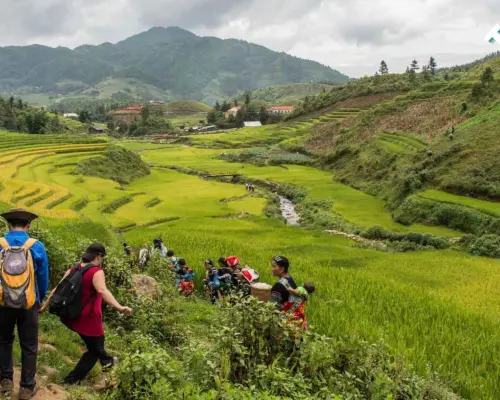


2D1N Sapa Long Trekking Tour | Route Cat Cat/Lao Chai – Ta Van | Hanoi, Vietnam
Reconnect with a simpler way of life on a unique 2-day tour of Sa Pa from Hanoi. Spend the night at the hotel and trek through the ethnic minority people’s villages and learn more about their way of life in the mountains.
- Admire the traditional costumes of the ethnic peoples
- Trek through the lush green rice paddies and terraces
- Experience life in the mountains and spend the night at a homestay
Package Options


Sightseeing Tours
| Tour Type | Shared tour |
| Transportation method | Transfer from meeting point |
| Tour types | Guided tour |
| Accommodation type | Hotel |
| Sightseeing type | Natural sights, Eco-tourism |
| Transport | Walking |
Product Info
Important Info
Reminders
Please choose the Guide Language in accordance to the description of the package you booked. False bookings will be subjected to cancellation
Holiday surcharge will be collected directly by the operator on the service using day
FAQ
Within Sapa town, walking is the most common way to get around. For reaching nearby trekking villages such as Cat Cat or Ta Van, local taxis, motorbike taxis (xe ôm), or rented motorbikes are frequently used. During organized trekking tours, transportation to and from the trailheads and between villages is typically arranged by the tour operator, ensuring a seamless experience.
During a Sapa long trekking tour, trekkers usually carry a small daypack with essentials for the day's hike. Main luggage is often transported separately by a support vehicle or transferred directly between the overnight accommodations or homestays in villages like Lao Chai and Ta Van. This arrangement allows participants to trek comfortably without the burden of heavy bags.
While some well-marked trails in Sapa can be explored independently, it is highly advisable to trek to remote villages like Lao Chai and Ta Van with a local guide. Guides possess crucial knowledge of the terrain, potential weather changes, and local customs. They enhance safety, provide navigation, and offer invaluable insights into the culture and daily life of the ethnic minority communities, enriching the overall trekking experience.
Beyond sturdy, waterproof hiking shoes, it is recommended to bring quick-drying, layered clothing suitable for varied temperatures, a waterproof jacket and trousers, and a small backpack for daily essentials. A hat, sunscreen, insect repellent, a reusable water bottle, and a basic first-aid kit are also crucial. Comfortable socks, personal toiletries, and a headlamp or flashlight are highly advisable for overnight stays.
Trekkers exploring Cat Cat and Ta Van villages can expect rich cultural exchange opportunities. This includes visiting local homes, observing traditional crafts such as indigo dyeing, weaving, and silversmithing practiced by H'mong or Dao people. Homestay experiences often involve sharing meals with local families, providing direct interaction and deeper insights into their customs, daily routines, and mountain way of life.
The Sapa trekking routes through Lao Chai and Ta Van villages are generally considered to be of moderate difficulty. The terrain is varied, encompassing dirt paths, narrow trails through rice terraces, some muddy sections (especially after rain), and occasional steep ascents and descents. Good physical fitness and appropriate footwear are necessary to comfortably navigate these paths and fully enjoy the scenic landscapes.
The most favorable seasons for a Sapa long trekking tour are typically spring (March to May) and autumn (September to November). During these months, the weather is generally mild and pleasant, with clear skies offering excellent visibility of the terraced rice fields. Autumn, specifically, presents stunning golden rice paddies ready for harvest. The summer months are lush but can be very wet, while winter brings colder temperatures and frequent fog.
During a Sapa long trekking tour, homestay experiences offer a genuine glimpse into the lives of local ethnic minority families. Guests typically stay in traditional wooden houses, often sharing common sleeping areas with mattresses and mosquito nets. Meals are usually simple, home-cooked local dishes, and hosts often share stories about their culture. It's a rustic, immersive experience focused on cultural connection rather than luxury.
Get Help


