

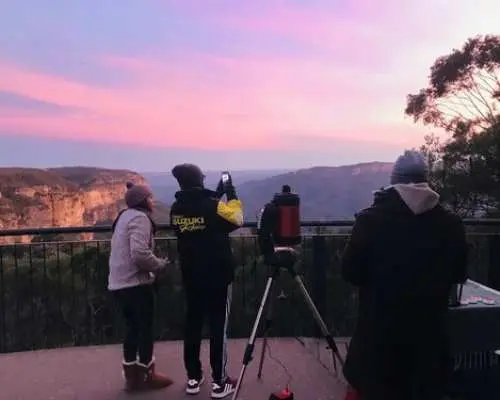


Blue Mountains Stargazing Tour | New South Wales
Engage in a night of astronomical fun that mixes scientific wonders and cultural fantasies. Enjoy a fully immersive experience lit up by the shine of the Moon or billions of stars in the Milky Way—a truly unique activity.
- Embark on a 90-minute interactive tour led by a local astrophysicist
- Learn fascinating facts about modern astronomy
- Listen to constellation stories through the lens of different cultures
- Unwind and relax under the mystical starry Milky Way
Package Options


Product Info
— What You Can Expect —
Go on a captivating journey of galactic beauty under Greater Blue Mountains skies. Gear up for a fun, interactive, and insightful sky-watching nocturnal tour with a memorable stargazing experience and an unforgettable folklore session in this wondrous World Heritage!
This tour is perfect for date nights, families, groups, and locals. This unforgettable experience features a view of Australia’s spectacular night sky away from the city lights. Indulge in this wonderful opportunity to experience the Southern Sky and its celestial wonders—only visible from the Southern hemisphere.
— Package Info —
The tour includes the following
- 90-min guided tour
- Storytelling through the constellations
- Naked-eye astronomy and navigation tips
- Viewing through professional computerised telescopes. See the following, depending on the time of the year: the Moon and its craters and seas, Saturn’s rings, the moons of Jupiter, Mars, and Venus, the Orion Nebula, star clusters, double and triple stars, shooting stars (if you are lucky), and deep space objects such as galaxies and our fabulous Milky Way
- Astrophysicist Q&A
- Complimentary hot chocolate (house-made with Barista Oat milk)
— Guide Info —
Dr. Dimitri Douchin has a PhD in Astronomy and Astrophysics and over ten years of experience as an astronomy guide in institutions including the University of Canterbury Mount John Observatory (Lake Tekapo, NZ), Sydney Observatory, Macquarie University, and Emirates One&Only Wolgan Valley.
Learn useful tips and hacks on how to identify stars


Immerse under the stars while listening to stories and lores of the constellations
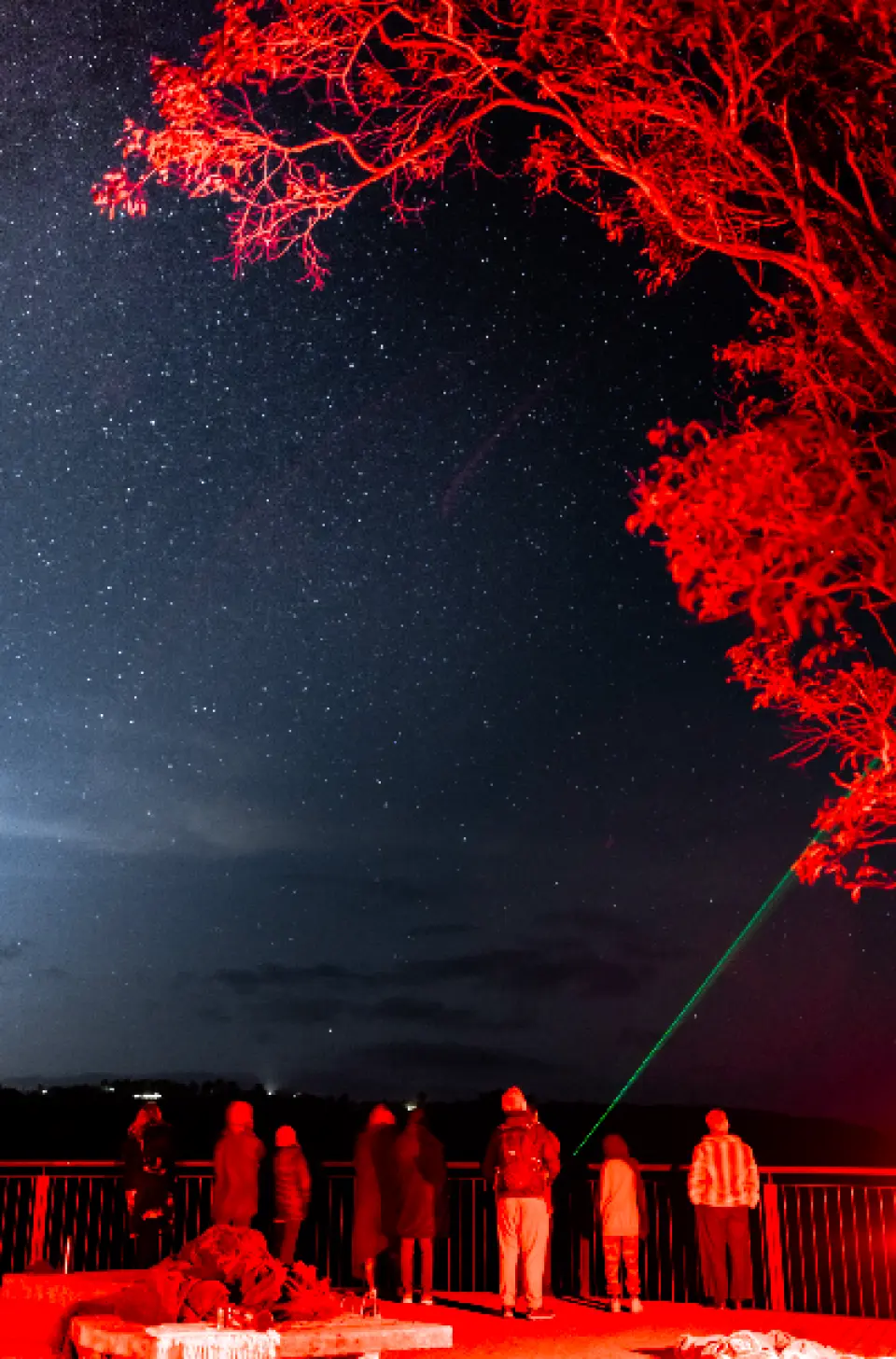

Stay cosy with hot chocolate and warm blankets


Purchase Notice
- This tour is not recommended for children under 4 years old but those under 3 years old may join for free. Please be mindful of your children at all times
- Travellers under 18 years old must be accompanied by a paying adult
- The minimum group size is 2 travellers, and the maximum is 30 travellers
- Guests are advised to bring water, warm clothes, gloves, and a blanket, as winter mountains nights are chilly
- Please refer to the FAQ for more info
Reminders
Please arrive at the designated location 15 minute(s) before the scheduled departure time, as the tour will depart on time
Please be aware that stargazing tours are weather-dependent and may be cancelled in case of cloud cover. If it is overcast, guests will receive an email at 1:00 pm Sydney time on the day of the tour to have an alternative 90-min indoor Planetarium Astronomy tour. No refunds are available
Cancellation Policy
- Cancellations 9 day(s) (inclusive) before the selected date are allowed. Unused orders can be canceled for free
- Cancellation is not allowed between 0–8 days from the selected date. Orders cannot be canceled or modified, and refunds will not be granted.
- Due to time zone differences, the confirmed cancellation date is based on the supplier’s local time. Please allow 2–5 business days to process your cancellation request, after which the cancellation fee will be charged according to the product’s cancellation policy. Once the cancellation is confirmed, you will receive your refund within 14 working days.
FAQ
The best months for a Blue Mountains stargazing tour typically align with the clearer, cooler seasons. Winter (June to August) often provides crisp, clear nights with less atmospheric haze, offering excellent visibility of the Milky Way. Autumn (March to May) and Spring (September to November) also present favorable conditions with stable weather. While summer (December to February) can be cloudier, clear nights are still possible. For optimal viewing, aim for dates closer to a new moon, as its absence minimizes natural light pollution.
The ideal time to visit the Blue Mountains for a general experience largely depends on your preferences. Spring (September to November) is popular for its blooming wildflowers and pleasant temperatures. Autumn (March to May) offers stunning fall foliage, particularly in areas like Blackheath. Summer (December to February) is warm and great for outdoor activities, but can be crowded. Winter (June to August) brings crisp, clear air and fewer tourists, though temperatures are cooler. Each season offers unique natural beauty and activities.
For a Blue Mountains stargazing tour, it's crucial to dress warmly, even during summer nights, as temperatures can drop significantly. Essential gear includes multiple layers of warm clothing, a waterproof outer layer, closed-toe shoes, a hat, gloves, and a scarf. Bringing a blanket, a hot drink in a thermos, and a red-light torch (to preserve night vision) is also highly recommended. Ensure you are comfortable and prepared for cooler outdoor conditions to fully enjoy the celestial experience.
Yes, the iconic Three Sisters rock formation in the Blue Mountains is beautifully floodlit every night from dusk until approximately 11 PM or midnight, depending on the season. This illumination creates a dramatic and captivating spectacle against the night sky, offering a unique perspective of this natural landmark. You can enjoy this nighttime view from the dedicated lookout points at Echo Point in Katoomba, which provides excellent vantage points.
Apart from the nightly illumination of the Three Sisters, specific large-scale light shows are not a regular, year-round feature in the Blue Mountains. However, some attractions like Scenic World occasionally offer seasonal evening events, such as 'Scenic World by Night,' which includes special illuminations and experiences. It's advisable to check local event calendars for Katoomba and Leura for any temporary nighttime festivals or cultural performances during your visit, as the region primarily focuses on its natural nighttime beauty.
An overnight stay in the Blue Mountains is highly recommended, especially when participating in a stargazing tour. Stargazing tours typically conclude late at night, making a relaxed overnight stay locally more convenient than a lengthy return journey. Staying overnight allows you to fully unwind, enjoy the tranquil evening atmosphere, and wake up refreshed to explore more of the region's natural beauty and attractions the following day without rushing. It enhances the overall immersive experience.
Visitors without a car can navigate the Blue Mountains primarily using public transportation and dedicated tourist services. Trains connect major towns like Katoomba, Leura, and Blackheath from Sydney. Within these towns and to key attractions, local bus services are available. The Blue Mountains Explorer Bus (hop-on hop-off) is a popular option for reaching various sights. Taxis and ride-sharing services exist but may be less frequent outside major hubs. Many tours also include transfers from central meeting points or accommodation.
The Blue Mountains stargazing tour is specifically designed to take place in locations carefully selected for optimal night sky viewing, away from urban light pollution. These sites are typically situated in areas known for their dark skies and clear horizons within the Blue Mountains National Park region. Tour operators prioritize locations that offer unobstructed views of the celestial sphere, allowing for the best possible observation of stars, planets, and the Milky Way, guided by local astrophysicists.
Get Help


