


Chiang Rai Highlights Day Tour: White Temple, Blue Temple & Black House from Chiang Mai
Journey through Northern Thailand’s countryside for a day. Visit three must-see attractions of Chiang Rai: White Temple, Blue Temple, and the Black House.
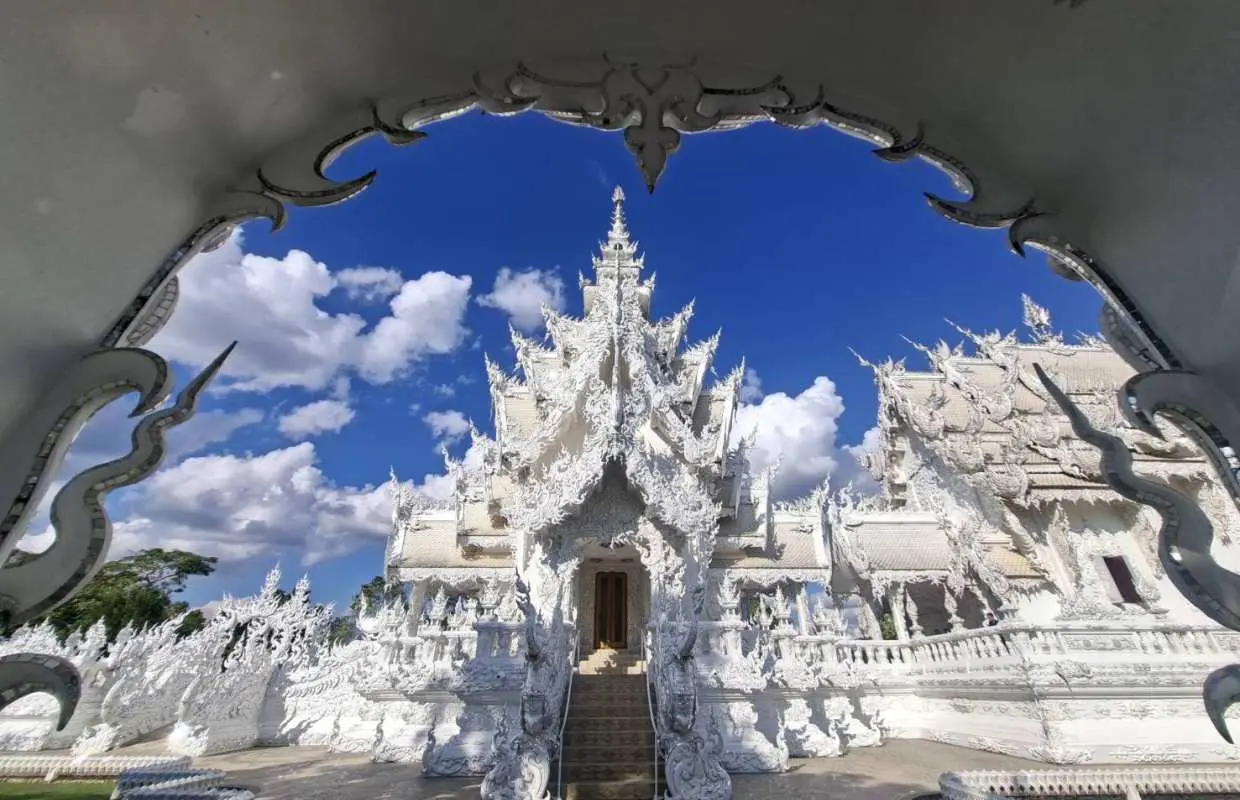
- Admire the sparkling white exterior of Wat Rong Khun, also known as the White Temple
- Marvel at the mesmerizing blue and gold interior of the Blue Temple, Wat Rong Suea Ten
- Explore the dark and mysterious buildings of the famous Black House, the Baan Dam Museum
- Select the optional add-on and take the opportunity to visit the Long Neck Village
- Enjoy convenient round-trip transfers from Chiang Mai, ensuring a stress-free and comfortable journey
Package Options


Sightseeing Tours
| Tour Type | Private tour, Shared tour |
| Transportation method | Hotel transfer |
| Tour types | Guided tour |
| Meal arrangement | Lunch included |
| Additional service & facility | Transfer included |
| Sightseeing type | Museum tour, Temples & shrines |
| Transport | Charter car |
Product Info
— What You Can Expect —
Embark on a cultural journey through Chiang Rai's famous White Temple, Blue Temple, and Black House on this tour. Discover the region's rich and spiritual artistic heritage as you explore the intricate carvings and sparkling white exterior of the White Temple, the blue and gold interior of the Blue Temple, and the darkly mysterious buildings of the Black House.
In addition to these landmarks, the tour also offers an optional visit to the Long Neck Village, where you can immerse yourself in the fascinating traditions and way of life of this unique tribe. Be amazed by at the distinctive long neck rings worn by the village women and gain a deeper understanding of their cultural practices. With round-trip transfers from Chiang Mai, this tour offers a memorable journey through some of Chiang Rai’s most iconic places. An experienced guide is included on join-in tours.
— Important Information —
- Package explanation) Sedan : is for a group of maximum 3 persons / SUV : is for a group of maximum 4 persons / Van : is for a group of maximum 9 persons.
- Free pickup is available from hotels and guesthouses in the Old Town, Night Bazaar, Nimman Haemin, and some areas of Santitham. Pickup service is not available for Airbnbs that only have an address and no registered business name. Please select a nearby hotel or landmark that can be found on Google Maps as your pickup location.
- If your hotel is outside the designated pick up area, please choose Mcdonald's Thapae https://maps.app.goo.gl/3Emwxq4s6AjZT35E6 OR Mcdonald's Nimman https://maps.app.goo.gl/duu4aQYzbet2Hvo7A, OR CM Transit Bus Stop. Central Chiang Mai https://maps.app.goo.gl/PQoJiGuxhaQ6q2PD9 as your meeting point.
- The pick-up time will be sent via chat within 12 hours of booking. Please check your messages.
- Modest attire such as trousers or a long skirt, and long sleeved tops is required for visiting temples or palaces. Sandals or flip flops are allowed.
- The timings provided for the itinerary are approximate
- The tour operates in rainy weather, even during the rainy season from May to October. We kindly recommend bringing an umbrella or raincoat.
- Please note that carry-ons or large luggage cannot be accommodated in the van. (only items that can be placed on your lap are allowed.)
Let's drive through Northern Thailand’s countryside. You will have a short stop at a natural hot spring and take a break. You can grab a bite with coffee and snacks.


Admire the breathtaking beauty of Wat Rong Khun often named The White Temple.


A serene Buddha statue hidden inside a cave


You will see a very unique architecture that stands out through the white colour inlaid work and the use of pieces of glass in the plaster, sparkling in the sun.


Wat Rong Suea Ten called Blue temple takes on the colors of blue and gold, blue representing Dharma in tribute to Buddha.


Blue Temple (Wat Rong Suea Ten), named after its blue and gold interior


Witness the unique architecture and displays at the Black House (Baan Dam Museum)


Let's head to the Long Neck Hilltribe as a optioal tour, and see the incredible length which continue and pass to the young generation to keep their own tradition in the changing world of technology


Enjoy the convenience of complimentary hotel transfers within our designated pick-up zone.


Purchase Notice
- [Package explanation] Sedan : is for a group of maximum 3 persons SUV : is for a group of maximum 4 persons Van : is for a group of maximum 9 persons
- If passenger number exceeds the number booked, the driver reserves the right to refuse service.
- If the pickup time is between 7:00 and 7:30, the van may arrive at any time within that window. Please note that this does not mean the van will wait for 30 minutes. As pickup times cannot be predicted in advance, we kindly ask that you be ready and waiting in the lobby starting at 7:00, as the van may arrive at any time from 7:00 onward. Being in the lobby from 7:00 will help ensure you do not miss the pickup. As this is a join-in tour where the van visits several accommodations, please understand that the pickup may be slightly delayed beyond 7:30 due to traffic or delays at earlier stops.
- The pick-up time will be sent via chat within 12 hours of booking. Please check your messages.
Reminders
Travelers with the following conditions or other health issues that could be worsened by excessive stimulation should not participate in this activity: Pregnant women
The schedule is subject to change without notice due to weather condition or other unforeseen interruptions.
Please note that carry-ons or large luggage cannot be accommodated in the van. (only items that can be placed on your lap are allowed.)
Please be informed you may share the van with guests from the optional Long Neck Village visit and may need to wait for them to finish.
FAQ
The White Temple (Wat Rong Khun) is renowned for its unconventional all-white exterior adorned with mirrored glass, symbolizing the purity of the Buddha and the reflection of wisdom. Its design features a bridge over a 'cycle of rebirth' area, intricately sculpted with reaching hands, leading to the main Ubosot, which blends traditional Buddhist art with surrealist contemporary design.
The intricate artwork at the White Temple is rich with Buddhist symbolism. The multitude of outstretched hands emerging from the 'pit of hell' beneath the bridge represents human suffering, greed, and desire. Crossing the bridge symbolizes transcending these worldly temptations to reach a state of enlightenment, moving from the realm of the profane to the sacred, guarded by mythical creatures.
Visiting the White Temple, Blue Temple, and Black House offers a deeply contrasting and enriching cultural experience. Each site showcases a distinct artistic philosophy: the White Temple's purity and surrealism, the Blue Temple's vibrant modern Buddhist art, and the Black House's introspective and often darker take on life and death. Together, they provide a comprehensive journey through contemporary Northern Thai art and spirituality.
For stunning photographs at the White Temple, focus on the iconic main bridge with its intricate details and the Ubosot's sparkling white exterior, especially in morning light. The golden building, serving as the restrooms, offers a striking contrast to the white temple. Also, explore the surrounding gardens and reflection pools for wider scenic shots and unique angles of this remarkable site.
Convenient round-trip transfers are provided directly from Chiang Mai for the day trip to the White Temple, Blue Temple, and Black House. This service ensures a stress-free and comfortable journey through Northern Thailand's scenic countryside, allowing visitors to relax and enjoy the attractions without the hassle of planning their own transportation or navigating unfamiliar routes between sites.
The three attractions offer distinct experiences. The White Temple (Wat Rong Khun) is a modern, unconventional Buddhist temple known for its pristine white facade and intricate glasswork. The Blue Temple (Wat Rong Suea Ten) is another contemporary Buddhist temple, but it stands out with its striking blue and gold design. The Black House (Baan Dam Museum) is not a temple but a complex of dark, traditional Lanna-style buildings housing unique art, sculptures, and artifacts, often exploring themes of life, death, and the universe.
At the Blue Temple (Wat Rong Suea Ten), visitors can admire a magnificent main hall featuring a large, serene blue Buddha statue amidst vibrant blue and gold murals and intricate Naga serpent carvings. The Black House (Baan Dam Museum) offers a collection of unique wooden structures filled with unconventional art, animal remains, and artifacts, creating a thought-provoking, often dark, and philosophical artistic experience.
Visiting the Long Neck Village offers a unique cultural encounter with the Kayan (Long Neck Karen) people. Here, you can observe their traditional way of life, learn about their distinct cultural heritage, and see women adorned with brass neck rings. It's an opportunity to appreciate their craftsmanship, particularly their weaving, and engage in respectful cultural exchange, often supporting local communities through purchases.
Get Help


