



Full-Day Valley Of The Queens Tour With Karnak Temple & Memnon
- Begin with Karnak Temple Tour and your selected private guide.
- Follow Avenue Of Sphinxes Tour during the East Bank section.
- Visit Valley Of The Queens Tour as the royal tomb focus.
- Stop at Colossi Of Memnon Tour for open monument views.
- Explore Queen Hatshepsut Temple Tour with guided context.
- Combine East Bank temple heritage with West Bank highlights.
- Select English, Italian, German, French, Spanish, or Russian.
- Book privately for 1 to 9 participants in your own group.
- Choose tickets and lunch included or exclude both services.
- Pickup details are confirmed one day before your activity date.
Package Options
Product Info
Begin your private Luxor day with pickup from your hotel or selected pickup point, then travel by private air-conditioned vehicle with your guide. This experience is created for travelers who want a full-day route that moves from East Bank temple heritage to West Bank royal landmarks while keeping the itinerary clear and accurate. The tour includes Karnak Temple Tour, Avenue Of Sphinxes Tour, Valley Of The Queens Tour, Colossi Of Memnon Tour, and Queen Hatshepsut Temple Tour. It does not include Valley Of The Kings Tour, Luxor Temple, museum visits, felucca sailing, or hot air balloon activities unless clearly booked through another product. Transfer time may vary depending on your hotel location, and final pickup details will be confirmed one day before your activity.
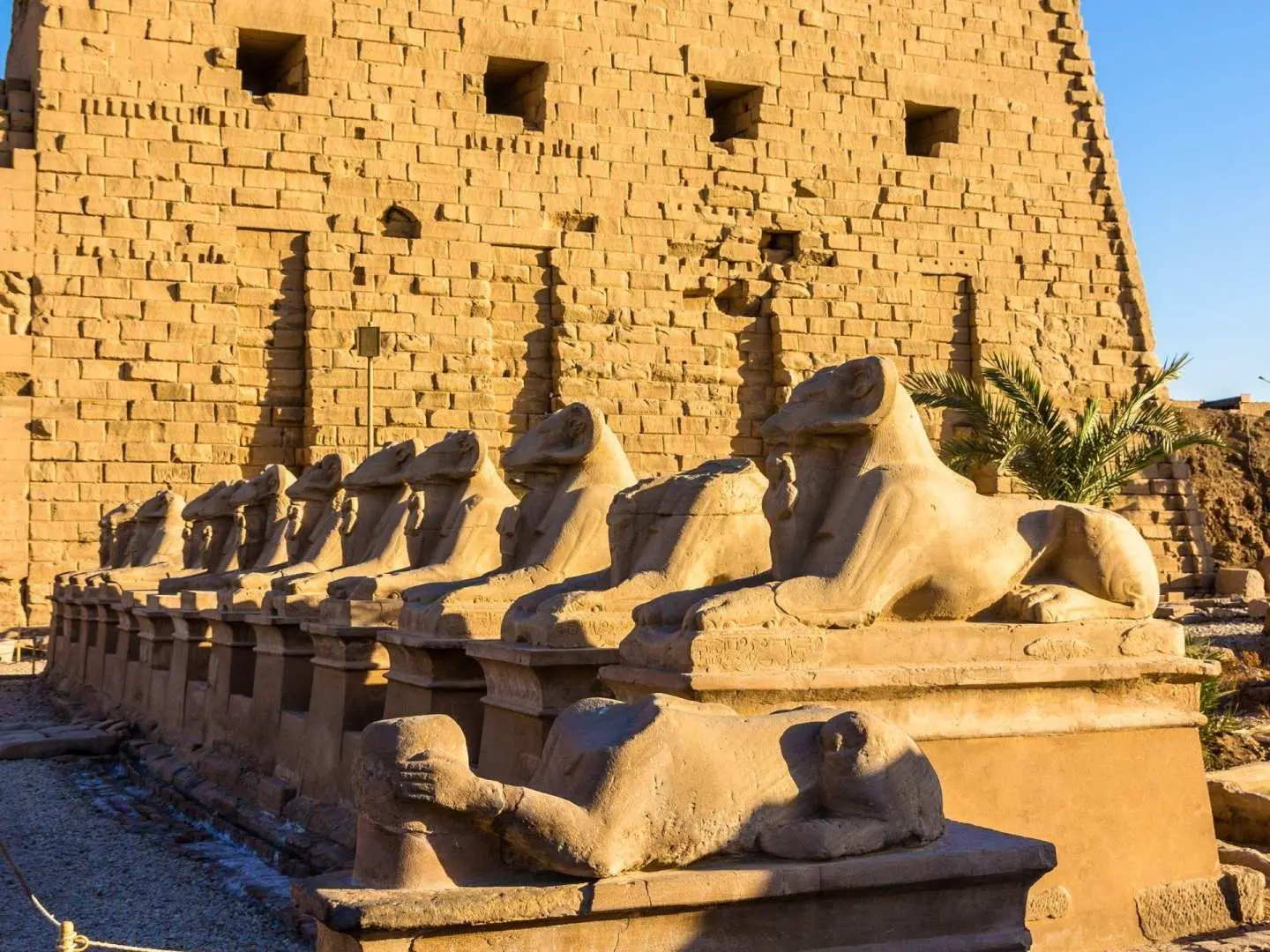
The day begins with Karnak Temple Tour, giving the experience a strong East Bank opening. Karnak introduces Luxor through a large ancient temple setting, open spaces, and historic details that help guests understand the scale of the city’s temple heritage. With your selected guide language, the visit becomes easier to follow, as your guide explains the site according to the confirmed package, ticketing process, access conditions, and daily timing.
After Karnak, continue to Avenue Of Sphinxes Tour according to timing, access rules, and local operation. This section adds a sense of connection to the East Bank route, linking the temple story with one of Luxor’s recognizable ancient paths. The exact flow may vary because of traffic, site access, ticketing arrangements, or daily scheduling, but the intended East Bank section remains focused on Karnak Temple and the Avenue Of Sphinxes.
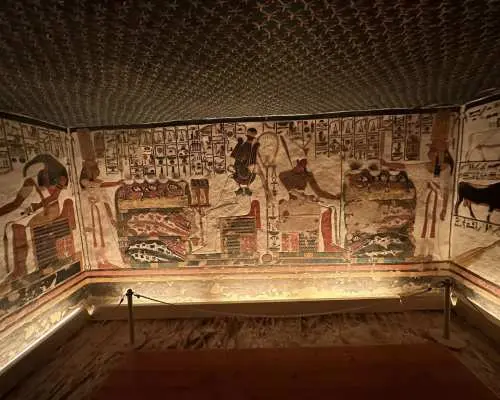
The route then continues toward the West Bank for Valley Of The Queens Tour, the main keyword focus of this product. This visit changes the atmosphere from temple architecture to royal tomb heritage. Your guide introduces the valley according to the selected package, tomb availability, access conditions, ticketing rules, and local timing. Extra tomb entries are not included unless clearly confirmed in the selected booking.
After Valley Of The Queens, continue to Colossi Of Memnon Tour. This open-air monument stop adds a different visual moment to the day and creates a natural transition between the royal tomb section and the temple visit that follows. The stop may be shorter than the temple or valley visits, but it remains an important West Bank landmark included in the route.
The final major stop is Queen Hatshepsut Temple Tour. This temple gives the day a strong architectural ending, with a dramatic setting and guided context after the tomb and monument sections. Your guide explains the visit according to the confirmed package, ticketing flow, site access, and daily operation. The result is a balanced Luxor route that combines East Bank temple heritage with West Bank royal and monument highlights.
Full-Day Valley Of The Queens Tour With Karnak Temple & Memnon
This main option follows the provided itinerary: Karnak Temple Tour, Avenue Of Sphinxes Tour, Valley Of The Queens Tour, Colossi Of Memnon Tour, and Queen Hatshepsut Temple Tour. After selecting the tour, guests can customize the booking through the available sub-options. Tour guide language can be selected from English, Italian, German, French, Spanish, or Russian. Participant number can be selected from 1 to 9 participants. Package type can be selected as with tickets and lunch included or without tickets and lunch.
If the with tickets and lunch package is selected, the listed required entry tickets and lunch are included according to the confirmed booking. Lunch location may vary depending on timing and daily operation, so guests should not expect one fixed restaurant. If the without tickets and lunch package is selected, the tour still includes private transport, guide service, and the guided route, but entry tickets and lunch are not included and must be paid separately if needed.
These selections apply only to the selected tour option, so guests should review guide language, participant number, package type, and itinerary carefully before purchase. Please ensure the phone number provided during booking is connected to WhatsApp for quick pickup and timing updates. If it is not connected to WhatsApp, kindly share an alternative number in advance.
Your tour begins with pickup from your hotel or selected pickup point. Transfer time may vary depending on your hotel location, and final pickup details are confirmed one day before the activity. After meeting your guide and driver, travel by private air-conditioned vehicle to begin the route. Start with Karnak Temple Tour according to the selected language, confirmed package, ticketing process, site access, and local operation. Continue afterward to Avenue Of Sphinxes Tour according to timing, access conditions, and daily flow. After the East Bank section, continue to Valley Of The Queens Tour on the West Bank according to tomb availability, ticketing rules, site access, and the selected package. Then stop at Colossi Of Memnon Tour before visiting Queen Hatshepsut Temple Tour. Lunch is included only if the with tickets and lunch package is selected. If the without tickets and lunch package is selected, lunch is not included. Entry tickets are included only when the ticket-included package is selected. At the end of the tour, return by vehicle for drop-off.

Purchase Notice
- Please check the selected main option carefully before purchase.
- Sub-options apply only to the selected tour option.
- Available guide languages are English, Italian, German, French, Spanish, and Russian.
- Participant selection is available from 1 to 9 participants.
- Package type may be with tickets and lunch or without both.
- With tickets and lunch includes listed required entries and lunch.
- Without tickets and lunch excludes entry fees and lunch.
- Pickup time may vary depending on your hotel location.
- Final pickup details will be confirmed one day before the activity.
- Please provide a WhatsApp-connected phone number for updates.
- If your number has no WhatsApp, share an alternative number early.
- Temple access may depend on local operation and daily timing.
- Tomb access may depend on local operation and availability.
- Avenue access may depend on timing and local operation.
- Lunch location may vary according to daily operation and timing.
- Drinks and personal expenses are not included.
- Extra tomb entries are not included unless clearly confirmed.
- Valley Of The Kings and Luxor Temple are not included.
- Museum visits and Nile sailing are not included.
- Valley Of The Queens Tour details depend on selected package.
How to Use
How to Use Your Voucher
- Please present the e-voucher on-site
FAQ
The Valley of the Queens served as the burial site primarily for the wives and children of pharaohs, as well as some high-ranking officials. The most famous tomb belongs to Queen Nefertari, the Great Royal Wife of Ramesses II, renowned for its beautifully preserved and vibrant wall paintings. Other notable figures include princes and princesses, such as Prince Khaemwaset, another son of Ramesses II. The tombs offer insights into the lives and beliefs of the New Kingdom's royal family members.
Yes, the Valley of the Queens is highly worthwhile for history enthusiasts. It offers a unique perspective on ancient Egyptian funerary practices and royal family life, complementing the Valley of the Kings. The site provides an intimate look into the decorative arts and spiritual beliefs of the New Kingdom, particularly through the intricate and colorful artwork found in the tombs. It's an essential part of understanding Luxor's rich historical heritage.
The main difference lies in who was buried there. The Valley of the Kings was primarily for pharaohs and powerful nobles, featuring larger, more elaborately planned tombs. The Valley of the Queens, conversely, was reserved for royal wives, children, and some high-ranking officials. While both sites offer stunning ancient Egyptian art, the Valley of the Queens' tombs often exhibit a more delicate and personal artistic style, reflecting the status of the women and children interred there.
The tomb of Queen Nefertari (QV66) is widely considered the most spectacular and important to see in the Valley of the Queens. Its exquisite and remarkably well-preserved painted decorations depict Nefertari's journey through the afterlife, showcasing unparalleled artistic quality. While access may sometimes be restricted or require a special ticket, it represents the pinnacle of tomb art at the site.
During the tour, guests travel comfortably in a private, air-conditioned vehicle. This ensures efficient and convenient transportation between all included historical sites, such as the Karnak Temple on the East Bank and the Valley of the Queens, Colossi of Memnon, and Queen Hatshepsut Temple on the West Bank. The private vehicle allows for a seamless experience without the hassle of arranging separate transport.
The tour is designed to provide ample time for exploration at each significant site, including the Valley of the Queens. While the exact duration can vary slightly based on group pace, the itinerary ensures a focused visit allowing guests to explore selected open tombs with their private guide and appreciate the historical context and artistic details. The overall full-day schedule balances visits to multiple key locations.
The Temple of Queen Hatshepsut, also known as Deir el-Bahari, is highly significant as a unique architectural marvel built for one of ancient Egypt's most powerful female pharaohs. Its striking terraced design, carved into the cliffs, stands out dramatically from other temples. It offers insight into Hatshepsut's reign, her divine birth, and her accomplishments, making it a crucial stop for understanding New Kingdom history and architecture.
The private guide plays a crucial role in enhancing the visitor experience by providing in-depth historical context, explanations of hieroglyphics, and insights into the significance of each site. For locations like Karnak Temple and the Valley of the Queens, the guide offers personalized commentary, answers questions, and helps navigate the complex historical narratives, ensuring a richer and more informed visit.
Get Help


