
8 Days Buddhist Pilgrimage Tour from Patna: Bodh Gaya, Lumbini, Kushinagar, Sarnath, Nalanda and Rajgir
- Cover the Buddhist Circuit across India and Nepal, including Vaishali, Kushinagar, Lumbini, Kapilvastu, Sravasti, Varanasi, Sarnath, Bodh Gaya, Rajgir and Nalanda.
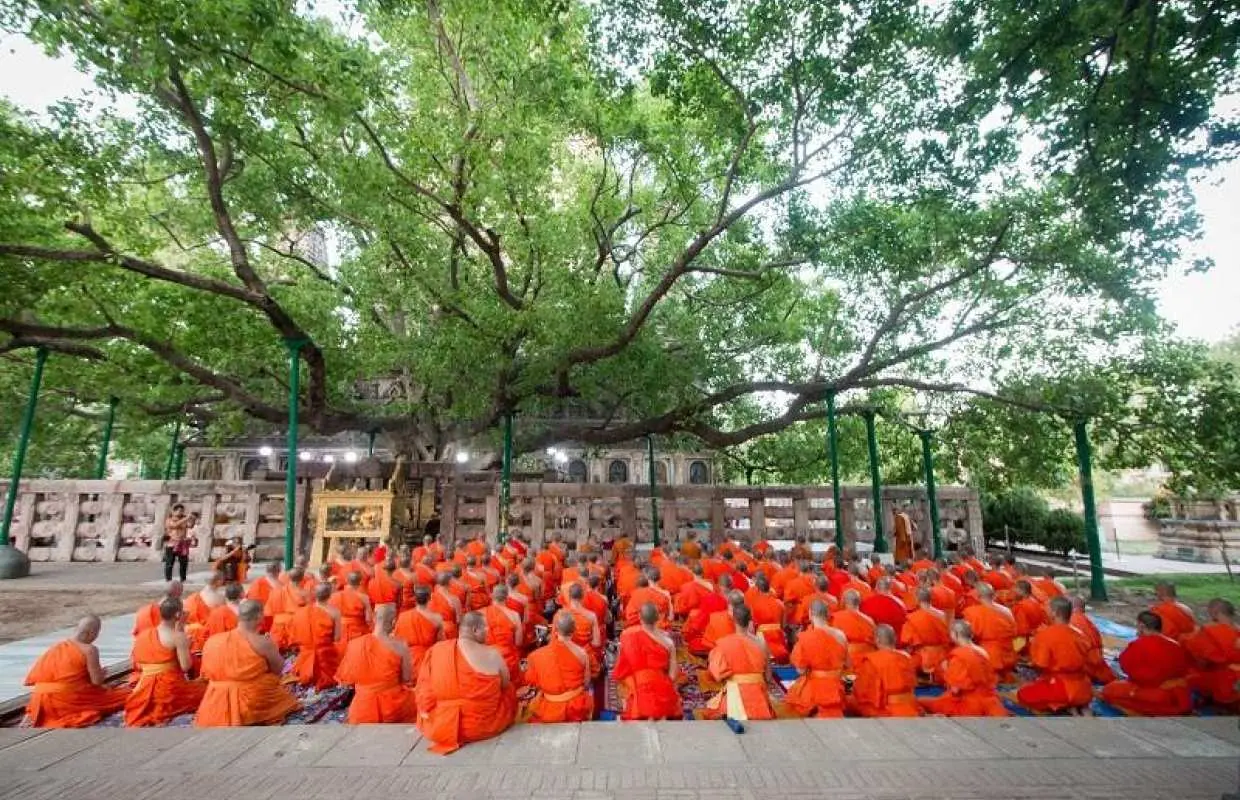
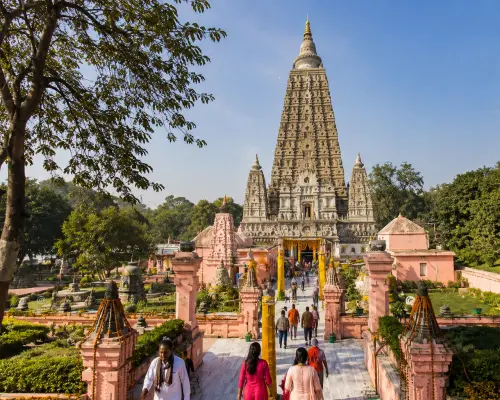
- Spend time at the Mahabodhi Temple Complex in Bodh Gaya, a UNESCO World Heritage Site where Lord Buddha attained enlightenment beneath the Bodhi Tree.
- See Lumbini, the birthplace of Lord Buddha, including the Maya Devi Temple, Sacred Garden, Ashokan Pillar and international monasteries.
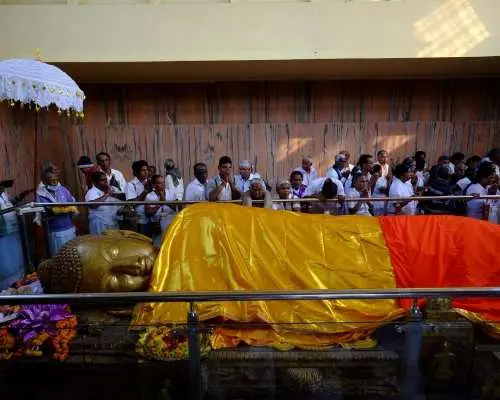
- Learn about the final days of Lord Buddha in Kushinagar, home to the Mahaparinirvana Temple and the reclining Buddha statue.
- Visit Sarnath, where Lord Buddha delivered his first sermon and established the first Buddhist Sangha after attaining enlightenment.
- Explore Rajgir and Nalanda, important centers of Buddhist learning, including Griddhakuta Hill (Vulture Peak), Venuvana Monastery and Nalanda University.
- See Vaishali, where Lord Buddha delivered his final sermon, and Kesariya Stupa, one of the largest Buddhist stupas in the world.
- Travel with private transportation, comfortable accommodations and a well-planned itinerary covering the major Buddhist pilgrimage destinations of India and Nepal.
Package Options


Product Info
FAQ
1. What is the primary significance of Bodh Gaya and the Mahabodhi Temple?
Bodh Gaya is profoundly significant as the place where Lord Buddha attained enlightenment beneath the sacred Bodhi Tree. The Mahabodhi Temple Complex, a UNESCO World Heritage Site, stands as a central pilgrimage destination, symbolizing this pivotal event. It features the revered Vajrasana (Diamond Throne) and a direct descendant of the original Bodhi Tree, making it a focal point for Buddhist devotion and meditation.
2. What historical governance issues are associated with the Mahabodhi Temple Complex in Bodh Gaya?
Historically, the Mahabodhi Temple Complex in Bodh Gaya has faced discussions regarding its management and preservation, particularly concerning the shared governance between Buddhist and Hindu communities. Efforts have focused on ensuring its status as a sacred Buddhist site while respecting its historical context and maintaining its UNESCO World Heritage recognition. These discussions primarily revolve around the administrative structure to best protect and promote this globally important pilgrimage site for all visitors.
3. What is the recommended dress code for visiting Buddhist pilgrimage sites like Lumbini and Sarnath?
When visiting Buddhist pilgrimage sites such as Lumbini and Sarnath, it is recommended to dress modestly and respectfully. This typically means wearing clothing that covers your shoulders and knees. Avoid revealing attire, and consider comfortable, easy-to-remove footwear as you may be asked to take off your shoes before entering certain temples or sacred areas. This respectful attire is a common practice across many religious sites.
4. What significant events are commemorated at Lumbini, Bodh Gaya, Sarnath, and Kushinagar, the main Buddhist pilgrimage sites?
These four sites mark the most significant events in Lord Buddha's life. Lumbini in Nepal is celebrated as his birthplace. Bodh Gaya in India is where he attained enlightenment under the Bodhi Tree. Sarnath, near Varanasi, is where he delivered his first sermon and established the first Buddhist Sangha. Kushinagar is revered as the place where Lord Buddha attained Mahaparinirvana, signifying his passing.
5. What specific sites can visitors explore at Lumbini, the birthplace of Lord Buddha?
At Lumbini, visitors can explore the Sacred Garden, which encapsulates the exact spot of Lord Buddha's birth. Key attractions include the Maya Devi Temple, dedicated to his mother, and the Ashokan Pillar, erected by Emperor Ashoka to mark the sacred location. The area also hosts a diverse array of international monasteries built by different Buddhist communities, offering insight into various traditions and architectural styles.
6. What significant landmarks can be found at Kushinagar, the site of Lord Buddha's Mahaparinirvana?
Kushinagar is a deeply revered site, marking Lord Buddha's Mahaparinirvana. Its primary landmark is the Mahaparinirvana Temple, which houses a colossal reclining Buddha statue. This statue, depicting Buddha at the moment of his passing, is a powerful visual representation of his final days. Surrounding stupas and ruins further commemorate events related to his cremation and the distribution of his relics, making it a poignant pilgrimage stop.
7. How much time should be allocated to explore the historical sites of Rajgir and Nalanda?
To thoroughly explore the historical sites of Rajgir and Nalanda, it is recommended to allocate a significant portion of a day, ideally a full day for each major area. In Rajgir, significant sites like Griddhakuta Hill (Vulture Peak) and Venuvana Monastery offer extensive areas for exploration. Nalanda, with its vast ancient university ruins, requires ample time to appreciate its archaeological significance and scale. A well-paced itinerary ensures a comprehensive visit to these important centers of Buddhist learning.
8. What key features and historical significance do the ancient ruins of Nalanda University and Rajgir's Venuvana Monastery hold?
Nalanda University, one of the world's earliest great universities, was a renowned center for Buddhist learning and scholarship, attracting scholars globally. Its extensive ruins showcase a sophisticated architectural and educational complex. Rajgir's Venuvana Monastery, believed to be the first Buddhist monastery, was a favored retreat for Lord Buddha and his disciples. Both sites highlight the intellectual and spiritual foundations of early Buddhism, offering deep historical insights to visitors.


