


Same Day Khajuraho Temple Tour from Delhi with Private Guide and Flights.
- Explore the UNESCO World Heritage-listed Western Group of Khajuraho Temples with a private local guide.
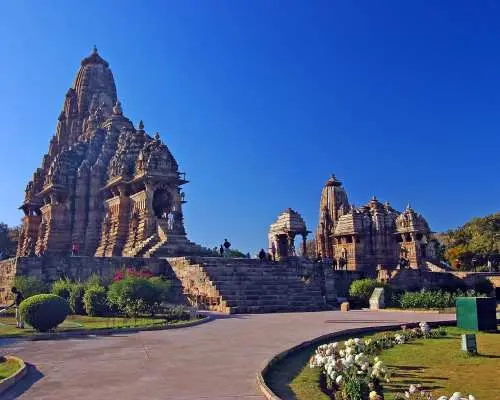
- Visit famous temples including Kandariya Mahadev Temple, Lakshmana Temple and Vishvanath Temple.
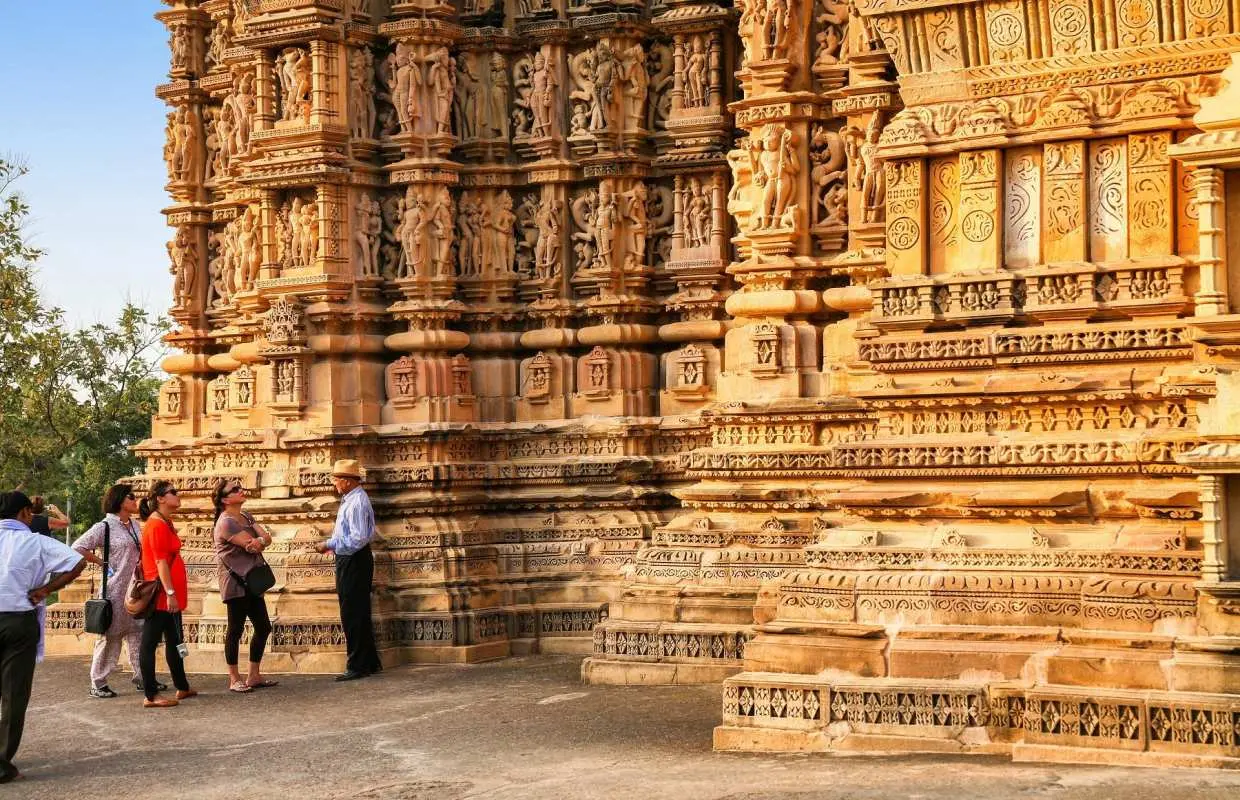
- Learn about the spiritual symbolism, mythology and artistic significance behind the intricate carvings.
- Discover the remarkable Nagara-style architecture built during the Chandela dynasty.
- Optional visit to the Eastern Group of Temples and Archaeological Museum for deeper cultural exploration.
- Enjoy a comfortable same-day experience with direct flights, private transfers and guided sightseeing.
- Ideal for travelers short on time who want to experience the artistic and historical beauty of Khajuraho.
Package Options


Product Info
FAQ
1. What makes the Khajuraho Temples famous, particularly their intricate carvings?
The Khajuraho Temples are renowned for their UNESCO World Heritage status and exquisite Nagara-style architecture. They are particularly famous for their intricate and detailed carvings, which adorn the temple exteriors. These sculptures depict a wide range of themes, including deities, celestial beings, daily life, mythical creatures, and significant spiritual and philosophical concepts, including sensual and erotic imagery, all symbolizing various aspects of human existence and divine expression. Key temples like Kandariya Mahadev Temple showcase this artistry.
2. What is the historical background and origin of the Khajuraho Temples?
The Khajuraho Temples were built primarily between the 9th and 11th centuries CE by the powerful rulers of the Chandela dynasty. This region served as the capital of the Chandela kingdom during that period. The temples reflect a significant era of artistic and architectural flourishing, dedicated to both Hindu deities and Jain Tirthankaras, showcasing the religious tolerance and sophisticated craftsmanship of ancient India.
3. What types of unique and symbolic sculptures can be observed at the Khajuraho Temples?
The sculptures at Khajuraho Temples are unique for their detailed portrayal of spiritual symbolism, mythology, and various facets of human life. Beyond their well-known erotic panels, the carvings extensively feature celestial dancers, musicians, gods and goddesses, warriors, animals, and scenes of daily activities. These diverse themes convey a rich tapestry of ancient Indian culture, philosophy, and artistic expression, offering profound insights into the beliefs of the Chandela period.
4. How much time is generally sufficient to explore the main Khajuraho Temple groups?
To thoroughly explore the main Western Group of Khajuraho Temples, which includes significant structures like Kandariya Mahadev Temple, Lakshmana Temple, and Vishvanath Temple, visitors typically need about 3 to 4 hours. If you wish to include the optional Eastern Group of Temples and the Archaeological Museum for a deeper cultural exploration, the total visit could extend to a full day, allowing for a comprehensive experience.
5. When is the best time of year to visit the Khajuraho Temples for a pleasant experience?
The best time to visit the Khajuraho Temples for a pleasant experience is during the cooler, drier months, typically from October to March. During this period, the weather is comfortable for sightseeing and exploring the outdoor temple complexes. The summer months, from April to June, should generally be avoided due to extremely high temperatures, which can make extended outdoor visits challenging.
6. What is the most convenient way to travel to the Khajuraho Temples from Delhi for a same-day tour?
For a same-day tour to the Khajuraho Temples from Delhi, the most convenient and efficient way to travel is by direct flight. This allows visitors to maximize their time exploring the temples without the long travel hours associated with other modes of transport. Upon arrival at Khajuraho Airport, private transfers are typically arranged to take you directly to the temple complex, ensuring a comfortable and seamless experience.
7. Which airport serves the Khajuraho Temples, and where is it located?
The Khajuraho Temples are served by Khajuraho Airport, identified by the IATA code HJR. This airport is conveniently located just 5 to 8 kilometers (about 3 to 5 miles) from the main temple complex, making it easily accessible for visitors. Direct flights from major cities like Delhi connect to Khajuraho Airport, facilitating quick access to the UNESCO World Heritage site for travelers.
8. Does a typical Khajuraho day tour from Delhi include visits to both the Western and Eastern Group of Temples?
A typical Khajuraho day tour from Delhi primarily focuses on the UNESCO World Heritage-listed Western Group of Temples, which houses the most famous and intricately carved structures like Kandariya Mahadev Temple. While the Western Group is the main highlight, some tours offer an optional visit to the Eastern Group of Temples and the Archaeological Museum for those interested in a deeper cultural exploration, provided time allows within the same-day itinerary.


