

Shangri-La, Yunnan, China | Shangri-La Popular Day Trip | Round Trip from Lijiang
- 【Same-day round trip】Departing from Lijiang, a one-day tour of Shangri-La, Tiger Leaping Gorge, and Songzanlin Monastery.
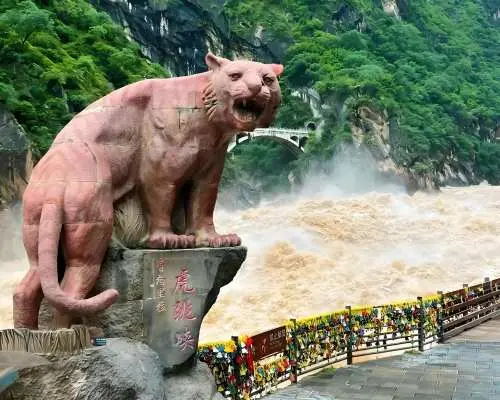
- Hike through Tiger Leaping Gorge, traversing the canyon, witnessing the surging waters and steep slopes, and experiencing its "majesty, danger, wonder, and beauty"!
- Comfortable and premium minivans in licensed tour buses or business vans for small group tours, driven by local professional drivers – superior quality guaranteed!
Package Options


Product Info
Shangri-La Day Trip

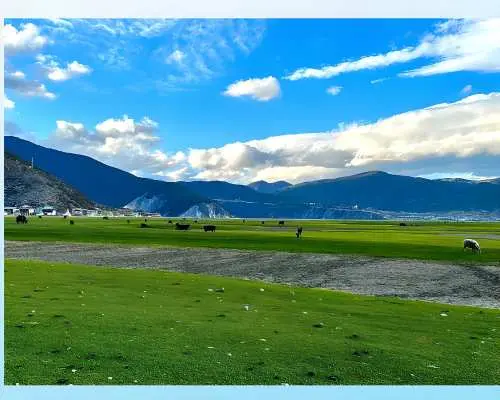
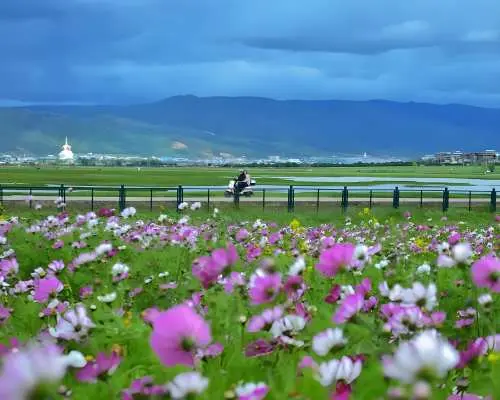
Starting from Lijiang, the national highway leads to Tiger Leaping Gorge. The Jinsha River flows from north to south, parallel to the Lancang and Nujiang Rivers. At the "First Bend of the Yangtze River" in Shigu, Lijiang, the Jinsha River turns left and flows eastward, passing between Jade Dragon Snow Mountain and Haba Snow Mountain, carving one of the world's deepest gorges—Tiger Leaping Gorge. Tiger Leaping Gorge combines snow-capped mountains, canyons, and rivers, and is an important part of the "Western Yunnan Shangri-La Ecological Tourism Area," one of Yunnan Province's six major tourism areas, and the heart of the Three Parallel Rivers natural heritage site. The scenic area features snow-capped mountains, canyons, rivers, and travertine terraces. After lunch at Tiger Leaping Gorge, we travel to Yila Grassland, located 6 kilometers northwest of Shangri-La City. Covering an area of 13 square kilometers, it is the largest and most beautiful grassland in Diqing Shangri-La. Yila means "Leopard Mountain" in Tibetan, named after the legendary Leopard Mountain located to the north of the grassland's entrance, which is said to be a sacred mountain. The Yila Grassland is like a rippling blue ocean, covered with countless wildflowers, rose-red wild peonies, wild chrysanthemums, and various other fragrant wildflowers and grasses of unknown names. It is connected with the beautiful Napa Lake and the beautiful and ancient Yila Village, forming a beautiful picture.

Next, visit Dukezong Ancient Town. Located in the central part of Shangri-La City, Diqing Tibetan Autonomous Prefecture, Yunnan Province, in Jiantang Town of the Zhongdian Basin, Dukezong Ancient Town was an important town and military garrison in the history of Shangri-La (Jiedi, Jietang, Zhongdian), and also a crucial post station on the Yunnan-Tibet section of the Ancient Tea Horse Road. Centered on Dagui Mountain, Dukezong Ancient Town expands radially, covering an area of 1.5 square kilometers. "Dukezong" is an ancient Tibetan name, also known as "Zongrao Dangabo" or "Daweizong," meaning "Moonlight City." It faces "Niwangzong"—the "Sunlight City" where the sun rises earliest—located on the banks of the Naihe River, creating a harmonious blend of sun and moon, and is known as "the sun and moon in one's heart." Finally, visit the Shangri-La Harmony Pagoda (Middle Pagoda). Located at No. 1 Yingbin Avenue, Shangri-La City, Diqing Prefecture, Yunnan Province, it is a landmark building and one of the largest Tibetan Buddhist white pagodas in the world. This white pagoda is not only a landmark for entering Shangri-La City but is also known as the "Window to Shangri-La." After the visit, the tour concludes in Lijiang.
Purchase Notice
1. The departure time and location will be confirmed by the driver the night before.
2. The driver reserves the right to change the order of visits without reducing the number of attractions visited.
3. If the travel agency has already packaged the meals and tickets, and the tourist voluntarily chooses not to participate, the travel agency will not provide a refund.
4. The grassland tour is at least at your own expense.
Reminders
A minimum of 2 traveler(s) are required for the tour to depart. If the number of participants does not reach the minimum requirement, the tour will be canceled. An email regarding tour cancellation will be sent 7 day(s) before the departure date
In case of delays caused by traffic, weather, or other force majeure factors resulting in the cancellation of some itinerary attractions, please contact customer service. We will arrange a partial refund for you
In the event of inclement weather such as typhoons or snowstorms, a decision on whether to cancel the tour will be made 2 day(s) before departure (local time 00:00). Notifications will then be sent via email
Travelers with the following conditions or other health issues that could be worsened by excessive stimulation should not participate in this activity: High blood pressure, Heart disease, Epilepsy, Pregnant women, Asthma
Please arrive at the designated location 30 minute(s) before the scheduled departure time, as the tour will depart on time
FAQ
1. Where is Shangri-La located in China?
Shangri-La is located in the northwest of Yunnan Province, China. It is situated on the Qinghai-Tibet Plateau, at a significant altitude. The city is known for its stunning natural landscapes, including snow-capped mountains, vast grasslands, and pristine lakes. It is a key part of the larger Diqing Tibetan Autonomous Prefecture.
2. Is altitude sickness a concern when visiting Shangri-La?
Yes, altitude sickness can be a concern when visiting Shangri-La due to its high elevation, typically around 3,200 meters (10,500 feet) above sea level. It's recommended to take precautions such as resting upon arrival, avoiding strenuous activities on the first day, staying hydrated, and avoiding alcohol. Consulting a doctor before traveling for personalized advice is also wise.
3. What is the best time of year to visit Shangri-La for pleasant weather?
The most pleasant time to visit Shangri-La is generally from May to October. During these months, the weather is milder, the grasslands are lush, and various flowers bloom, making it ideal for outdoor activities and sightseeing. Summer (July-August) offers warmer temperatures but can also see more rainfall, while autumn (September-October) provides clear skies and vibrant foliage.
4. How long is the travel duration from Lijiang to Shangri-La for a day trip?
For a day trip from Lijiang to Shangri-La, the one-way journey typically takes approximately 3 to 4 hours by road, depending on traffic and road conditions. This duration allows for a round trip within a single day, ensuring ample time to explore key attractions like Tiger Leaping Gorge and Songzanlin Temple as part of an organized tour.
5. What transportation options are available for a day tour from Lijiang to Shangri-La?
The most common and convenient transportation for a day tour from Lijiang to Shangri-La is by private car or organized tour bus/van. These options often include a driver and guide, providing comfort and direct routes to attractions like Tiger Leaping Gorge and Songzanlin Temple. There is currently no high-speed rail directly to Shangri-La.
6. What activities can visitors experience at Tiger Leaping Gorge during a Shangri-La day tour?
During a Shangri-La day tour, visitors to Tiger Leaping Gorge can experience the magnificent canyon through hiking various sections. The tour often includes walking along established paths to witness the powerful Jinsha River rushing through the narrow gorge, observing the steep valley slopes, and marveling at the sheer "grand, perilous, unique, and picturesque" natural scenery.
7. What are the highlights of Napa Lake that visitors can enjoy?
Napa Lake (Napa Hai) offers visitors a serene natural experience. Highlights include scenic stops for photography around the lake, enjoying the tranquil high-altitude wetlands, and observing seasonal changes. In warmer months, the grasslands are lush, while in autumn, the golden hues create stunning landscapes. It's an ideal spot for appreciating Shangri-La's natural beauty.
8. What can visitors expect to see at Songzanlin Temple during a Shangri-La excursion?
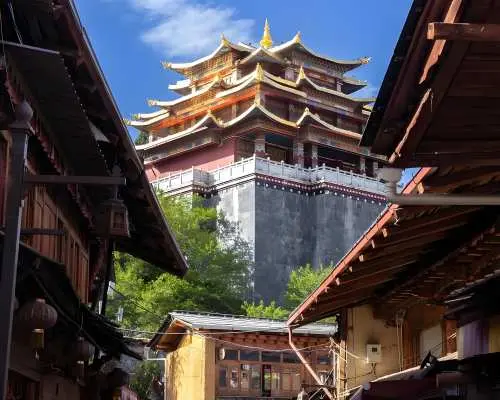
At Songzanlin Temple, visitors can explore the largest Tibetan Buddhist monastery in Yunnan, often referred to as the "Little Potala Palace." You can expect to see grand monastic architecture, vibrant murals, intricate Thangkas, and ancient scriptures. The temple offers a deep cultural and spiritual experience, with opportunities to observe monks, prayer wheels, and stunning views of the surrounding landscape.


