




Hue Imperial City and Forbidden City Walking Private Tour with Tour Guide l Vietnam
- Excursions with a tour guide rich in dynastic history knowledge
- Visit Thiệu Phương Garden, Thai Binh Pavilion, Cua Ngo Mon
- Learn about the history of the Nguyen Dynasty lasting 143 years with many even
- Explore the magnificently rebuilt Kien Trung Palace
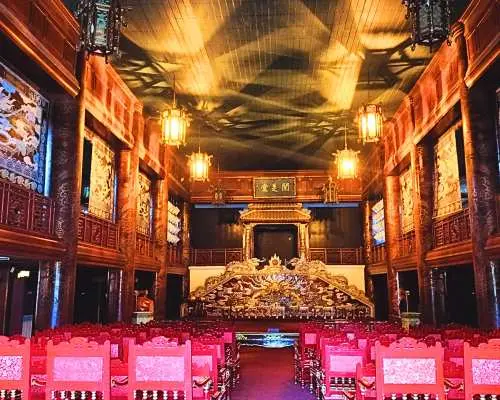
- Visit the oldest Duyet Thi Duong theater of the Nguyen Dynasty
Package Options


Product Info
Purchase Notice
Our knowledgeable history tour guide will pick you up at Nine Holy Cannons in Cua Ngan, and then assist you in purchasing tickets and continuing your Hue Imperial City Walking Tour.
if you book option have private car, the driver will pick up and drop off at Hue hotel.
Reminders
A minimum of 2 traveler(s) are required for the tour to depart. If the number of participants does not reach the minimum requirement, the tour will be canceled. An email regarding tour cancellation will be sent 1 day(s) before the departure date
In case of delays caused by traffic, weather, or other force majeure factors resulting in the cancellation of some itinerary attractions, please contact customer service. We will arrange a partial refund for you
Please arrive at the designated location 10 minute(s) before the scheduled departure time, as the tour will depart on time
Admission tickets will not be included for travelers under the age of 99 and are required to be purchased on-site
This tour not iclude entrance ticket
FAQ
Yes, Hue Imperial City is highly recommended for first-time travelers to Vietnam. It offers profound insight into the country's imperial past, showcasing grand architecture, historical significance, and a peaceful atmosphere. Exploring the vast complex provides a unique opportunity to learn about the Nguyen Dynasty and experience a UNESCO World Heritage site rich in culture and history, making it a truly enriching experience.
Hue Imperial City served as the capital of Vietnam's Nguyen Dynasty for 143 years (1802-1945), acting as the administrative and cultural heart of the nation. Within it, the Forbidden City (Tu Cam Thanh) was reserved exclusively for the emperor, his family, and closest mandarins. It housed the imperial residences, temples, and important administrative buildings, symbolizing the dynasty's power and intricate court life.
To thoroughly explore Hue Imperial City and the Forbidden City, including key sites like the Ngo Mon Gate, Thai Hoa Palace, Thiệu Phương Garden, Thai Binh Pavilion, and the Kien Trung Palace, a half-day to a full day (approximately 3-5 hours) is generally recommended. A private walking tour with a knowledgeable guide can efficiently cover the highlights and provide deeper historical context.
Yes, the Hue Imperial City complex is well-suited for a walking tour. The main attractions within the Imperial City and Forbidden City are relatively close to each other, allowing visitors to explore on foot. Paved pathways and clear signage make navigation straightforward. A private tour with a local guide further enhances the experience, providing expert navigation and detailed historical insights as you walk.
A walking tour of Hue Imperial City and Forbidden City typically includes visiting significant sites such as the Ngo Mon Gate, Thái Hòa Palace, Thiệu Phương Garden, and Thái Bình Pavilion. You can learn about the history of the Nguyen Dynasty and explore the magnificently rebuilt Kien Trung Palace. The tour also offers a chance to visit the oldest Duyet Thi Duong theater, providing a comprehensive historical and cultural experience.
The Forbidden City (Tu Cam Thanh) was the most exclusive and sacred area within Hue Imperial City. Its purpose was to serve as the emperor's private residence, living quarters for his concubines and family, and the location for his most intimate daily activities. Access was strictly limited, signifying the emperor's ultimate authority and divine status. It was a secluded world within the grand imperial citadel.
Yes, there is typically an entrance fee required to access the main complex of Hue Imperial City and the Forbidden City. This fee contributes to the maintenance and restoration of this UNESCO World Heritage site. You can conveniently purchase your entry tickets in advance through online travel platforms like KKday, ensuring a smooth entry process and often providing options that include guided tours for a more immersive experience.
A knowledgeable tour guide significantly enhances the experience of exploring Hue Imperial City by providing rich historical context and engaging stories about the Nguyen Dynasty. They can explain the architectural significance of each structure, share insights into the lives of emperors and their court, and clarify details about events. This deepens your understanding far beyond what a self-guided visit offers, bringing the ancient city to life.
Get Help


