



Hue: Dragon Boat, Perfume River, Pagoda & Royal Tomb Tour l From Hue, Vietnam
- Visit the peaceful Tomb of Tu Duc with its gardens and lakes
- Explore the traditional architecture of the Tomb of Minh Mang
- Try making incense at the colorful Hue Incense Village
- See the unique East-meets-West design of the Tomb of Khai Dinh
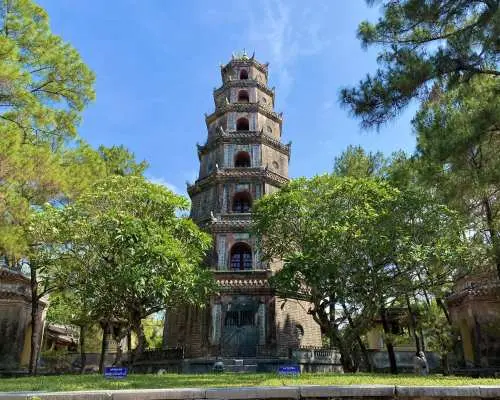
- Enjoy a Perfume River cruise to Thien Mu Pagoda
Package Options


Product Info
Important Info
Reminders
A minimum of 2 traveler(s) are required for the tour to depart. If the number of participants does not reach the minimum requirement, the tour will be canceled. An email regarding tour cancellation will be sent 2 day(s) before the departure date
FAQ
In Hue, the dragon boat is a powerful symbol rooted in Vietnamese folklore and history. It represents strength, prosperity, and good fortune. Traditionally, these boats were used in royal ceremonies on the Perfume River, embodying the imperial city's cultural heritage and its connection to the mythical dragon, a revered creature in Vietnamese culture associated with power and royalty.
The Perfume River in Hue, known locally as Sông Hương, is said to derive its name from the aroma of wildflowers and herbs that fall into the water from upstream forests during autumn. As these natural elements drift along the river, they impart a subtle, fragrant scent to the water, particularly noticeable during certain seasons, lending the river its evocative name.
During a Perfume River cruise, visitors can enjoy a serene visual journey, taking in the picturesque landscape of Hue, including lush riverbanks, traditional villages, and imperial architecture. The gentle breeze and the rhythmic sound of the boat create a peaceful ambiance. At certain times of the year, a subtle, natural fragrance from local flora carried on the water might be perceived, contributing to the unique sensory experience.
Yes, a Perfume River cruise in Hue is highly recommended for travelers seeking a tranquil and culturally immersive experience. It offers a unique perspective of Hue's imperial city and its surrounding beauty, connecting iconic sites like Thien Mu Pagoda. The serene journey allows for relaxation while observing local life along the riverbanks, making it a memorable part of visiting Hue.
Thien Mu Pagoda, also known as Linh Mụ Pagoda, is one of Hue's most iconic and historically significant Buddhist temples. Established in 1601, it symbolizes the spiritual heart of the city and is associated with various legends and historical events, including its role in the anti-government protests of the 1960s. Visitors can explore its seven-story Phuoc Duyen Tower, ancient bells, and peaceful gardens, reflecting centuries of Vietnamese Buddhist heritage.
The Tomb of Khai Dinh is renowned for its distinctive blend of traditional Vietnamese and European architectural styles. Its most striking features include a massive stone stele pavilion, intricate mosaic work made from ceramic and glass, and a lavishly decorated interior with bronze statues and ornate carvings. This fusion reflects Khai Dinh's fascination with Western culture and makes the tomb a visually opulent and unique historical site.
At the Tomb of Tu Duc, visitors can explore a beautifully preserved imperial complex set amidst tranquil gardens, lakes, and pavilions. The site served as a retreat for Emperor Tu Duc before his death and later became his burial place. Key sights include the Luu Khiem Lake, Xung Khiem Pavilion for poetry, and Hoa Khiem Temple, which originally served as the emperor's living quarters. The peaceful surroundings offer insight into royal life and a serene atmosphere.
At the Hue Incense Village, visitors can immerse themselves in the traditional craft of incense making. You can observe skilled artisans meticulously creating colorful incense sticks, often laid out to dry in vibrant bundles. Some visits may offer the chance to try your hand at the process, gaining a deeper appreciation for this ancient Vietnamese tradition and the cultural significance of incense in daily life and worship.
Get Help


