


Half-Day Cu Chi Tunnels Experience | Small Group (Max 14 Pax) & Multilingual Guide from Ho Chi Minh City
- Watch a short introductory video showing how the tunnels were constructed.
- Spend your time exploring the maze of the tunnels and a lot of traps.
- Try to eat cassava and drink hot tea.
Package Options


Sightseeing Tours
| Tour Type | Shared tour |
| Sightseeing type | Natural sights, Japanese castles |
Product Info
— What You Can Expect —
Embark on a fascinating half-day journey to the Cu Chi Tunnels, an immense underground network that served as a strategic base during the Vietnam War. This tour offers a profound look into the resilience and ingenuity of the Vietnamese people.
Book your exciting tour with KKDAY now!
— Pick-up policy —
- We will pick you up at your hotel in District 1 center including Bui Thi Xuan, Le Lai, Nguyen Trai (partial), Ton That Tung, Pham Ngu Lao, Bui Vien, Do Quang Dau, Phan Chu Trinh, Ly Tu Trong, Le Thanh Ton, Hai Ba Trung, Nguyen Hue, Dong Khoi, Ton Duc Thang, Nguyen Thai Binh, Vo Van Kiet, and surrounding areas. (Please provide us hotel address when booking)
- Note: Drop-off time is subject to traffic, weather...so the finished time could be later than expected.

Our car & tour guide will pick you up from your hotel in center district 1. Start your tour to visit Cu Chi Tunnels. Just 70km Northwest of Sai Gon, the Cu Chi area resides at the end of the Ho Chi Minh Trail and served as the base from where Vietnamese guerrilla soldiers attacked Sai Gon.

The fighters of Cu Chi took the war underground by developing a network of tunnels that stretched as far as Cambodia, which included: meeting rooms, kitchens and ventilation systems. These tunnels served as an effective network for engaging in guerrilla warfare against U.S troops.
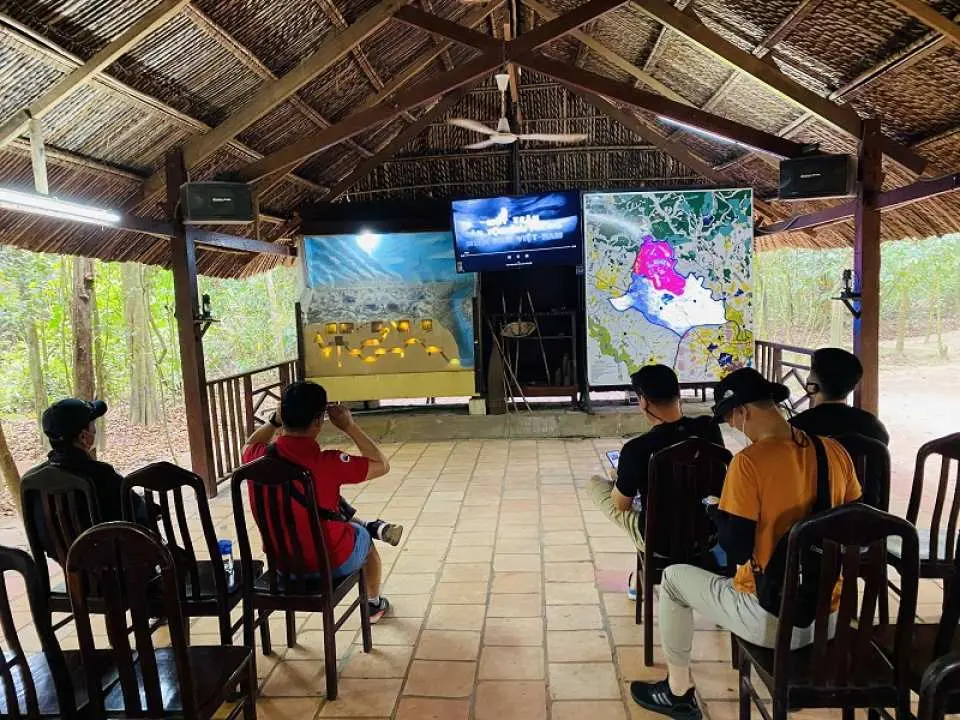
Before exploring the tunnels, you will watch an introductory video about how the tunnels were made and how Vietnamese people survived in the harsh conditions of the wartime.

Then, spend your time exploring the remaining areas and tunnel system, including special living areas with kitchens and bedrooms alongside other martial facilities like weapons factories, field hospitals, and command centers helping whoever lives inside the tunnels meet their basic needs.

You'll enjoy the feeling of walking through the tunnels that lead to the secret houses.

During the war, many hidden trap doors and dangerous traps were also placed within the maze-like tunnels for security purposes.
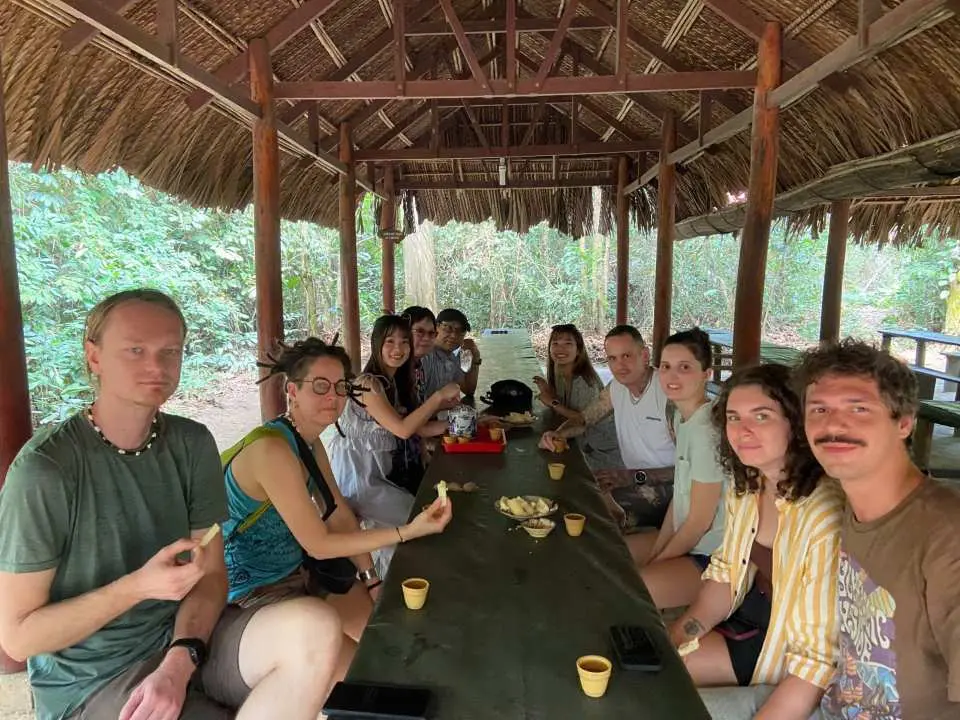
Afterward, special tea and cassava (guerrillas’ food during the war) will be served.

Modern, air-conditioned tour vehicles will make your trip easy and convenient. Includes pick-up and drop-off service at all central hotels.
Important Info
Reminders
Reservations are required before 11:00 p.m. before the departure date (for the English tour) and 2 days before the departure date (for the other tour languages).
Please let us know if you have any additional requirements (vegetarian, seating position, etc.)
Not recommended for people with claustrophobia, respiratory or cardiovascular conditions, and pregnant women.
FAQ
1. What is the historical significance of the Cu Chi Tunnels during the Vietnam War?
The Cu Chi Tunnels played a crucial role during the Vietnam War, serving as an underground city for Viet Cong soldiers. This extensive network provided shelter, communication routes, hospitals, and storage facilities, allowing guerilla fighters to operate effectively against American forces. They were instrumental in the Tet Offensive and symbolized the resilience and ingenuity of the Vietnamese people in their struggle for independence. Visiting offers a profound insight into this critical period.
2. Is visiting the Cu Chi Tunnels a worthwhile experience for international tourists?
Yes, visiting the Cu Chi Tunnels is highly recommended for international tourists seeking a deeper understanding of Vietnam's history and wartime resilience. It offers a unique opportunity to explore the actual tunnel system, witness various traps, and learn firsthand about the challenging conditions faced by soldiers. The site provides a compelling historical narrative and a chance to reflect on the human spirit's endurance.
3. What unique features and activities can visitors experience at the Cu Chi Tunnels?
Visitors to the Cu Chi Tunnels can watch an introductory video explaining the tunnels' construction and historical context. You can then explore sections of the actual tunnel network, some of which have been widened for tourists. The site also features displays of booby traps, reconstructed living areas, and a shooting range (optional). You can even try traditional tapioca (cassava) and hot tea, staple foods for soldiers during the war.
4. What are the common transportation options to reach the Cu Chi Tunnels from Ho Chi Minh City?
The most common ways to reach the Cu Chi Tunnels from Ho Chi Minh City are by organized tour bus, private car, or local bus. Tour buses offer direct, convenient transfers, often including a guide. A private car provides flexibility. For a local experience, you can take a public bus from Ben Thanh Market to Cu Chi town, then a local taxi or motor-taxi to the tunnels. Travel time is usually 1.5 to 2 hours.
5. How much time should I allocate for a comprehensive tour of the Cu Chi Tunnels?
For a comprehensive visit to the Cu Chi Tunnels, it's generally recommended to allocate about a half-day, typically 5 to 6 hours, including travel time from Ho Chi Minh City. This duration allows enough time to watch the introductory video, explore various tunnel sections, examine exhibits of traps and weaponry, and experience traditional foods like cassava. The actual time spent at the site is usually 2-3 hours.
6. What kind of daily life and wartime activities were conducted within the Cu Chi Tunnels?
Life within the Cu Chi Tunnels was incredibly challenging. Soldiers lived, slept, ate, and even studied underground. The network included kitchens, hospitals, meeting rooms, and weapon factories. Daily activities involved preparing for combat, tending to the wounded, making rudimentary weapons, and engaging in propaganda efforts, all while enduring cramped conditions and the constant threat of discovery. It showcased an extraordinary level of adaptation and resilience.
7. What specific areas or exhibits are available for exploration at the Cu Chi Tunnels site?
At the Cu Chi Tunnels site, visitors can explore various reconstructed sections, including narrow tunnels (some widened for tourists), command centers, medical aid stations, and sleeping bunkers. There are also outdoor exhibits showcasing booby traps, craters from bombs, and displays of rudimentary weapons and uniforms. An educational video introduces the tunnels' history, and a shooting range offers an optional experience.
8. How can I conveniently book a tour to the Cu Chi Tunnels and what is generally included?
You can conveniently book a Cu Chi Tunnels tour through KKday, which offers a streamlined booking process and often includes round-trip transportation from Ho Chi Minh City, an English-speaking guide, and entrance fees. Booking through KKday ensures a reliable service, allowing you to focus on the historical experience without the hassle of arranging logistics. Tours typically cover the introductory video, tunnel exploration, and exhibits.


