


Kyoto, Arashiyama | Fukuda Museum of Art "I Want to Be Happy! - Paintings of Prayer -" Advance Admission Ticket
- At the special exhibitions held four times a year, easy-to-understand explanations are provided in both Japanese and English, even for those unfamiliar with Japanese paintings.
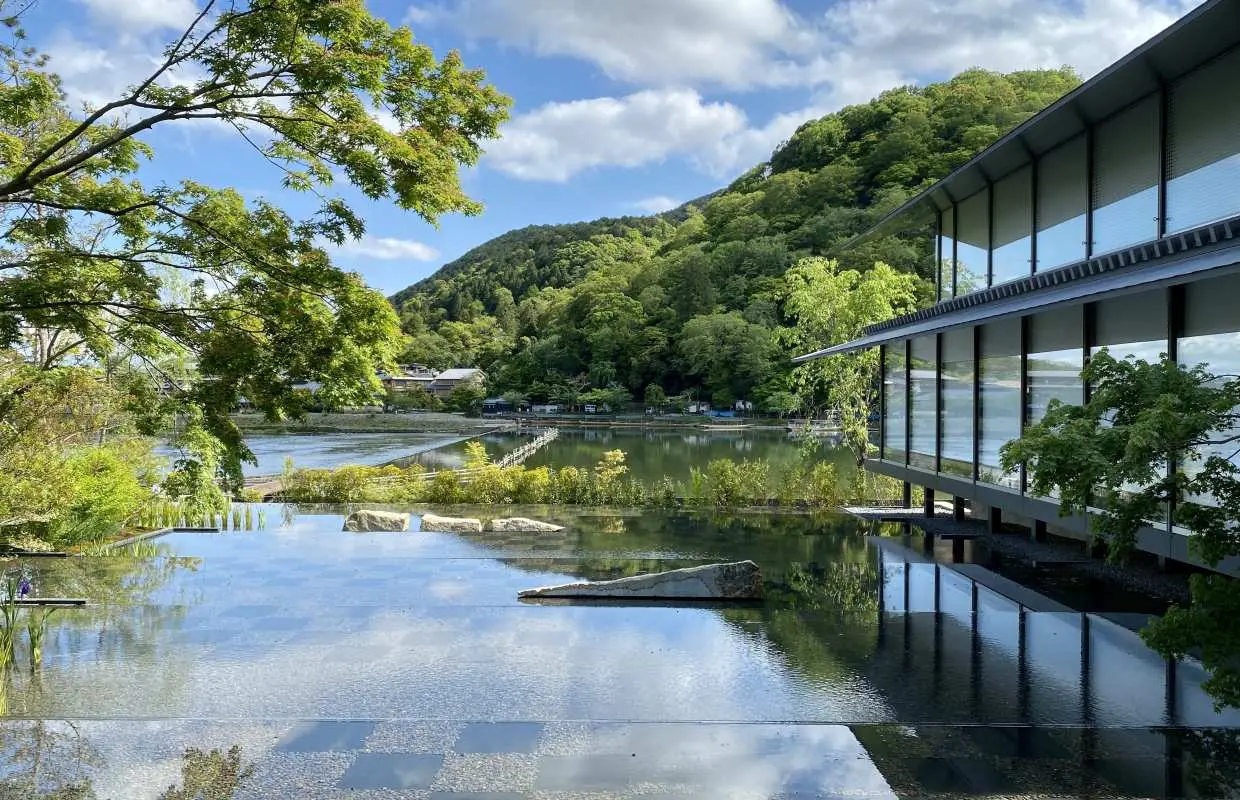
- Photography is generally allowed anywhere in the museum (with some exceptions). Enjoy taking photos of your favorite artwork, cool architecture, and stunning views of Arashiyama.
- You can also enjoy the cafe "Bread, Espresso and Fukuda Art Museum," where you can quietly enjoy the magnificent view of Arashiyama and Togetsukyo Bridge, and the museum shop, where you can purchase original goods!
Attraction Tickets
| Exhibit type | Art exhibits |
| Attraction type | Classical art |
| Tour types | None |
Product Info
The content of this product is provided by machine translation and may not reflect the actual information, please take this into consideration before booking.
- Fukuda Art Museum -
Saga Arashiyama has been cherished as a scenic spot since ancient times. The Fukuda Museum of Art, a new museum that opened in 2019, is located near the bustling Togetsukyo Bridge. Stepping inside, you'll find yourself in a world apart from the surrounding hustle and bustle. The museum houses approximately 2,000 works by famous Kyoto-based painters such as Ito Jakuchu and Uemura Shoen, and its concept is to create exhibits that will move even those unfamiliar with art. Clear cases that allow you to experience the jewel-like colors of Japanese paintings, catchy explanations, and exhibition rooms where many works can be photographed, will surely be enjoyable even for those unfamiliar with Japanese art. In addition, the museum cafe, "Bread and Espresso and Fukuda Museum of Art," offers a spectacular view of the Togetsukyo Bridge.
<About this exhibition>
[Entry limited from July 18th to September 6th] "I want to be happy! - Paintings of prayer -"
The Fukuda Museum of Art in Arashiyama, Kyoto, will hold a special exhibition themed on "prayer" in the summer of 2026. Since ancient times, when people did not have a written language, people have imbued their prayers with pictures, wishing for their own happiness, the happiness of those close to them, and the peace and security of their country.
This exhibition is divided into three parts. First, it introduces the world of "Buddhist paintings," depicting the figures and stories of Buddha, and showcases for the first time at this museum a number of ambitious works by modern painters who challenged themselves with realistic expression and new sensibilities. In the second-floor exhibition room, "auspicious paintings" that adorn daily life, such as the Seven Lucky Gods, cranes and turtles, and pine, bamboo, and plum blossoms, are displayed, conveying prayers for peace in life. Finally, it takes you to the world of landscape paintings by Higashiyama Kaii (1908-1999), a giant of the Japanese art world.
Kaii's brushwork, which he described as "a prayer of the heart, a desire to live honestly," is filled with a tranquility that seems to purify the viewer's heart, allowing them to spend a moment conversing with their own inner voice amidst the hustle and bustle of everyday life.
[July 18th - September 6th Special Exhibition] "I Want to Be Happy! - Paintings of Prayer -"
![[July 18th - September 6th Special Exhibition] "I Want to Be Happy! - Paintings of Prayer -"](https://image.kkday.com/v2/image/get/c_fit%2Cq_55%2Ct_webp%2Cw_960/s1.kkday.com/product_185093/20260525033535_hmTqX/jpg)


Important Info
Reminders
Changes and refunds are not possible after purchase.
If you have a disability certificate and are using tickets for one caregiver, please be sure to present it at the reception on the day. If you are unable to present it, you will be charged the difference between the general and university student fare.
From August 1st to August 31st, admission is free for elementary school students. *Parental supervision is required.
The museum will be closed on August 18th.
Children under 12 can enter for free.
How to Redeem Your Voucher
How to Use Your Voucher
- Please present your QR code on-site
Experience Location
Location Name: Fukuda Art Museum
Address: Fukuda Art Museum, 3-16, Munobabacho, Sagatenryuji, Ukyo Ward, Kyoto City- Business hours: 10:00-16:30 (closes at 17:00)
- Closed: 11/11 (Tue), 12/2 (Tue), 12/16 (Tue), 12/30 (Tue), 12/31 (Wed), 1/1 (Thu)
Cancellation Policy
- Once the order has been completed, it cannot be canceled, modified, or refunded
- Due to time zone differences, the confirmed cancellation date is based on the supplier’s local time. Please allow 2–5 business days to process your cancellation request, after which the cancellation fee will be charged according to the product’s cancellation policy. Once the cancellation is confirmed, you will receive your refund within 14 working days.
FAQ
To reach Arashiyama from Kyoto, you have several convenient options. The JR Sagano Line (San-in Line) from Kyoto Station to Saga-Arashiyama Station is a popular choice, taking about 15-20 minutes. From Saga-Arashiyama Station, Fukuda Museum of Art is a pleasant 10-15 minute walk. Alternatively, you can take the Hankyu Arashiyama Line from Shijo Kawaramachi to Arashiyama Station, which is closer to Togetsukyo Bridge and a slightly longer walk to the museum. Taxis are also available, offering direct travel.
The Fukuda Museum of Art offers unique experiences, including special exhibitions held four times a year with easy-to-understand explanations in both Japanese and English. Visitors can generally photograph artworks, cool architecture, and stunning views of Arashiyama. The museum also features a cafe, "Bread, Espresso and Fukuda Art Museum," where guests can quietly enjoy magnificent views of Arashiyama and Togetsukyo Bridge, along with a museum shop selling original goods.
The iconic Arashiyama Bamboo Grove itself does not require an entrance fee and is free to explore. However, the Fukuda Museum of Art, like most private museums, does have an admission fee to access its exhibitions and facilities. This fee grants entry to current special exhibitions and permanent collections. Information on current admission requirements is available at the museum entrance.
Yes, photography is generally permitted inside the Fukuda Museum of Art. This allows visitors to capture their favorite artworks, the museum's architecture, and the beautiful Arashiyama views visible from within. However, there may be specific exceptions for certain works or exhibitions, so it's advisable to check for any posted signs or ask staff if unsure in particular areas.
For the Arashiyama Bamboo Grove, most visitors spend about 30 minutes to an hour walking through and taking photos. To fully appreciate the Fukuda Museum of Art, including viewing the exhibitions, enjoying the cafe, and browsing the shop, planning 1.5 to 2 hours is recommended. Combining both attractions with other Arashiyama sights like Togetsukyo Bridge could easily fill a half to a full day.
The Fukuda Museum of Art is conveniently located in the heart of Arashiyama, making it easily accessible on foot from other major attractions. From the Fukuda Museum of Art, the entrance to the famous Arashiyama Bamboo Grove is approximately a 15 to 20-minute walk. This route is quite scenic, passing by local shops and other points of interest within the Arashiyama area.
For visiting the Fukuda Museum of Art and the general Arashiyama area, the closest Sagano Romantic Train station is Torokko Arashiyama Station. From this station, it is a pleasant walk of about 10-15 minutes to reach the Fukuda Museum of Art, passing through parts of the Arashiyama Bamboo Grove along the way. This allows convenient access to both the museum and surrounding sights.
Yes, the Fukuda Museum of Art is designed to be welcoming for international visitors and those new to Japanese paintings. During its special exhibitions, comprehensive and easy-to-understand explanations are provided in both Japanese and English. This ensures that all guests can engage with and appreciate the artworks and their cultural context, regardless of their prior knowledge or background in Japanese art.
Get Help


