
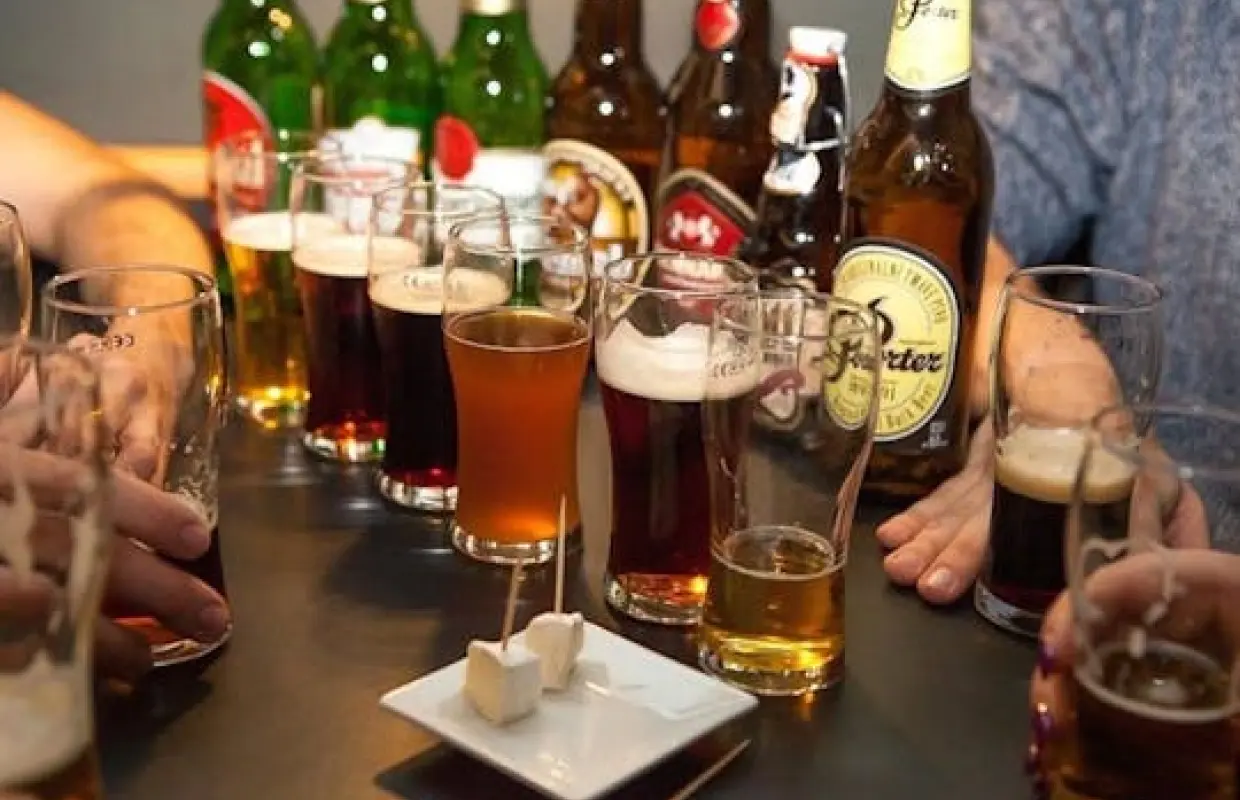


Czech beer tasting experience in Prague
- Try 7 premium Czech beers with cheese and crackers and learn to appreciate beer like a true beer connoisseur on this guided tasting tour.
Cultural Experiences
| Location | Indoor |
Product Info
Purchase Notice
Reminders
Please refer to your voucher for final information regarding meeting points, pick-up locations, and pick-up time
Meeting point description: Meet your guide at the local operator's office, Prague 1, Týnská 639/4, the office is on the right.(Týnská 639, Old Town, Czechia)
Participants under the age of 18 are not allowed
How to Redeem Your Voucher
How to Use Your Voucher
- Please present the e-voucher on-site
Validity Period
- The voucher must be used on the selected date and within operating hours; Invalid after expiration
FAQ
A guided Czech beer tasting offers a unique cultural immersion. Visitors gain insight into Czech brewing traditions and the nuances of various beer styles, going beyond common lagers. Experts guide participants through tasting techniques, explaining flavor profiles and characteristics. The experience often includes curated pairings like local cheeses, enhancing the overall sensory journey and making it a memorable educational and enjoyable activity in Prague.
In a premium Czech beer tasting, participants can expect to sample a diverse range of iconic beers. Pilsner Urquell, known for its crisp, clean profile and hoppy bitterness, is often a highlight. Other commonly featured styles include dark lagers (Tmavé Pivo), amber lagers (Polotmavé Pivo), and various craft ales from smaller local breweries. The selection aims to showcase the rich spectrum of Czech brewing, from traditional to modern interpretations, often totaling seven distinct types.
Czech beers are renowned for their balance of malt sweetness and distinct hop bitterness, often from Saaz hops. Expect to encounter crisp, refreshing lagers with notes of toasted grain and caramel in darker varieties. Pilsners offer a clean, floral, and slightly spicy hop aroma. Some craft selections might introduce fruitier or more experimental profiles. The tasting experience highlights these subtle differences, guiding participants to identify malty richness, hoppy zest, and overall drinkability.
During a guided Czech beer tasting, experts share practical techniques to enhance appreciation. These typically include evaluating the beer's appearance (color, clarity, head retention), assessing its aroma for distinct notes like malt, hops, or yeast, and understanding the taste components such as sweetness, bitterness, and acidity. Participants also learn about mouthfeel, carbonation, and the importance of proper serving temperatures and glassware, akin to wine tasting principles.
To complement the premium Czech beers, tasting experiences often include thoughtfully selected food pairings. Common offerings are a variety of local cheeses, which can range from mild to sharp, chosen to enhance specific beer profiles. Crackers or bread are usually provided to cleanse the palate between samples. These pairings are designed to highlight how different flavors interact, enriching the overall tasting journey and providing a deeper understanding of Czech culinary traditions alongside its beer culture.
A guided format significantly enhances the learning experience by providing expert insights and a structured approach. A knowledgeable guide can explain the historical context of Czech brewing, the unique characteristics of each beer, and the specific ingredients and processes involved. They facilitate discussions, answer questions, and offer personalized tips, transforming a simple tasting into an educational journey. This direct interaction helps participants grasp complex concepts and appreciate the depth of Czech beer culture more effectively.
Yes, a key aspect of a comprehensive Czech beer tasting experience in Prague is learning about the rich history and deep-rooted brewing traditions. Guides often delve into the origins of Pilsner lager, the significance of monastic brewing, and the cultural role of beer in the Czech Republic. Participants gain an understanding of how centuries of craftsmanship and unique local ingredients have shaped the country's distinctive beer styles and global reputation, providing valuable context to the tasting itself.
A premium Czech beer tasting session in Prague typically lasts between 1.5 to 2 hours. This duration allows ample time for sampling multiple beer varieties, engaging in guided discussions about their characteristics and history, and enjoying the accompanying food pairings. The pace is designed to be leisurely, ensuring participants can fully savor each sample and absorb the information shared by the expert guide without feeling rushed.
Get Help


