




Kings Canyon & Outback Panoramas with Returns to Uluru | Northern Territory
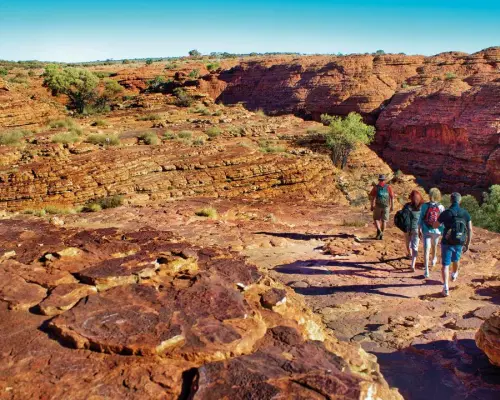
Experience the remoteness of outback Australia as you travel to Kings Canyon. Try out a once-in-a-lifetime experience with the Kings Canyon Rim Walk, climb up a 100-meter cliff, and marvel at the beauty of nature, sandstone walls, grottos, chasms, and cliffs.
- Start your Kings Canyon tour journey with a delightful breakfast at Kings Creek Station
- Enjoy a good hiking and relaxing walk at Kings Canyon Rim Walk
- Climb the canyon rim for an amazing view of Watarrka National Park
- Marvel at the beauty of nature at Kings Canyon
Package Options


Product Info
— What You Can Expect —
Embark on an exciting journey and experience the remoteness of outback Australia as you travel to Kings Canyon. Located in the heart of Watarrka National Park, it lies in an ancient Australian landscape. Depart to Kings Canyon from Ayers Rock Resort and stop by Kings Creek Station for a delicious breakfast.
Make a rocky climb to the canyon rim for a marvellous view of Watarrka National Park. Follow the rim of the canyon, stopping to look down into the canyon gorge at lookout points, and descend into the green oasis at the "Garden of Eden."
Experience the thrill of completing the three-hour circuit walk or choose the short relaxing walk to explore the boulder-strewn canyon floor.
After completing the Kings Canyon tour, return to Ayers Rock Resort for lunch.
– Important information –
- Entry to Watarrka National Park requires a NT Parks Pass. It is not included in the price above and can be purchased here
- Fitness Requirements: Creek Bed Walk - Easy, Rim Walk - Difficult
Challenge yourself and explore the iconic Kings Canyon Rim Walk
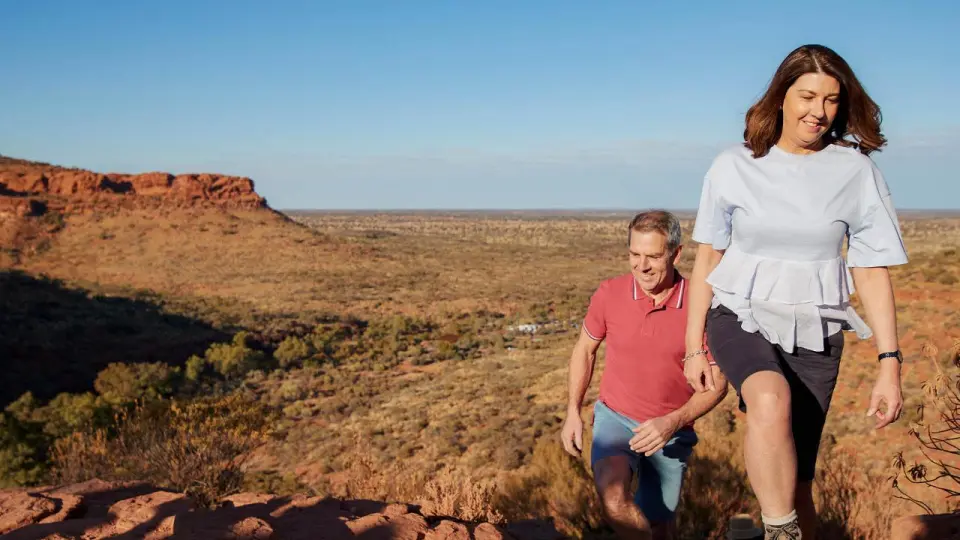
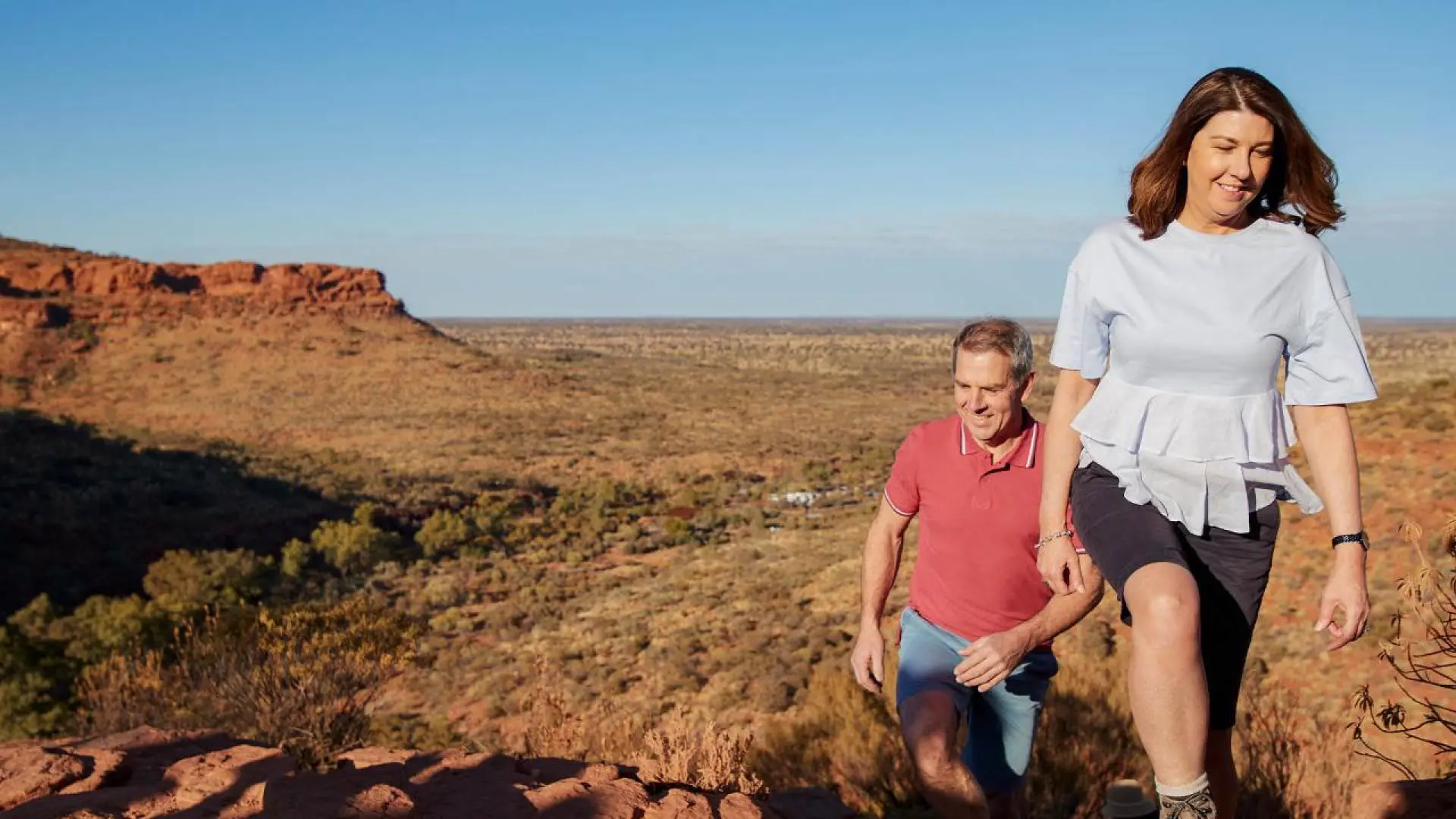
Experience the thrill of completing the three-hour circuit walk with some rocky and steep cliffs
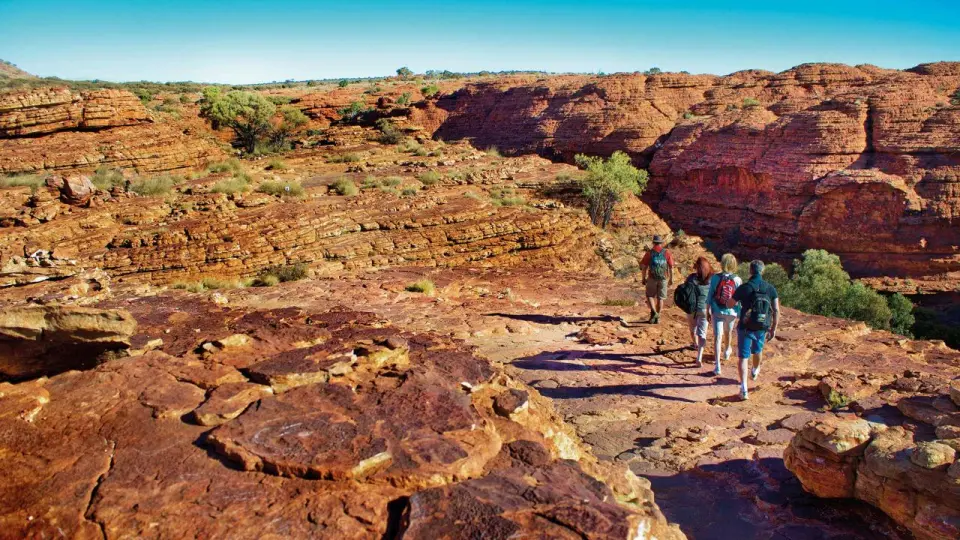

Enjoy the beauty of nature and view sandstone walls, grottos, chasms, and cliffs

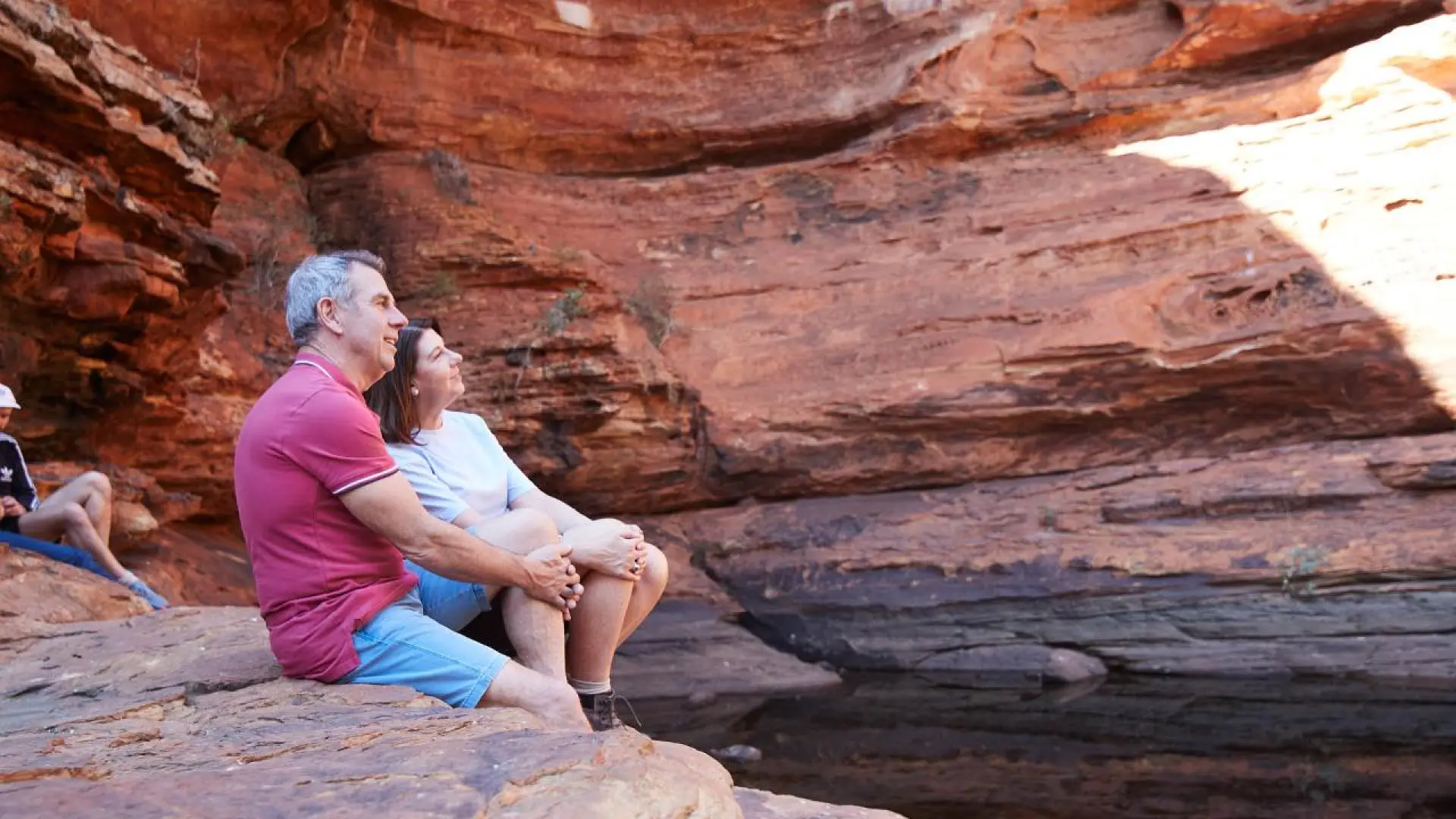
Take an easy and relaxing walk along Kings Creek and explore the boulder-strewn canyon floor


Map of Kings Canyon Rim Walk


Purchase Notice
– What to bring –
- Sturdy walking shoes (Shoes with heels, sandals, flip-flops or open toe shoes are not permitted)
- Flynet in summer months (optional)
- Warm layers in cooler months
- Water bottle to hold 3 litres for the Rim Walk or 1.5 litres for the Creek Bed Walk
- Swimmers & towel (if swimming)
- Sunglasses, sunscreen and hat
Reminders
Please arrive at the designated location 10 minute(s) before the scheduled departure time, as the tour will depart on time
Refunds will not be granted to travellers who do not wish to see all the attractions on the itinerary
Inclusions that are not utilised are non-refundable and non-transferable
Travel insurance is highly recommended for all guests covering all applicable dates of travel with the Provider
The tour operator reserves the right to cancel the trip due to unforeseen circumstances
For emergency regarding the trip, please contact +61 29028 5180
Cancellation Policy
- Cancellations 3 day(s) (inclusive) before the selected date are allowed. Unused orders can be canceled for free
- For cancellations made 2 to 2 days prior to selected date, a cancellation fee of 50% will apply
- Cancellation is not allowed between 0–1 days from the selected date. Orders cannot be canceled or modified, and refunds will not be granted.
- Due to time zone differences, the confirmed cancellation date is based on the supplier’s local time. Please allow 2–5 business days to process your cancellation request, after which the cancellation fee will be charged according to the product’s cancellation policy. Once the cancellation is confirmed, you will receive your refund within 14 working days.
FAQ
Kings Canyon is approximately 300 to 320 kilometers northeast of Uluru (Ayers Rock). The estimated driving time between Uluru and Kings Canyon is generally around 3.5 to 4 hours via Luritja Road and Lasseter Highway, depending on road conditions and stops. This route offers a scenic drive through the vast outback landscape of the Northern Territory, connecting these iconic destinations.
Yes, the main roads connecting Uluru to Kings Canyon, specifically Lasseter Highway and Luritja Road, are fully sealed. This ensures a relatively smooth journey for most vehicles. While the major routes are sealed, it is always advisable to check local road conditions, especially if planning to venture onto any unsealed tracks leading to specific outback stations or viewpoints.
The primary roads between Uluru and Kings Canyon are well-maintained, sealed highways, offering generally good driving conditions. However, travelers should be aware that conditions can change, particularly after heavy rains, which might lead to temporary closures or affect unsealed side roads. It's crucial to drive cautiously, especially at dawn and dusk, due to potential wildlife encounters, and to carry adequate water and fuel due to limited services.
Kings Canyon is geographically closer to Uluru than to Alice Springs. It is approximately 300-320 kilometers from Uluru, making it a common pairing for tours departing from the Uluru region. In contrast, Kings Canyon is located about 450 kilometers southwest of Alice Springs. Its proximity to Uluru makes it an accessible extension for many visitors exploring the Watarrka National Park area.
To fully experience Kings Canyon and successfully complete its renowned Rim Walk, it is recommended to allocate at least half a day, typically 3 to 4 hours. This timeframe allows for the challenging ascent, leisurely exploration of the canyon rim's unique features, and appreciation of the stunning panoramic views. Many tour itineraries are specifically designed to provide ample time for this significant hike.
The Kings Canyon Rim Walk is a challenging 6-kilometer circuit that provides breathtaking panoramic views of Watarrka National Park. The walk begins with a steep climb to the canyon rim, known as 'Heart Attack Hill.' Once at the top, visitors can explore diverse landscapes, including the lush Garden of Eden, sandstone domes, and deep chasms, all from the impressive 100-meter high cliff tops.
During a Kings Canyon tour, Kings Creek Station often serves as a key stop for visitors. Guests typically enjoy a delightful breakfast here, providing a refreshing start before embarking on or concluding their Kings Canyon adventure. Beyond meals, the station offers a unique glimpse into the authentic Australian outback lifestyle, providing essential amenities and a chance to experience a working cattle station.
Kings Canyon is celebrated for its spectacular natural features. Visitors can observe towering sandstone walls that rise over 100 meters, carved by millions of years of erosion, creating deep chasms and hidden grottos. A notable feature is the Garden of Eden, a verdant oasis with a permanent waterhole. From the rim, the expansive and ancient landscape of Watarrka National Park showcases stunning geological formations and unique biodiversity.
Get Help


