

Package Options


Product Info
Purchase Notice
Reminders
Please refer to your voucher for final information regarding meeting points, pick-up locations, and pick-up time
Meeting point description: Meet your guide at the Radius Tours Office. Please be at least 15 minutes before the tour starts at the meeting point.(Dachauer Str. 4, 80335 Munich, Germany )
FAQ
1. Which key locations associated with Hitler and the Nazi Party does the Munich Third Reich walking tour cover?
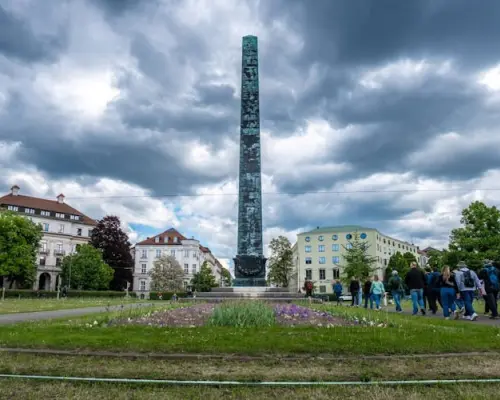
The Munich Third Reich walking tour typically covers significant historical locations such as Königsplatz, once a central square for Nazi rallies; the Feldherrnhalle, site of the Beer Hall Putsch; and areas around the former party headquarters. These sites reveal Munich's critical role as the 'Capital of the Movement' and provide insights into the early rise of the Nazi Party.
2. How does the Munich Third Reich walking tour portray daily life in the city during WWII?
The Munich Third Reich walking tour explores daily life by detailing how propaganda permeated society, the atmosphere of fear and compliance, and the impact of the war on ordinary citizens. It often includes discussions of public spaces and architectural changes that reflected the regime's control, giving visitors a sense of the challenges faced by Munich residents during that turbulent period.
3. What makes the Munich Third Reich walking tour a unique way to understand the city's WWII history?
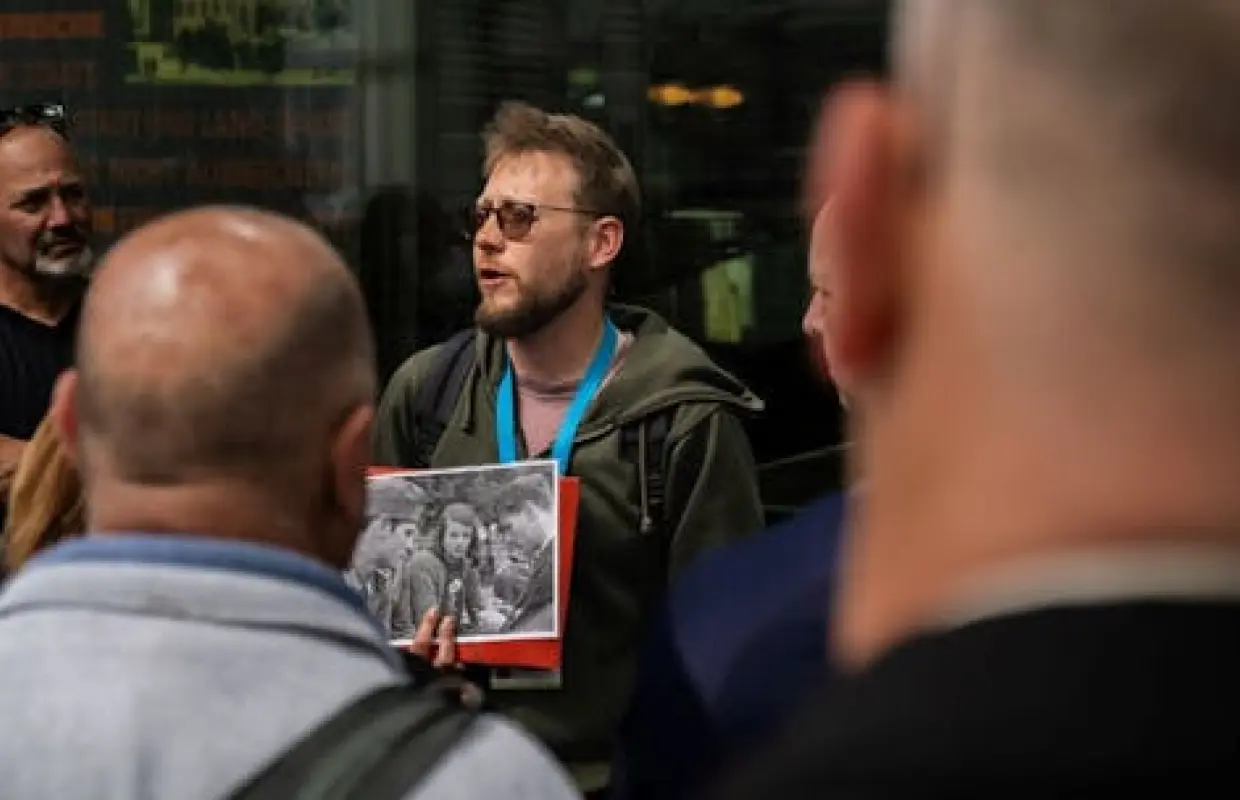
This walking tour offers a unique understanding by physically guiding visitors through the very streets and squares where pivotal historical events unfolded. Led by an expert guide, it connects the physical landscape of Munich with its dark past, providing context and narratives that bring the city's role in the Third Reich and WWII to life in an immersive and educational way, rather than just reading about it.
4. What was Munich's critical role in the origins and rise of the Third Reich, as explored by the walking tour?
Munich was crucial as the birthplace of the Nazi Party and the 'Capital of the Movement.' The walking tour highlights how the city became a breeding ground for Hitler's ideology and early political activities. It covers events like the Beer Hall Putsch and the establishment of key Nazi institutions, demonstrating how Munich provided the initial platform for the Third Reich's ascent to power.
5. What kind of historical buildings or landmarks from the Third Reich era can be seen on the Munich walking tour?
On the Munich Third Reich walking tour, visitors can see various historical buildings and landmarks that were significant during that era. These may include structures around Königsplatz designed for Nazi parades, facades of former administrative buildings, and sites that have been repurposed or now house memorials, all offering a tangible connection to Munich's transformation under Nazi rule.
6. How does the Munich Third Reich walking tour help visitors understand the key Nazi figures connected to the city?
The walking tour illuminates the connections of key Nazi figures by placing them within the context of the specific locations where they lived, worked, or conducted their early political activities in Munich. The expert guide shares historical anecdotes and contextual information about individuals like Hitler, Himmler, and Goebbels, helping visitors grasp their influence and the impact of their presence on the city's history.
7. In what ways did Munich transform under the Third Reich, and how is this showcased on the walking tour?
Munich transformed from a cultural hub into a symbolic center for Nazi ideology, with its architecture and public spaces reshaped for propaganda and rallies. The walking tour showcases this by pointing out specific architectural changes, discussing urban planning alterations, and recounting historical events that demonstrate how the regime visually and functionally molded the city to reflect its power and ideals.
8. What is the typical duration and starting point for the Munich Third Reich walking tour?
The Munich Third Reich walking tour typically lasts approximately 2.5 to 3 hours, offering a comprehensive overview of the key historical sites. The common starting point is often a central and easily accessible location, such as Marienplatz or another well-known landmark in Munich's old town, ensuring convenience for participants.


